


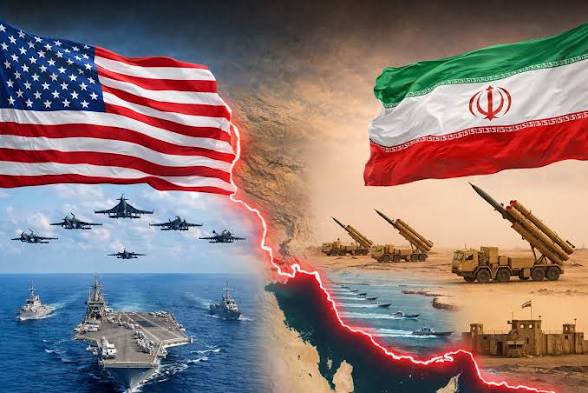
A fragile peace between the United States and Iran appeared to unravel on Monday as both nations exchanged military blows and accusations, reigniting fears of a wider conflict in the Gulf and threatening global oil supplies.
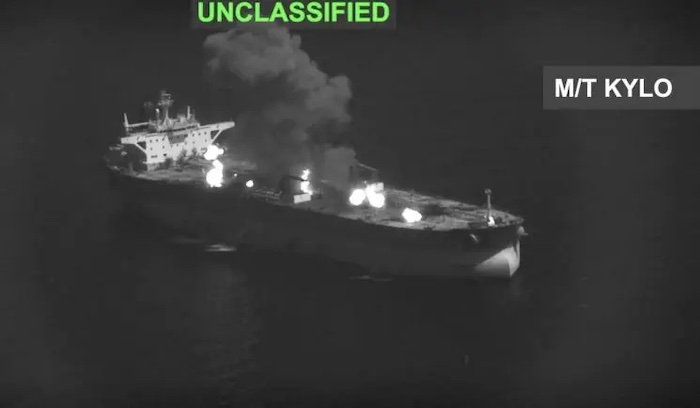
The latest escalation began after Washington accused Tehran of attacking commercial vessels in the Strait of Hormuz, one of the world’s most critical oil shipping routes. In response, the United States launched what it described as “powerful strikes” on targets in Iran’s Hormozgan province and the port city of Mahshahr, while simultaneously reinstating oil sanctions that had been suspended under a recent peace arrangement.
Iran swiftly retaliated, announcing that it had targeted 85 American military installations across the region. The retaliation triggered air raid sirens in Bahrain and Kuwait, heightening concerns that the conflict could spread beyond the two rivals.
According to US officials, the military operation followed attacks on three vessels navigating the Strait of Hormuz, including oil tankers linked to Qatar and Saudi Arabia. Washington insisted that Tehran’s actions violated commitments contained in a memorandum of understanding (MoU) signed by both countries last month to ease tensions and improve maritime security.
In a parallel move, the US Treasury Department revoked a sanctions waiver that had allowed Iran to continue limited oil exports under the interim agreement reached on June 17. American authorities said Tehran had failed to honour the terms of the accord, prompting the reimposition of sanctions effective July 17.
Officials in Washington said the United States had responded on both military and economic fronts after determining that Iran breached its obligations under the deal.
The US military also targeted facilities linked to Iran’s control of the Strait of Hormuz, where American forces have continued escorting commercial vessels through southern shipping lanes. Washington accused Tehran of restricting access to alternative routes and creating unsafe conditions for maritime traffic.
US officials further claimed that heavy mining of the central shipping channel had made navigation increasingly dangerous for commercial vessels.
“The dispute still centres on differing interpretations of the memorandum, with each side accusing the other of violating the agreement,” a correspondent reporting from Washington noted.

Amid the renewed hostilities, attention also turned to the funeral procession of Iran’s slain Supreme Leader, Ayatollah Ali Khamenei. His coffin arrived in the Iraqi holy city of Najaf, where hundreds of thousands of mourners gathered to pay their respects.
The funeral procession is expected to move through Najaf before continuing to Karbala, another major Shi’ite pilgrimage centre, ahead of the return of Khamenei’s remains to Iran for burial later in the day.
Despite the massive turnout, Iraq’s leading Shi’ite cleric, Ali al-Sistani, was not expected to attend due to his advanced age and the intense heat, with temperatures hovering around 45 degrees Celsius.
The renewed military action has also sparked criticism within US political circles, including from figures aligned with President Donald Trump’s Make America Great Again movement.
Former Republican congresswoman Marjorie Taylor Greene questioned the rationale behind launching new attacks after previous claims that Iran’s military capabilities had been significantly weakened.
Similarly, Joe Kent argued that the latest strikes had effectively buried the memorandum of understanding and risked dragging Washington back into a conflict it had earlier sought to avoid.
Kent maintained that the agreement was originally reached because there was “no military solution” to securing the Strait of Hormuz, urging the United States to step back from further escalation before the crisis spirals into a broader regional confrontation.

Comments (0)
No comments yet. Be the first to share your thoughts!