

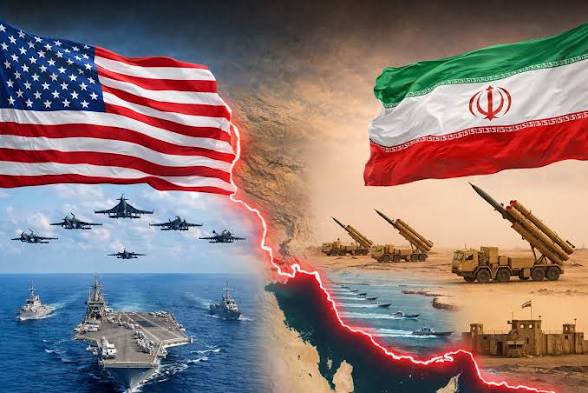
The United States and Iran have formally signed an interim ceasefire agreement aimed at ending months of conflict between the two countries, marking a significant diplomatic breakthrough amid efforts to restore stability in the Middle East.
The agreement, signed by U.S. President Donald Trump and Iranian President Masoud Pezeshkian, was released on Wednesday by both governments and is expected to serve as a framework for negotiating a permanent peace settlement over the next 60 days.
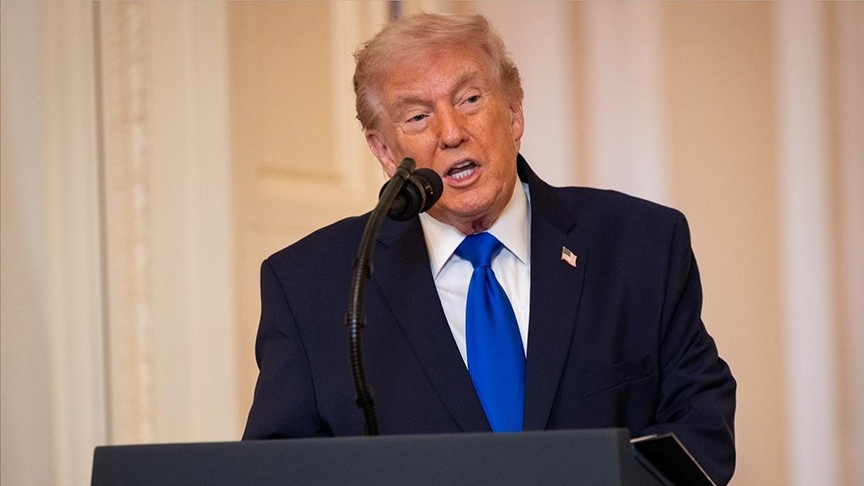
Despite welcoming the accord, President Trump issued a stern warning that the United States would resume military action if Iran failed to comply with the terms of the agreement.
Speaking during the G7 summit in France, Trump said Washington would respond forcefully to any breach of the ceasefire.
“We’re going to bomb the hell out of them if they violate the agreement,” Trump told reporters, adding that he hoped Iran would honour its commitments and help usher in a new era of peace and lower global energy prices.
The U.S. leader also suggested a softer stance on Iran’s missile programme than previously expressed. Trump had earlier pledged to eliminate Iran’s ballistic missile capabilities but acknowledged during his remarks that it would be unfair to deny Tehran missile capabilities while other nations retained similar weapons.
The interim accord extends a ceasefire initially announced in April and broadens its scope to include hostilities in Lebanon. The agreement is designed to create a two-month window during which negotiators from both sides will work toward a comprehensive and permanent peace deal.
Iranian officials welcomed the development, describing it as a diplomatic victory that delivered greater gains than military confrontation.
Iran’s chief negotiator, Mohammad Qalibaf, said the country achieved through negotiations what could not have been accomplished on the battlefield.
“Everything we sought to achieve through military action, we obtained several times over through negotiation,” he said during a televised address.
Iranian authorities also released photographs of the signed document, describing it as one of the most significant agreements between Tehran and Washington since the establishment of the Islamic Republic in 1979.
The conflict began on February 28 when U.S. and Israeli forces launched coordinated attacks on Iran, leading to the assassination of Supreme Leader Ayatollah Ali Khamenei and several senior military commanders, according to reports.
The confrontation rapidly expanded into a broader regional crisis involving multiple actors across the Middle East. More than 7,000 people are reported to have been killed, primarily in Iran and Lebanon, while the conflict also disrupted global energy markets, fuelled inflationary concerns and heightened fears of food insecurity in vulnerable nations.
Under the terms of the 14-point memorandum, both sides agreed to an immediate cessation of hostilities across all fronts. The deal also provides for the full restoration of maritime traffic through the Strait of Hormuz, the removal of restrictions on Iranian ports, the suspension of U.S. sanctions against Iran and the release of billions of dollars in frozen Iranian assets.

In addition, a proposed $300 billion reconstruction fund is expected to support post-war recovery efforts in Iran.
The agreement also addresses concerns surrounding Iran’s nuclear programme. Tehran reaffirmed its longstanding position that it would not pursue nuclear weapons and accepted international supervision of the down-blending of its stockpile of enriched uranium under the oversight of the International Atomic Energy Agency (IAEA).
However, Iran rejected U.S. demands that its enriched uranium be removed from the country, opting instead for on-site monitoring and processing.
Analysts note that while the agreement delivers substantial economic relief to Iran, several of Washington’s original war objectives remain unmet. Iran’s government remains intact, its ballistic missile programme has not been dismantled, and its support for regional groups, including Hezbollah in Lebanon, continues.
Financial markets responded positively to the ceasefire announcement, with oil prices declining amid expectations that shipping operations through the Strait of Hormuz would return to normal. However, prices later recovered some losses following Trump’s renewed threats of military action should the agreement collapse.
World leaders attending the G7 summit welcomed the ceasefire and expressed hope that it would reduce tensions across the Middle East. The leaders of France, Germany, Britain, Japan, Italy, Canada and the United States also renewed calls for an immediate end to violence in Lebanon.
Although the agreement calls for a halt to hostilities between Israel and the Iran-backed Hezbollah movement, clashes have continued in parts of southern Lebanon.
Israel, which was not directly involved in the U.S.-Iran negotiations, has maintained that it reserves the right to take military action against Hezbollah and continues to operate in parts of southern Lebanon.
President Trump also appeared to distance himself from some of Israel’s military tactics, lightly criticising Prime Minister Benjamin Netanyahu over the scale of operations against Hezbollah.
“Netanyahu happens to be a good man, gets a little excited sometimes,” Trump said, suggesting that Israel adopt a more measured approach in Lebanon.
Meanwhile, reports from Lebanon indicated that Israeli airstrikes and artillery attacks continued in several southern communities on Wednesday. Security sources also reported drone attacks targeting Israeli forces, allegedly carried out by Hezbollah fighters.
The Israeli military later confirmed that five soldiers were injured in two separate drone incidents in southern Lebanon.
While the ceasefire agreement represents a major diplomatic step toward ending months of bloodshed, significant challenges remain as negotiators work toward a permanent settlement capable of addressing longstanding security, political and nuclear disputes between Washington and Tehran.

Comments (0)
No comments yet. Be the first to share your thoughts!