


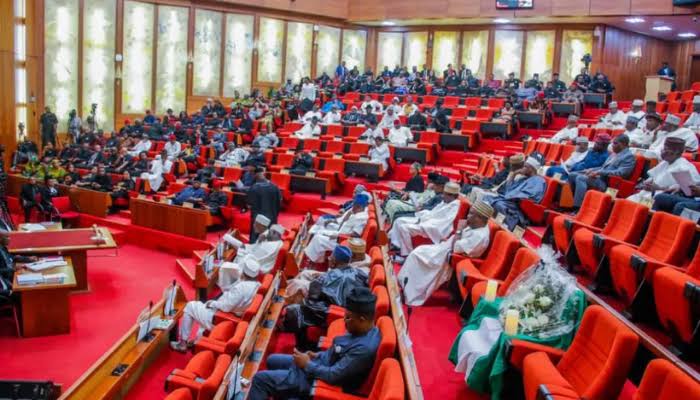
Federal lawmakers have called on the Federal Government to significantly increase funding for Nigeria’s solid minerals sector, saying greater investment is essential to unlock its vast economic potential and fast-track the country’s drive toward economic diversification.
The appeal came on Friday during the opening of a two-day ministerial retreat organised by the Ministry of Solid Minerals Development in Abuja. The event brought together government officials, industry experts and other stakeholders to assess progress in the sector and outline strategies for sustainable growth.
Speaking at the retreat, Chairman of the Senate Committee on Solid Minerals Development, Senator Sampson Ekong, stressed that adequate funding and stronger collaboration among stakeholders were critical to transforming the industry.
He expressed concern over what he described as insufficient budgetary allocations and releases to a sector widely regarded as one of Nigeria’s most promising non-oil revenue sources.
According to Ekong, reforms introduced in recent years can only yield meaningful results if backed by the financial resources required to implement them effectively. He urged the government to place greater emphasis on the mining industry, noting that it remains a key component of efforts to reduce the nation’s dependence on oil revenue.
The senator also expressed optimism that the retreat would help identify policy gaps and strengthen strategies aimed at promoting responsible mining, local value addition and sustainable development.
Echoing similar concerns, Chairman of the House Committee on Solid Minerals Development, Rep. Jonathan Gbefwi, described inadequate funding as one of the biggest obstacles limiting the sector’s growth.
He said the industry possesses the capacity to rival the oil sector as a major contributor to government revenue if provided with the necessary financial support.
“If this sector receives the funding it requires, it can become one of Nigeria’s biggest sources of revenue,” Gbefwi said.
He urged stakeholders to sustain ongoing reforms, noting that the mining industry has become increasingly important as global energy transitions reshape traditional oil markets.
In his remarks, the Permanent Secretary of the Ministry of Solid Minerals Development, Dr. Faruk Yabo, described the retreat as a strategic platform designed to align the ministry’s vision, strengthen institutional coordination and accelerate the delivery of key mandates under President Bola Tinubu’s Renewed Hope Agenda.
Yabo revealed that the ministry’s transformation efforts would continue to be driven by seven priority areas introduced by the Minister of Solid Minerals Development, Dr. Dele Alake.

Among the initiatives are the establishment of the Nigerian Solid Minerals Corporation, the development of strategic partnerships with international mining companies to attract investment, expansion of geoscience data acquisition and the creation of a comprehensive National Solid Minerals Database.
Other priorities include formalising artisanal and small-scale miners into registered cooperatives, strengthening mining security through the reconstitution of the Mines Surveillance Task Force and Mine Police, reviewing mining licences and improving the efficiency of the Mining Cadastre System.
The ministry is also pursuing plans to establish six mineral processing centres across the country to boost local value addition and reduce reliance on exporting raw minerals.
Yabo noted that these priorities are tied to measurable national objectives and will serve as benchmarks for evaluating the ministry’s performance.
Addressing participants, Minister of Solid Minerals Development, Dr. Dele Alake, urged ministry staff and agencies to build on the progress already recorded under the Seven Priority Areas framework.
He challenged stakeholders to develop fresh ideas and innovative approaches capable of pushing the sector beyond its current targets.
Alake said significant strides had been made over the past two years in areas such as sector reforms, investment promotion, mining security, digital transformation, revenue generation and institutional strengthening.
However, he stressed that the focus must now shift toward achieving measurable outcomes that deliver lasting economic benefits for Nigerians.
The minister reaffirmed Nigeria’s commitment to leveraging its abundant critical mineral resources to drive industrialisation, including supporting the local production of electric vehicle batteries and other high-value manufacturing activities.
He commended staff of the ministry and its agencies for their contributions to ongoing reforms and encouraged them to sustain efforts aimed at transforming the solid minerals sector into a major pillar of the nation’s economy.
.jpg)
Comments (0)
No comments yet. Be the first to share your thoughts!