By Al-Amin Isa
There is a moment in every global crisis when the script becomes predictable. The same words roll out. “Freedom.” “Democracy.” “International order.” They arrive polished, rehearsed, and wrapped in the language of moral urgency. But if you step back and watch who those words are aimed at, and who they carefully avoid, you begin to see the outline of a double standard that is no longer subtle. It is structural.
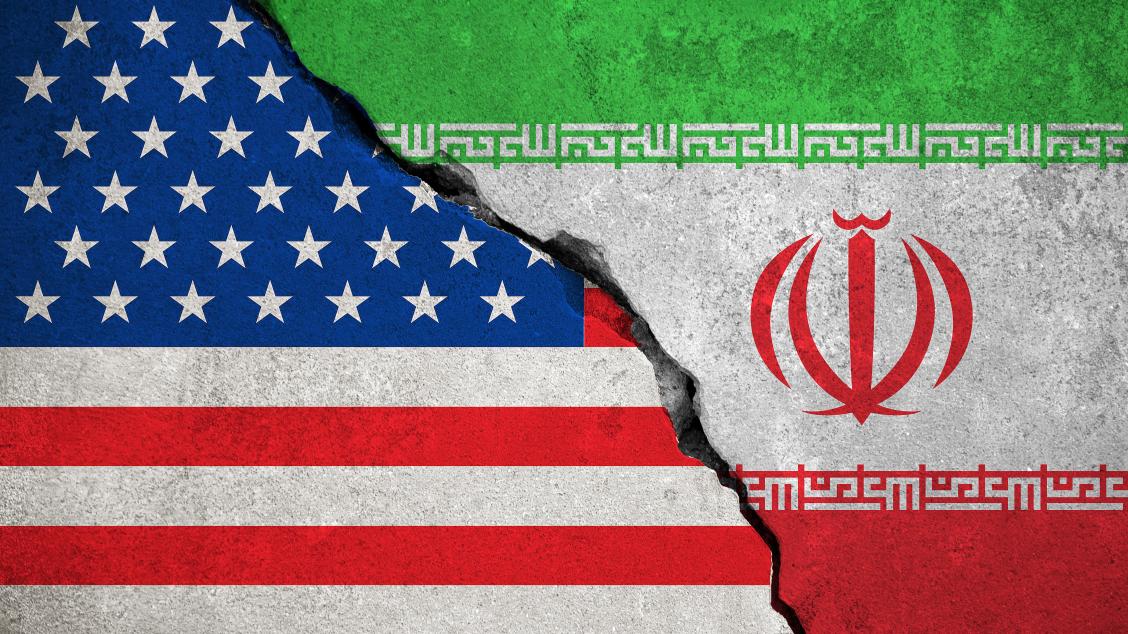
The latest standoff between Iran and the United States has once again dragged this contradiction into the open.
Iran is portrayed as a problem that must be managed, pressured, and contained. Its political system is framed as illegitimate, its leadership as defiant, its economy as something that must be squeezed into compliance. Sanctions are justified as a moral tool. Diplomatic isolation is described as a defense of global values. Every move Tehran makes is examined under a moral microscope.
But the real question is not whether Iran’s system deserves criticism. Many Iranians themselves have voiced deep frustrations about governance, accountability, and freedoms. The question is why “democracy” suddenly becomes a global emergency only in certain places, while in others it is treated as an optional accessory.
Look at the map of America’s closest allies.
Saudi Arabia has no national elections. Power flows through royal decree, not popular mandate. Yet it remains one of Washington’s most valued partners and one of the world’s biggest buyers of U.S. weapons. Billions of dollars in fighter jets, missile systems, and defense contracts move smoothly through diplomatic channels. There are no sanctions for the absence of the ballot box. No international coalition demanding immediate political reform. The relationship is described with comfortable words: “stability,” “strategic partnership,” “regional security.”
Egypt offers another lesson.
A military coup removed a democratically elected government and installed a leadership backed by the armed forces. Political opposition was crushed. Media space narrowed. Prisons filled. And yet, U.S. military aid continued to arrive in the billions. Joint exercises continued. Diplomatic smiles were maintained. The language changed from “democratic transition” to “counterterrorism cooperation.” Once again, the principle of democracy was quietly folded into the practical needs of power.
Then there is Equatorial Guinea.
Decades of one-family rule. Elections that exist more as ritual than choice. Vast oil wealth flowing out of the ground and into global markets. Western energy companies operate there. Contracts are signed. Profits are secured. And the world’s moral outrage remains remarkably restrained.
These are not side stories. They are the main plot.
Now place Iran back at the center of the frame.
Unlike these allies, Iran has spent decades resisting Western economic and strategic dominance. It has nationalized resources. It has challenged U.S. influence in the Middle East. It has built alliances that run against Washington’s preferred order. And suddenly, its political system is not just flawed, it is framed as a threat to global stability itself.
This is where the language shifts.
Democracy becomes a weapon, not a goal. Sanctions become a tool of persuasion, not a last resort. Economic pain is presented as a moral necessity. The suffering of ordinary people is reframed as “pressure” that will eventually produce political change.
But ask yourself a simple question: if democracy were truly the non-negotiable standard, why does it stop at the doors of oil fields, military bases, and arms contracts?
Why is a monarchy a “partner” in one context, a military ruler a “stabilizing force” in another, and a defiant republic a “global threat” in a third?
The Iran–U.S. standoff exposes the real dividing line in global politics. It is not democracy versus dictatorship. It is alignment versus resistance.
Countries that fit neatly into the Western-led economic and security order are managed, supported, and often shielded from serious consequences. Countries that challenge that order are scrutinized, sanctioned, and morally indicted on the world stage.
This does not mean Iran is beyond criticism. No state is. Its record on political freedoms, dissent, and civil rights is debated fiercely by its own citizens and by observers around the world. But the credibility of that criticism collapses when it is delivered by powers that ignore the same or worse practices in their allies.
And this is where the damage runs deeper than geopolitics.
Selective morality breeds global cynicism. It tells people in the Global South that “values” are not universal, they are conditional. It tells young activists that their struggle for rights will be celebrated or ignored depending on whether their country sits inside or outside a strategic alliance. It allows authoritarian leaders everywhere to dismiss genuine domestic criticism as foreign manipulation, because they can point to the obvious inconsistency in how those foreign powers behave.
In the case of Iran, sanctions and pressure are sold as a path to freedom. But decades of economic isolation have also produced shortages, inflation, and hardship for ordinary people. When democracy is delivered through empty shelves and collapsing currencies, it begins to look less like liberation and more like collective punishment.
And the world notices.
The growing skepticism toward Western leadership across Asia, Africa, and Latin America is not born out of ideology alone. It is born out of observation. People see which governments are scolded and which are embraced. They see which violations spark outrage and which are quietly managed behind closed doors.
The tragedy is that this double standard weakens the very ideals it claims to defend.
Democracy, accountability, and human rights are powerful ideas. They do not belong to the West. They belong to humanity. But when they are used selectively, they lose their moral force and become just another instrument of power politics.
The Iran–U.S. standoff is not only about nuclear programs, regional influence, or sanctions regimes. It is a mirror held up to the global system itself. And in that mirror, many see not a world guided by consistent values, but one governed by strategic convenience.
If the United States and its Western allies want democracy to be taken seriously as a principle rather than dismissed as a slogan, they must apply it without exception. Not only to rivals. Not only when it is cheap. But when it is costly, when it risks contracts, alliances, and influence.
Until that day comes, the language of freedom will continue to ring hollow in much of the world, and the charge of double standards will keep finding fresh evidence, crisis after crisis, standoff after standoff, speech after speech.