


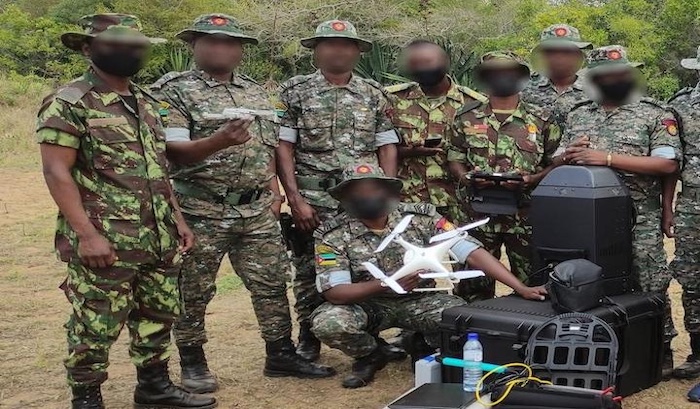
The United Nations has sounded a fresh warning over the rapidly evolving tactics of terrorist groups operating in northern Nigeria and the wider Sahel region, revealing that extremists are now leveraging drones, encrypted communication technologies and cryptocurrencies to expand their reach and challenge government authority.
The concern was raised before the UN Security Council by the Special Representative of the UN Secretary-General for West Africa and the Sahel, Leonardo Simão, who painted a troubling picture of a region grappling with escalating insecurity, mass displacement and a worsening humanitarian crisis.
Presenting the Secretary-General’s latest report covering developments from November 2025 to June 2026, Simão said terrorist networks have become increasingly sophisticated, enabling them to coordinate attacks more effectively across national borders.
According to him, armed groups are no longer relying solely on conventional methods of warfare but are embracing emerging technologies, including drones, advanced communication systems and digital financial channels such as cryptocurrencies, making them more difficult for security agencies to track and dismantle.
He noted that the threat has become particularly severe in northern Nigeria and the central Sahel, where extremist groups are combining acts of terror with organised criminal activities to strengthen their influence and control over strategic territories.
Simão warned that these groups are not only carrying out attacks but are also pursuing economic and territorial dominance, a trend that continues to weaken public trust in government institutions and deepen divisions within communities.
“Nigeria, Niger and Burkina Faso remain among the countries most heavily affected by terrorism, kidnappings and deadly attacks on civilians,” he told the Security Council.
The UN envoy disclosed that the persistent violence has triggered one of the region’s most pressing humanitarian emergencies, forcing approximately 6.8 million people from their homes. In addition, about 1.28 million people have fled across borders as refugees or asylum seekers in search of safety.
He stressed that women, children and young people are paying the highest price for the conflict, as insecurity and funding shortages continue to hinder humanitarian agencies from reaching vulnerable populations in many affected areas.

Despite the grim security outlook, Simão highlighted a number of encouraging developments that signal renewed commitment to regional cooperation.
Among them is the reopening of the Kamba border crossing between Nigeria and Niger, a move expected to improve cross-border relations and economic activities. He also pointed to progress made by the Cameroon-Nigeria Mixed Commission in implementing the 2002 International Court of Justice ruling on the two countries’ land and maritime boundaries.
Describing these efforts as important confidence-building measures, Simão said dialogue and cooperation remain essential tools for addressing the region’s complex security challenges.
He, however, cautioned that military offensives alone would not be enough to defeat terrorism, urging governments to confront the underlying drivers of violent extremism, including poverty, unemployment, social exclusion and vulnerability.
According to him, sustainable peace can only be achieved through a combination of security measures and socio-economic development initiatives capable of reducing the appeal of extremist ideologies.
The UN official also informed the Security Council that the Economic Community of West African States (ECOWAS) is intensifying efforts to operationalise its regional standby force. However, he noted that inadequate funding remains a major obstacle to the initiative's full implementation.
The briefing formed part of the Security Council’s review of political, security and humanitarian developments in West Africa and the Sahel, coming shortly after the Council extended the mandate of the United Nations Office for West Africa and the Sahel (UNOWAS) until January 31, 2029.
The latest warning underscores growing fears that terrorist groups are adapting faster than ever, using modern technology and cross-border networks to sustain their operations, while governments and regional bodies race to contain a threat that continues to destabilise millions of lives across West Africa.



Comments (0)
No comments yet. Be the first to share your thoughts!