


By Taibat Ummi Yakubu
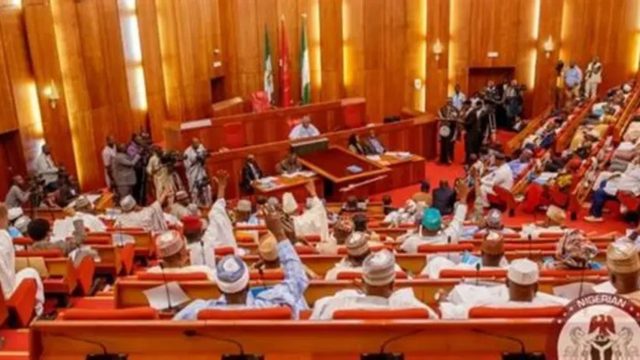
The House of Representatives has called for a major shift in Nigeria’s fight against insecurity, urging the Federal Government to discontinue the rehabilitation and reintegration of repentant terrorists, bandits and kidnappers and instead focus on dismantling the financial networks that sustain violent crimes across the country.
The lawmakers’ position, captured in a motion adopted during Wednesday’s plenary, reflects growing concerns over the rising influence of criminal groups and the staggering amount of money flowing into their operations through ransom payments and illicit financial channels.
Leading the debate, Hon. Ademorin Ali Kuye argued that while security forces continue to confront terrorists and kidnappers on the battlefield, the financial lifeline that keeps such groups active remains largely intact.
According to him, intelligence reports and security assessments indicate that Nigerians paid an estimated ₦2.23 trillion in ransom between January 2021 and June 2025, a figure that underscores the scale of the country’s kidnapping crisis and the profitability of organised crime.
He said the continued payment of huge ransoms has strengthened criminal networks, encouraged more abductions and prolonged insecurity in several parts of the country.
As part of its resolutions, the House urged the Executive arm of government to halt programmes designed to rehabilitate and reintegrate former terrorists and other violent offenders into society. Lawmakers maintained that greater attention should be directed towards identifying, tracking and destroying the financial structures that enable criminal groups to operate.
The House also called for stricter enforcement of laws regulating ransom payments and terrorism financing, stressing the need for stronger collaboration among financial institutions, law enforcement agencies and victims to prevent criminals from accessing funds.
Lawmakers further urged the Federal Ministry of Finance to increase investment in financial intelligence infrastructure by providing modern transaction-monitoring technology and advanced analytical systems capable of detecting suspicious financial activities.
Kuye noted that existing laws already provide the legal framework for such action. He cited the Central Bank of Nigeria (CBN) Act, 2007, and the Banks and Other Financial Institutions Act (BOFIA), 2020, which empower the apex bank to supervise financial institutions and protect the integrity of the financial system.
He added that the Money Laundering (Prevention and Prohibition) Act, 2022, and the Terrorism (Prevention and Prohibition) Act, 2022, place obligations on banks, designated non-financial businesses and government agencies to detect, report and disrupt illicit financial transactions, including ransom payments.
The lawmaker also referenced findings from the Nigeria Financial Intelligence Unit (NFIU), the National Bureau of Statistics’ 2024 Crime Experience and Security Perception Survey, as well as independent security research organisations, all of which point to the enormous financial burden imposed by kidnapping and other criminal activities.
Of particular concern, he said, are reports from the National Counter Terrorism Centre under the Office of the National Security Adviser indicating that some Point-of-Sale (POS) operators and other financial channels have been used to facilitate ransom payments and conceal money trails, making investigations more difficult.
Kuye warned that criminal organisations have become increasingly sophisticated, exploiting both formal and informal financial systems to move illicit funds. These include Bureau de Change operators, hawala networks, cryptocurrency platforms, livestock trading channels and trade-based money laundering schemes.
He cautioned that weak coordination among intelligence agencies and inadequate enforcement of anti-money laundering regulations could further expose Nigeria to security threats, weaken public confidence and increase the risk of international sanctions, including continued grey-listing by the Financial Action Task Force (FATF).
Following the adoption of the motion, the House directed the Central Bank of Nigeria, the Nigeria Financial Intelligence Unit and other relevant regulators to conduct a comprehensive audit of suspicious POS transactions in high-risk areas and impose sanctions on operators found to be involved in ransom-related dealings.
Lawmakers also urged the CBN to strengthen real-time surveillance of suspicious financial transactions linked to kidnapping, terrorism, banditry and organised crime, while tightening oversight of Bureau de Change operators and other financial intermediaries suspected of facilitating money laundering.
The House further called on the Attorney-General of the Federation and relevant law enforcement agencies to investigate and prosecute individuals, organisations and financial facilitators connected to ransom transactions in line with existing laws.
In a broader effort to tackle the problem, lawmakers urged the National Security Adviser to convene a national stakeholders’ summit on financial intelligence and ransom financing with the aim of developing a coordinated strategy to disrupt criminal financial networks.
The House also tasked security agencies with conducting forensic financial investigations on all funds and assets recovered during anti-kidnapping and counter-terrorism operations to expose the individuals and structures behind criminal financing.
The resolutions signal a tougher stance by lawmakers, who insist that defeating terrorism, banditry and kidnapping requires more than military action. For the House, cutting off the flow of money to criminal groups may prove just as important as confronting them on the battlefield.


Comments (0)
No comments yet. Be the first to share your thoughts!