


For decades Nigeria has spent billions on weapons, soldiers, surveillance drones, and security votes. Yet insecurity keeps spreading from banditry in the Northwest, to kidnapping on highways, to farmer-herder clashes in the Middle Belt, to militancy in the Niger Delta. Every new administration promises to crush criminals, but the crisis outlives the campaigns.
The reason is simple, and we have refused to name it: the root of Nigeria’s insecurity is the absence of social justice in governance. Until we resurrect social justice, there will be no peace in this country. Not tomorrow. Not in the next 50 years. It is pertinent to note that injustice breeds desperation.
When citizens watch public funds looted with no consequence, when court judgments are ignored, when jobs go to 'connections' instead of competence, when police extort instead of protect, people lose faith in the system. A young man who sees no path to dignity through honest work becomes easy recruitment material for bandits. A community whose farmland is destroyed and gets no compensation turns to self-help. A student whose future is mortgaged by ASUU strikes and a broken economy sees no reason to obey laws that never protected him.
What Nigerians failed to understand is that insecurity is not just the act of a criminal with a gun. It is the symptom of millions who have concluded that the state is not for them. That conclusion is born from social injustice.
Furthermore, unequal application of the law is a trigger
Nigerians do not expect perfection. We expect fairness. But when the law descends heavily on the poor hawker while the powerful walk free, when ONE NIGERIA applies differently in Abuja than in Katsina, Zamfara, Ogun, Lagos, Anambra, Enugu, CrossRivers, Bayelsa, Borno, Adamawa, Niger , and/or Plateau anger replaces patriotism. Ethnic and religious violence thrives in that gap. People then seek protection from militias, vigilantes, or their own tribe, because the state has proven it cannot be an impartial referee.
Again, on this note Nigerian leaders shall know that no amount of military operations can defeat an enemy that is continuously reproduced by unfair courts, biased appointments, and lopsided development. Every bullet fired without addressing the WHY simply creates two more recruits.
Still, it is important for our leaders to acknowledge the undisputed fact that development without justice is an illusion. Indeed, the
roads, bridges, and airports are good, but if contracts are awarded to cronies while local contractors are shut out, if schools are built where politicians live while rural children sit on the floor, if federal projects bypass whole regions for decades, then development itself becomes a source of conflict. Citizens do not riot because a road is missing. They riot because they see the road everywhere except where they live, and they know why. That is social injustice. And it is more dangerous than poverty. A poor man with hope can wait. A man treated as a second-class citizen in his own country will not wai!
Worthy of note is that peace is the child of justice. The scriptures say, righteousness exalts a nation. History says, the same thing in plain english that no society survives long on force alone. The Roman Empire collapsed when its citizens felt the empire was no longer theirs. South Africa could not be governed by Apartheid forever. Peace treaties last only when the aggrieved feel they have a stake. Nigeria will not be an exception. You cannot police 220 million people into unity. You can only govern them into it. And governance means justice. Of course, justice means equal opportunity, impartial law, fair distribution of resources, and accountability for the powerful.
From the foregoing I concluded that the way forward of tackling insecurity in Nigeria is the resurrection of social justice or bury peace
if we want insecurity to end. We must stop treating it as a security problem alone. It is a governance problem. We must reform justice. Make courts fast, independent, and accessible to the poor man in Yandaki, Olo-Ibiri, Ajegunle, Dambua, Ogbomosho, Kainji, Ogoja, Nwewi as much as the elite in Abuja.
Not only the above, the state must enforce accountability. No one should be above the law. Not a governor, not a general, not a contractor. Impunity must die in Nigeria in order to end insecurity. Additiinally, balance development must be at the forefront in projects execution. Every region must see itself in the national budget. Marginalization, real or perceived, is fuel for separatism and crime. This happened in so many climes and Nigeria is not an exception.
Finally, the state must protect dignity of its citizenry in terms of jobs creation, education, healthcare and general infrastructure. A citizen who feels valued by the state will defend the state at whatever cost.
Thus, unless we resurrect social justice in the heart of governance, we are only managing insecurity, not solving it. We will keep buying guns while losing the people. We will keep announcing victories, while the next generation grows up angrier.
With loud voice any sensible and responsible humanbeing knows that Nigeria does not lack resources, brains, or courage. It only lacks justice. And without justice, peace is impossible. Not for a year. Not forever.
The choice is glaringly clear that justice now, or perpetual war in my dear country NIGERIA.
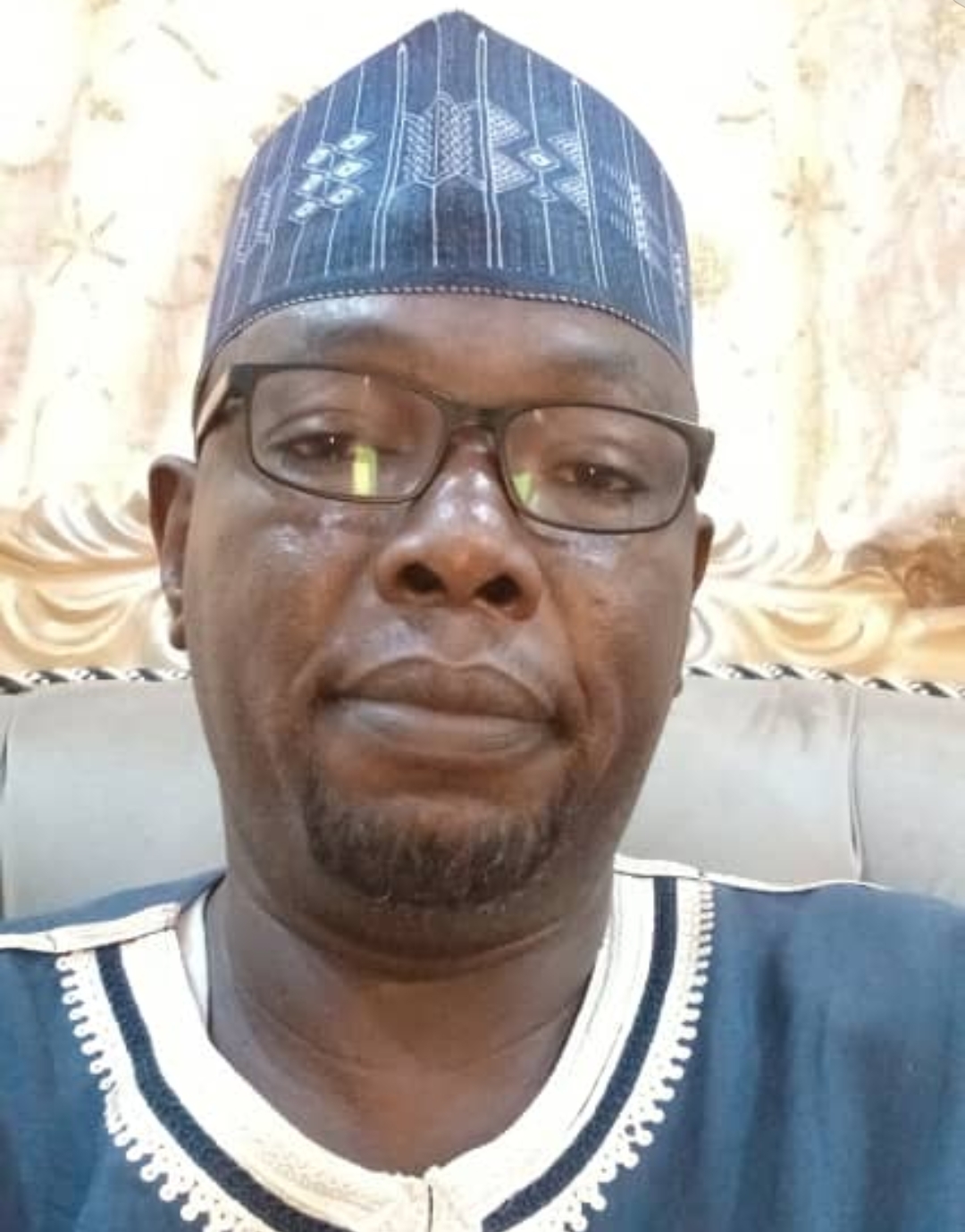
Dr. Kabir Umar Musa Yandaki, Department of Political Science, Umaru Musa Yar'adua University Katsina-Katsina State

Comments (0)
No comments yet. Be the first to share your thoughts!