


BY TAIBAT UMMI YAKUBU
A bottle of whisky bought to celebrate a new job, medicine taken daily to control blood pressure, or palm oil purchased to prepare a family meal may appear harmless. But what happens when the product inside the packaging is not what the buyer believes it to be?
That question has gained renewed urgency following enforcement operations by the National Agency for Food and Drug Administration and Control (NAFDAC) in Lagos and Aba, where officials uncovered a suspected illegal drinks operation and seized packaging materials bearing the names of well-known brands, reportedly worth more than ₦200 million.
The discoveries have exposed a disturbing possibility for Nigerian consumers: products that look familiar and carry trusted brand names may not always be what they claim to be.
For families, the implications extend beyond financial losses. Depending on the product and the nature of the adulteration, counterfeit goods can expose consumers to dangerous substances, undermine medical treatment and create serious public health risks.
Inside the Lagos operation
NAFDAC operatives reportedly uncovered a suspected illegal facility in a two-storey building at Zamfara Plaza, BBA Trade Fair Complex, along the Badagry Expressway in Ojo, Lagos State.
The operation followed intelligence gathering and surveillance targeting suspected counterfeiters operating within the Trade Fair International Market.
Two suspects, Chibuzor Okafor and William John, were arrested. Officials reportedly recovered drums, filters, packaging materials, a heating device and other equipment suspected to have been used in the alleged operation.
The Assistant Director of NAFDAC’s Investigation and Enforcement Directorate, Mr Kunle Ojo, expressed shock at the discovery.
“What we have discovered today is a lot, and it’s mind-boggling. We are here to protect the lives of many Nigerians,” he said.
One of the arrested suspects, Okafor, who described himself as a drinks dealer, told Saturday Vanguard that he transferred drinks into other bottles, claiming the original packaging had been damaged.
“I deal on drinks. I change the bottle of the drink. It’s not that the bottle is not good. It’s the drink in there, because the other one is already damaged. So that’s why we are putting it to the next bottle,” he said.
His explanation raises questions about the identity and safety of the products being transferred, although laboratory analysis and further investigation would be needed to establish their composition and whether they violated applicable regulations.
For a customer picking up a bottle of whisky, wine or an energy drink from a shop, the difficulty is knowing what happened before the product reached the shelf.
A familiar label, sealed-looking packaging and an attractive presentation may create confidence, but they cannot independently establish that a product is genuine when its contents or packaging have been tampered with.
Aba raid uncovers packaging materials worth over ₦200m
The Lagos discovery was accompanied by another operation in Aba, Abia State, where NAFDAC officials raided shops at Old Court Road Market over suspected counterfeiting activities.
The agency reported recovering labels, corks and outer packaging materials bearing the names of established beverage brands.
The brands identified included Jameson, Glenfiddich, Four Cousins, Lord’s Dry Gin and Imperial Blue. Materials bearing the names of Chelsea, Squadron and Seaman’s Aromatic Schnapps were also recovered, alongside packaging materials associated with Goya oil.
NAFDAC estimated the value of the materials recovered from five shops at more than ₦200 million.
The operation reportedly encountered resistance, with some traders threatening officials and people assisting with the evacuation of the seized items. The owners of the shops visited reportedly fled, while the premises were placed on hold pending further action.
The discovery highlights a potentially important part of the counterfeit trade: the use of packaging designed to make unauthorised products resemble those manufactured by legitimate companies.
However, the recovery of labels, corks and packaging materials does not, by itself, establish the precise contents of any finished product or prove that every recovered item was used in counterfeiting. Those questions require further investigation.
Taken together, the Lagos and Aba operations have raised concerns about how counterfeiters may obtain packaging materials, handle products and move potentially fraudulent goods into consumer markets.
The danger consumers cannot see
Counterfeit alcoholic beverages can pose different risks depending on their ingredients, manufacturing conditions and handling.
Some products may involve the unlawful transfer of genuine drinks into unauthorised packaging. Others may be diluted, adulterated or manufactured with unsafe ingredients.
One particularly serious hazard is methanol contamination. Methanol is toxic and can cause severe poisoning, visual impairment, permanent blindness and death when consumed in sufficient quantities.
Other contaminants and unsafe production practices can also cause harm. However, the presence of counterfeit packaging alone does not establish that a drink contains methanol or any other specific toxic substance.
That distinction matters because the actual composition of a suspicious product can only be determined through appropriate testing.
Nevertheless, the possibility of adulteration presents a serious challenge for consumers who may have no reliable way to verify a product’s history simply by examining its bottle.
A drink purchased for a wedding, birthday, Christmas celebration or business meeting may appear identical to a trusted brand. If the contents have been altered, however, the consequences could be far more serious than disappointment or wasted money.
When medicine fails the patient
The threat posed by substandard and falsified products becomes particularly concerning when medicines are involved.
Imagine a patient being treated for malaria who continues to experience symptoms despite taking prescribed medication. After spending money on consultations, tests and prescriptions, the patient returns to the hospital because the condition has not improved.
The family may begin to question the diagnosis, the effectiveness of the treatment or whether the illness has become more severe.
One possibility they may not immediately consider is the quality of the medicine itself.

Treatment failure can result from several factors, including incorrect diagnosis, inappropriate dosing, poor adherence, drug resistance and complications. But a falsified or substandard medicine containing insufficient active ingredients, the wrong substances or harmful contaminants may also contribute to ineffective treatment or injury.
The danger is that a patient could continue deteriorating while the underlying cause remains unidentified.
For people living with hypertension or diabetes, unreliable medication can be particularly concerning because these conditions require consistent management and monitoring. If a medicine does not contain the expected active ingredient, a patient may believe the condition is being controlled when it is not.
The consequences can include repeated hospital visits, additional medical expenses and an increased risk of complications.
Substandard products can also weaken confidence in healthcare providers and legitimate medicines, potentially encouraging some patients to abandon prescribed treatment or turn to unverified alternatives.
The risks extend to food and herbal remedies
The concerns surrounding product safety go beyond drinks and medicines.
Food products, cosmetics, packaged water and other regulated goods can also be adulterated, contaminated, falsely labelled or manufactured outside approved standards.
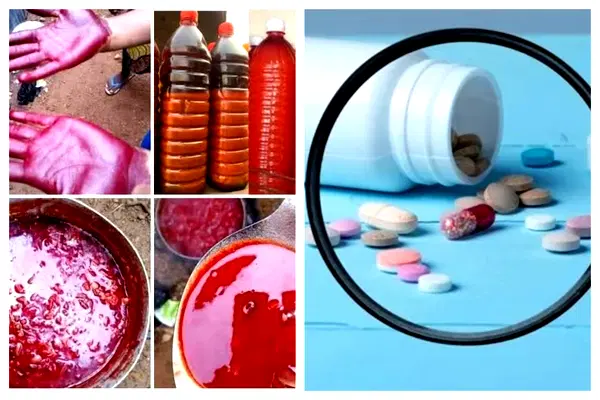
Palm oil purchased for cooking, for example, may appear normal to an unsuspecting buyer even when its quality or composition has been compromised. The safety of a product cannot always be established through appearance alone.
Consumers also face risks from unverified herbal preparations promoted as treatments for medical conditions.
A case reported in Ogun State involved a young woman who allegedly bought an advertised herbal product through a radio programme in Abeokuta to treat suspected fibroids.
According to the account, she inserted the substance as directed but later experienced severe pain and a sensation of internal blockage. Medical experts reportedly discovered that the substance was caustic soda, a highly corrosive chemical.
If confirmed as reported, the incident illustrates the potentially devastating consequences of using a substance whose ingredients and safety have not been properly established.
It also raises questions about the marketing of purported remedies and the responsibility of those who advertise, distribute or sell products intended for human use.
People experiencing distressing health conditions may be particularly vulnerable to promises of quick or inexpensive solutions, especially when specialist healthcare is difficult to access or costly.
For that reason, product safety requires more than enforcement against counterfeiters. It also demands public awareness, responsible advertising and access to reliable health information.
Experts warn of a wider healthcare challenge
The President of the Health Care Providers Association of Nigeria (HCPAN), Dr Austin Aipoh, also described substandard and falsified medicines as a major challenge for the country's healthcare system in an interview with Saturday Vanguard.
Aipoh identified treatment failure as one of the immediate consequences of using medicines that do not meet required standards.
The wider impact can extend to families, healthcare facilities and the national economy through additional medical expenses, lost productivity and preventable complications.
Legitimate manufacturers and distributors can also suffer when counterfeiters exploit their brand names, while consumers may lose confidence in products they have purchased safely for years.
What can consumers do?
Although identifying sophisticated counterfeits can be difficult, consumers can take practical steps to reduce their exposure to potentially unsafe products.
Purchase medicines from licensed pharmacies and other authorised outlets.
Check product registration details, batch numbers, expiry dates and packaging integrity where applicable.
Be cautious of unusually cheap products, broken seals, suspicious labels or inconsistent packaging.
Avoid using products suspected of being tampered with, and report concerns to NAFDAC or the appropriate authorities.
Consult qualified healthcare professionals when treatment appears ineffective instead of independently changing medication or relying on unverified remedies.
These precautions cannot eliminate every risk, but they can help consumers make safer purchasing decisions.
The bigger question facing regulators
The discoveries in Lagos and Aba highlight the importance of tracing suspected counterfeit products beyond the immediate point of seizure.
Investigators must establish where the materials originated, how they were distributed, whether finished products were manufactured or repackaged illegally, and who may have profited from the activities.
Where evidence establishes wrongdoing, appropriate prosecution and enforcement are necessary to deter further offences. Product testing and transparent communication are equally important in determining the actual risks posed by recovered goods.
For Nigerian consumers, the issue ultimately comes down to trust: trust that the medicine purchased will contain what it should, that the drink served to guests is safe, and that the food prepared at home meets acceptable standards.
When that trust is exploited, the consequences can reach far beyond the marketplace.
The real concern is not simply the discovery of counterfeit labels or suspicious bottles. It is whether consumers can confidently know what they are buying, what they are putting into their bodies and whether the products they depend on are safe.

.jpg)

Comments (0)
No comments yet. Be the first to share your thoughts!