By Aliyu Barda MNIQS, RQS, FCIPMN
A Reflection on Service, Sacrifice, and the True Meaning of Integrity
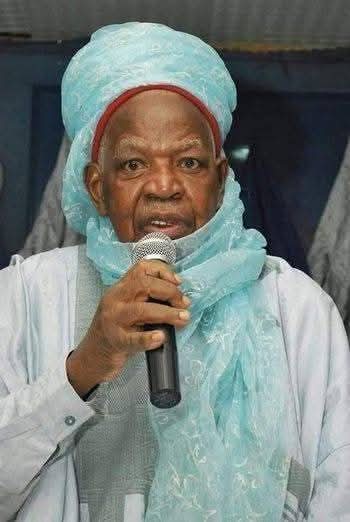
Justice Mamman Nasir (1929 – 13 April 2019)
Seven Years On: Remembering a Life of Discipline, Justice, and Uncommon Integrity
Seven years have passed since the departure of Mamman Nasir, yet his legacy continues to resonate—firm, enduring, and deeply instructive. His life was not merely lived; it was devoted to justice, leadership, and service to both community and nation.
For many who grew up in the era of General Yakubu Gowon, when Nigeria had only twelve states, Mamman Nasir was already a familiar and commanding presence. As Attorney General and Commissioner for Justice of North Central State, his image—dressed in the dignified black coat and white wig—frequently appeared in the New Nigerian. To young minds at the time, he symbolized the seriousness of law, the dignity of office, and the discipline of public service.
Born on 2nd July 1929 in Katsina, he came from a distinguished lineage rooted in leadership and tradition. He was the son of Kogo Abdullahi, grandson of Galadima Abu, and great-grandson of Galadima Sallau—an ancestry that reflected a long-standing heritage of responsibility within the Katsina Emirate. This noble background would later find full expression when he himself became Galadiman Katsina.
His early life was marked by discipline and intellectual pursuit. After his foundational education in Katsina and Kaduna College, he advanced in his studies and proceeded abroad for legal training. Notably, he began his working life in a technical capacity, an experience that shaped his structured thinking, administrative discipline, and methodical approach to leadership.
His rise in public service was steady and distinguished. In 1961, under the leadership of Ahmadu Bello, the Sardauna of Sokoto, he was appointed Minister of Justice of Northern Nigeria—a testament to the trust placed in his character and competence. The story of that appointment remains emblematic of the era: summoned early in the morning, asked to resign immediately from the civil service, and supported on the spot by contributions from cabinet members to pay his notice. It was a moment that reflected both the simplicity of leadership at the time and the confidence reposed in him.
From there, his career continued to flourish through various key roles, including Attorney General and Commissioner for Justice during the Gowon era, where his prominence became widely recognized across the country.
In 1975, he attained a rare honour—being appointed directly from the Bar to the Supreme Court of Nigeria, a feat scarcely repeated in Nigeria’s judicial history. Yet, in a remarkable act of humility and duty, he stepped down in 1978 to lead the Court of Appeal following the passing of Justice Dan Ibekwe. For him, service was never about rank, but about responsibility. He would later explain that courts, regardless of hierarchy, were all instruments of justice—echoing the tradition in other jurisdictions where service, not status, defines a judicial career.
His appointment also came at a critical national moment, when debates around Shari’a within the Constituent Assembly threatened division. As part of a historic compromise, a Shari’a Division was created within the Court of Appeal, and his leadership became central to stabilizing that delicate balance.
As President of the Court of Appeal for fourteen years, he built a culture of discipline, integrity, and intellectual excellence. His leadership was defined not by noise, but by quiet strength and consistency. Stories from those who worked closely with him reveal a man of extraordinary restraint—one who avoided indulgence, maintained strict boundaries, and insisted on accountability even in the smallest matters. It is said that even routine provisions in his office were left untouched, reflecting a personal discipline that became legendary among colleagues.
Those who served under him also recall his deep commitment to fairness. Even when individuals had personal connections to him, he made it clear that merit alone must prevail. In one instance, he emphasized that a successful candidate earned his position purely on performance, not relationship—a powerful testament to his incorruptible standards.
At critical moments in Nigeria’s history, his voice stood firm. During the crisis that followed the June 12 election crisis, he spoke with clarity and conviction, insisting that the judiciary must not be ridiculed or manipulated by political actors. He criticized the misuse of courts through conflicting orders and emphasized that proper legal channels must always be followed. In his view, the Court of Appeal could even sit at midnight if necessary to protect justice—a principle he illustrated with real cases where urgent intervention preserved order and legality.
Upon retirement in 1992, he embraced traditional leadership as Galadiman Katsina and District Head of Malumfashi. Even this transition was not without contest, reflecting the weight and significance of the position he assumed. Yet, he carried the role with dignity, becoming a custodian of tradition and a bridge between modern governance and cultural heritage. He also remained deeply committed to preserving the legacy of the Sardauna, playing key roles in northern intellectual and political discourse, including participation in national constitutional processes.
Family and Personal Legacy
Beyond his public achievements, Justice Mamman Nasir was a devoted family man whose legacy lives on through his children, relatives, and generations he influenced.
He is survived by his children, among them:
• Alhaji Nasir Nasir, a retired Federal Civil Servant who served in the Ministries of Defence, Transport, and Education, and attended the War College, Jos
• Hajia Bilkisu Nasir
• Justice Mairo Nasir, Judge of the High Court, Abuja
• Hon. Abdulkadir Mamman Nasir, Chief of Staff to the Governor of Katsina State
•Professor Sadiya Nasir, Medical Director at the National Obstetric Fistula Centre, Babbar Ruga, Katsina State
• QS Ibrahim Nasir
• Alhaji Shehu Nasir
• Alhaji Bello Nasir
• Hajia Saudatu Nasir
• Barrister Halliru Nasir
• Hajia Hajara Nasir
He was also part of a notable family network. Among his siblings were:
• Late Col. Mansur Malumfashi
• Late AIG Aminu Malumfashi
• Late Binta (Goggo Yar Magaji)
• Late Binta (Yaya Dollar)
His extended family and cousins include distinguished personalities such as:
• Late Baba Audu
• Late Hajia Fatima Alu Gizanda (Hajia Tumba Hada)
• Alhaji Usman Jariri
• Dr. Halima Yalwa Adamu
• Alhaji Ibrahim Dasuki
• Dr. Kabir Yammama
• Alhaji Bello Abdulkadir Yammama (Danjen Katsina)
• Nasir Yammama, Senior Special Assistant to the President
• Justice Abdullahi Yusuf
• DIG Atiku Yusuf (Rtd.)
• Engr. Bello Aliyu
• Late Alhaji Tambaya Kafur
• Late Hajia Baraka Commassie
• Alhaji Jamilu Umaru Chajinas
• Professor Turai Hafiz Abubakar
A Life That Became a Standard
Those who knew him closely speak of a man of unwavering fairness, discipline, and quiet strength. He belonged to a generation of leaders who believed that public office was a trust, not a privilege.
In his later years, though age gradually weakened his voice, his dignity remained intact. He continued to receive visitors, offer counsel, and stand as a living symbol of an era defined by honour and responsibility.
Seven years after his passing on 13 April 2019, Justice Mamman Nasir remains more than a historical figure—he remains a standard. A standard of discipline. A standard of justice. A standard of integrity.
His life calls on us to reflect deeply: to serve with sincerity, to lead with humility, and to uphold truth regardless of circumstance.
May Allah, in His infinite mercy, forgive his shortcomings, accept his immense contributions, and grant him Aljannatul Firdaus.