By Al-Amin Isa
The Edge of the Abyss
We're standing on the brink. Not metaphorically, literally. Right now, in the Persian Gulf, American aircraft carriers slice through waters that could ignite with a single miscalculation. Israeli war rooms are buzzing with theories about Trump's "real" intentions. And in Tehran, commanders are calculating how many missiles it would take to turn those carriers into burning hulks.
Some Israeli defense analysts want us to believe this is all part of the plan. They say Trump is playing 4D chess, negotiating endlessly while secretly assembling the largest military buildup since Desert Storm. Two moves ahead, they claim. Always two moves ahead.
Here's the problem: what if he's not?
The Fantasy from Tel Aviv
Let's examine what these analysts are actually selling. Their narrative goes like this:
First, strangle Iran. Cut off its oil exports, crash its currency, trigger bread riots, and watch the regime teeter. If that doesn't work, and spoiler alert, it won't, unleash hell. American bombers, Israeli fighter jets, maybe 50% of U.S. deployable hardware raining down on Iranian nuclear sites and military bases.
It sounds decisive. It sounds tough. It sounds exactly like the kind of thing that makes defense contractors wealthy and civilians dead.
Because here's what this fantasy ignores: Iran isn't some broken state waiting to be "liberated." It's not Iraq in 2003, with a hollowed-out military and a population that (initially) greeted invaders with cautious hope. It's not Afghanistan, where tribal fragmentation made conquest easy and occupation impossible.
Iran is something else entirely.
The Iran Reality Check
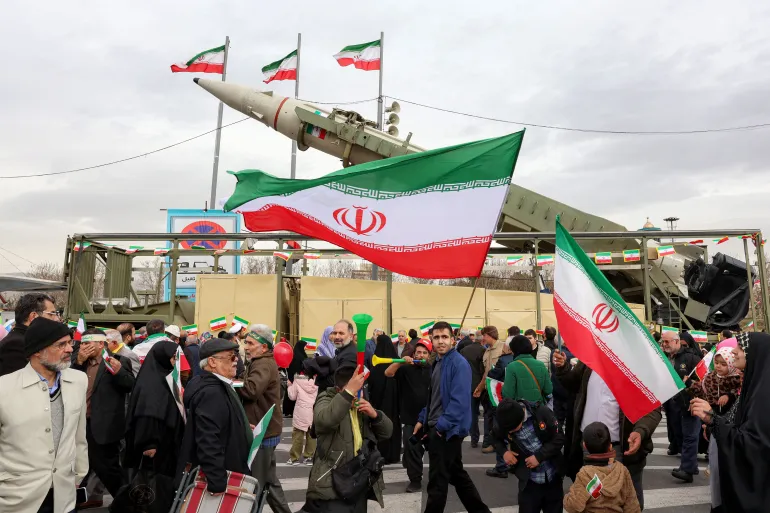
Stop me if you've heard this before: "They'll fold under pressure." They won't. And we have decades of evidence proving why. The Arsenal: Iran possesses one of the most formidable missile programs in the Middle East, not imported scrap, but indigenous production lines cranking out precision-guided ballistic missiles and kamikaze drones by the thousands. Their Revolutionary Guard has spent twenty years preparing for exactly this scenario: asymmetric warfare against a technologically superior enemy. They can hit U.S. bases in Qatar. They can swarm Navy ships in the Strait of Hormuz. They can turn Saudi oil facilities into infernos, as they demonstrated in 2019 when they temporarily knocked out half of Aramco's production with a drone strike.
The Alliance Web: While Washington was sanctioning and threatening, Tehran was building. Russian intelligence sharing. Chinese economic lifelines. Joint naval drills in the Gulf of Oman. This isn't symbolic solidarity, it's operational coordination. When Russian advisors help Iran harden nuclear facilities against bunker-busters, and when Chinese refiners buy sanctioned Iranian oil at discounted rates, that's survival infrastructure. That's a bet against American staying power.
The Terrain: Mountain ranges that swallow air strikes. Underground facilities buried in bedrock. Urban sprawl where every street becomes a potential ambush. Anyone who thinks American forces would face "surgical" conditions has learned nothing from twenty years of counterinsurgency. This isn't a target set. It's a meat grinder wearing geography's mask.
The Society: Yes, Iran has protests. Yes, the economy is hemorrhaging. But here's what outside observers consistently miss: Iranians can despise their government and still fight for their country. Nationalism isn't a tap that turns off when the economy sours. If anything, external threat tends to weld populations to their leaders, however flawed. The "regime change through pressure" theory has been failing in Cuba for sixty years, in North Korea for seventy. What makes anyone think Iran will be different?
The Global Powder Keg
But let's widen the lens, because this isn't really about Iran anymore.
The Hormuz Factor: Twenty percent of global petroleum consumption passes through a strait barely twenty-one miles wide at its narrowest point. Iran doesn't need to "win" a war to devastate the world economy, they just need to make shipping insurance prohibitively expensive for a few months. Remember the 1973 oil shock? That was a voluntary embargo. Imagine an involuntary one, enforced by anti-ship missiles and mine-laying drones. We're talking $200+ barrel oil. We're talking recession in Europe, inflation spirals in developing economies, potential famines in import-dependent nations.
The China Calculation: Beijing watches this unfold with something approaching delight. Every American carrier group steaming toward the Gulf is one less available for the South China Sea. Every Pentagon planner focused on Iran is one not planning for Taiwan contingencies. China has already positioned itself as the alternative to American-led order; a disastrous Iran war would cement that perception across the Global South. They don't need Iran to win. They need America to bleed.
The Russia Angle: For Moscow, this is almost too good to be true. Ukraine has already exposed limits in Western military stocks. A second major theater would stretch those stocks to breaking. Russian military intelligence has decades of experience coordinating with Iranian counterparts. And if American prestige takes another hit, think Saigon, think Kabul, but this time with global economic consequences, Putin's narrative of Western decline writes itself.
The Israeli Variable: Here's where it gets truly dangerous. Israeli analysts pushing the "Trump is buying time" theory may be projecting their own desires onto American policy. Israel has legitimate existential fears about Iranian nuclear advancement. But there's a difference between defensive concern and offensive advocacy. If Jerusalem interprets American military buildup as tacit permission for unilateral strikes, if they believe the U.S. will inevitably be drawn in after the fact, then the tail truly wags the dog. And once Israeli planes are over Iranian airspace, de-escalation becomes a fantasy.
Trump's Dangerous Theater
So what is actually happening in Washington?
The surface picture: Trump says he wants a deal. "The best deal," presumably. Meanwhile, the USS Carl Vinson and its strike group join the Harry S. Truman in the region. B-2 bombers deploy to Diego Garcia. Fighter squadrons rotate through Gulf bases. It's the most concentrated American military presence in the Middle East since 1991.
The deeper picture: This isn't strategy. It's performance art with live ammunition. Consider the personnel. Trump's inner circle on Iran includes figures drawn from real estate, television, and partisan media. These aren't Kissinger-era diplomats who spent careers studying Persian history and regional dynamics. They're deal-makers who believe personal chemistry and "maximum pressure" can bend any adversary to their will. It's the same instinct that produced the "perfect phone call" with Ukraine and the love letters with Kim Jong Un—applied now to a nation of eighty-five million people with three thousand years of statecraft behind it. The result is incoherence masked as flexibility. One day, threats. The next, offers to talk. Military buildup interpreted differently by every audience: as preparation for war by hawks, as deterrence by moderates, as negotiation leverage by optimists. But coherence matters in crises. When the other side can't predict your responses, when they can't distinguish genuine red lines from theatrical bluster, the risk of miscalculation skyrockets.
And miscalculation is how wars start. Remember 1914? A terrorist assassination in Sarajevo shouldn't have triggered global conflagration. But mobilization schedules created automaticity. Alliances created obligation. Prestige concerns prevented backing down. Something similar operates here: American carriers can't stay deployed indefinitely. Iranian hardliners can't accept humiliation indefinitely. At some point, the logic of sunk costs and credibility demands action. And then we're not choosing war anymore. War chooses us.
Who Actually Wins From This?
Ask the uncomfortable question. If American and Iranian forces exchange blows, if the Strait of Hormuz becomes a shooting gallery, if global markets seize up, if American troops die in rocket attacks on regional bases, who benefits?
Not the Iranian people, certainly. Not ordinary Americans. Not Europeans facing energy crises. Not Gulf Arabs caught in the crossfire.
But China? They watch their primary rival exhaust itself in another Middle Eastern morass while they build islands in the South China Sea and broker peace deals between Saudis and Iranians. Russia? They gain leverage in Ukraine as Western attention and weapons stocks split. Defense contractors? Their stock prices surge with every escalation.
There's a term for this in intelligence analysis: "useful idiots." Not idiots in the sense of stupidity, but in the older sense, private persons pursuing private interests without comprehending the larger game they're pieces within. When Israeli analysts assure themselves that Trump controls events, when American officials believe military deployments substitute for political strategy, when media consumers cheer "toughness" without counting costs, they're not analyzing. They're being used.
The Lie of Limited War
Perhaps the most pernicious assumption permeating this debate is the notion of "limited" conflict. Surgical strikes. Decapitation attacks. A few days of bombing, then back to negotiations.
This is delusion dressed as sophistication. Iran has spent forty years preparing for exactly this scenario. Their command structure is dispersed. Their retaliation options are pre-planned and delegated. If American bombs fall on Natanz or Fordow, Iranian missiles will fall on Al Udeid Air Base in Qatar, on the Fifth Fleet headquarters in Bahrain, on Saudi refineries, possibly on Israeli cities. They won't ask permission. They won't calibrate proportionally. They'll execute plans developed through decades of war-gaming.
And then? American presidents don't absorb attacks on troops and shrug. They escalate. More targets. More forces. More commitment to "finish the job." The limited war becomes unlimited. The regional conflict becomes global economic crisis. The "decisive moment" becomes a decade of insurgency, terrorism, and great-power competition played out in burning oil fields.
This isn't pessimism. This is pattern recognition. Iraq was supposed to be a cakewalk. Afghanistan was supposed to be over in months. Libya was supposed to be humanitarian protection, not state collapse. The gap between war's promise and war's reality isn't a bug in the system. It's the system.
The Alternative Nobody's Talking About
There is another path. It's not glamorous. It doesn't generate cable news excitement or campaign rally applause. But it exists. Real diplomacy with Iran would require accepting uncomfortable truths: that forty years of hostility haven't produced regime change, that sanctions have hurt civilians more than leaders, that regional security architecture must include rather than exclude Tehran. It would mean swallowing pride, accepting imperfect agreements, and investing in verification mechanisms rather than military postures.
The 2015 nuclear deal wasn't perfect. But it was working, until Washington tore it up. Since then, Iran's nuclear program has advanced precisely because the incentive structure collapsed. Every threat, every sanction, every carrier deployment has pushed Tehran further toward breakout capability while providing political cover for hardliners who always claimed America couldn't be trusted.
We could reverse this. Not through "maximum pressure" theater, but through sustained, professional engagement that recognizes Iran's legitimate security interests alongside everyone else's. It wouldn't be popular with domestic hardliners in either country. It wouldn't produce photo opportunities. But it might, just might, prevent the catastrophe currently being rehearsed in the Persian Gulf.
The Choice Before Us
History doesn't repeat, but it rhymes. In 2003, American policymakers convinced themselves that Iraq would welcome invasion, that oil revenues would fund reconstruction, that democracy would flower in Mesopotamia. They were wrong about everything. Thousands of Americans died. Hundreds of thousands of Iraqis died. Trillions of dollars evaporated. Regional stability shattered. ISIS emerged from the chaos.
We're hearing the same tunes now. Different lyrics, same melody. "This time will be different." "The enemy is weaker than they appear." "We can control escalation." "The world will thank us afterward."
They were wrong then. They're wrong now. The difference is stakes. Iraq was a disaster. Iran would be cataclysmic, global recession, great-power confrontation, potential nuclear proliferation if the Non-Proliferation Treaty collapses under the strain. The world that emerges from an Iran war isn't the world we know. It's poorer, more dangerous, more fragmented, more hostile to American leadership.
Israeli analysts telling themselves that Trump controls events are whistling past the graveyard. Trump himself, improvising between threat and offer without strategic framework, is driving toward the cliff while arguing about the radio station. And the rest of us, policymakers, journalists, citizens, have a choice: speak now, clearly and urgently, or inherit the ashes.
Time isn't buying us wisdom. It's buying us complacency. Every day we accept the narrative that military buildup equals strength, that negotiation theater equals diplomacy, that Iran will fold before American resolve, we're one day closer to the explosion.
And when it comes, nobody will be able to say they weren't warned. The facts are here. The patterns are clear. The catastrophe is visible, approaching, entirely preventable. What's missing is the will to prevent it.