


TAIBAT UMMI YAKUBU
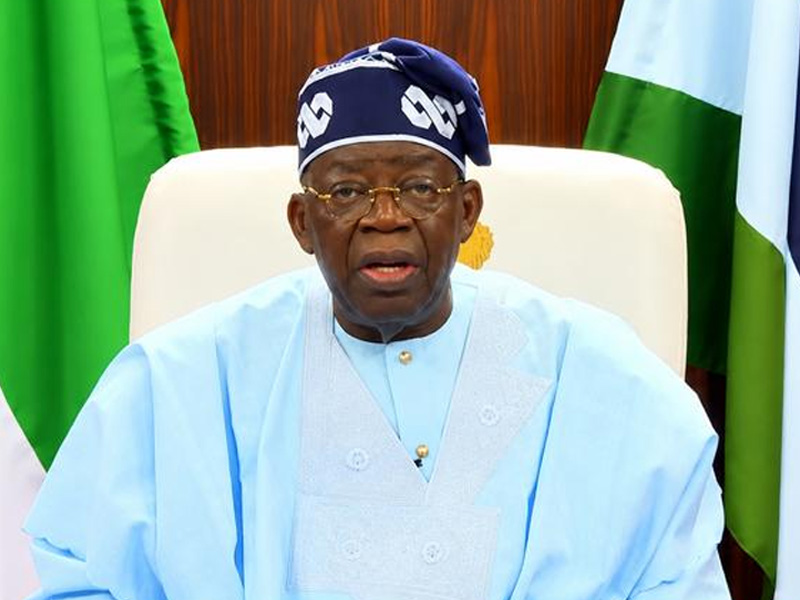
President Bola Tinubu has proposed a fresh adjustment to Nigeria’s 2026 budget, slashing the approved expenditure by ₦3.2 trillion while retaining the government’s borrowing target of ₦29.2 trillion.
The revised proposal, which reduces the budget from ₦68.3 trillion to ₦65.1 trillion, has been forwarded to the Senate for consideration, even as the current budget cycle approaches its scheduled expiration at the end of December.
Despite the spending reduction, the Federal Government intends to maintain its existing deficit and borrowing arrangements, leaving the country with a projected fiscal shortfall of ₦31.4 trillion, representing 5.6 per cent of Gross Domestic Product (GDP).
Under the new proposal, government revenue, including earnings from government-owned enterprises, is estimated at ₦33.7 trillion, while capital expenditure is pegged at ₦26.2 trillion.
Details of the adjustment emerged on Tuesday after Senate President Godswill Akpabio read President Tinubu’s executive communication during plenary.
Explaining the changes, the president said the review was necessary to accommodate financial obligations that were either inadequately captured in the original budget or required additional legal and administrative provisions.
Among the issues addressed are expenditures incurred by the Nigerian National Petroleum Company Limited (NNPCL) on behalf of the Federal Government, outstanding debt service provisions, capital warrants already issued and supplementary commitments involving ministries, departments and agencies.
The revised framework also makes provisions for reforms and interventions involving government institutions and social accounts.
However, the decision to maintain the borrowing target means the government will still pursue its earlier financing strategy despite reducing the overall size of the budget.
Tinubu said the government plans to raise ₦29.2 trillion through borrowing, comprising ₦18.4 trillion from domestic sources and approximately ₦10.8 trillion from foreign lenders.
The president also maintained the proposed $7.7 billion external borrowing programme under the 2026–2027 Supplementary External Borrowing Plan, which is expected to contribute towards financing the country's foreign borrowing requirements.
According to him, the proposed foreign loan is equivalent to about ₦10.3 trillion, using an exchange rate of $1 to ₦1,346.50, and would not expand the borrowing limit already contained in the budget.

Beyond the adjustments to government financing, the revised proposal includes additional capital and overhead allocations for selected ministries, departments and agencies to support priority national projects.
Tinubu said the additional provisions would help accelerate unfinished critical infrastructure projects, strengthen agricultural production, lower production costs, improve the use of farmland, expand access to markets and tackle challenges associated with water availability.
He added that much of the capital funding allocated to MDAs consisted of amounts that had already received expenditure warrants, while only a limited number of new provisions were introduced.
Following the presentation, Akpabio referred the proposal to the Senate Committee on Rules and Business for further legislative action ahead of its consideration by lawmakers.
The adjustment comes months after Tinubu signed the original ₦68.32 trillion 2026 budget into law in April.
That budget provided ₦32.29 trillion for capital projects, ₦15.81 trillion for debt servicing, ₦15.43 trillion for recurrent non-debt expenditure and ₦4.80 trillion for statutory transfers.
The original spending plan was built around projected revenue of ₦36.87 trillion, leaving a deficit of approximately ₦31.46 trillion, which the government intended to finance through domestic and foreign borrowing, asset sales and project-tied loans from multilateral and bilateral institutions.
The latest revision therefore changes the spending structure without significantly altering the government's reliance on borrowed funds.
With capital expenditure reduced from its original allocation, questions may arise over which infrastructure and development projects will bear the impact of the adjustment, particularly as the government continues to prioritise existing commitments and new interventions.
The unchanged deficit and borrowing targets also mean that debt financing will remain a major feature of the government's spending strategy, despite the lower budget size.
The Senate's consideration of the revised proposal is expected to determine the extent of the changes and how the government intends to manage the affected allocations before the end of the current budget year.
.jpg)
Comments (0)
No comments yet. Be the first to share your thoughts!