

BY TAIBAT UMMI YAKUBU
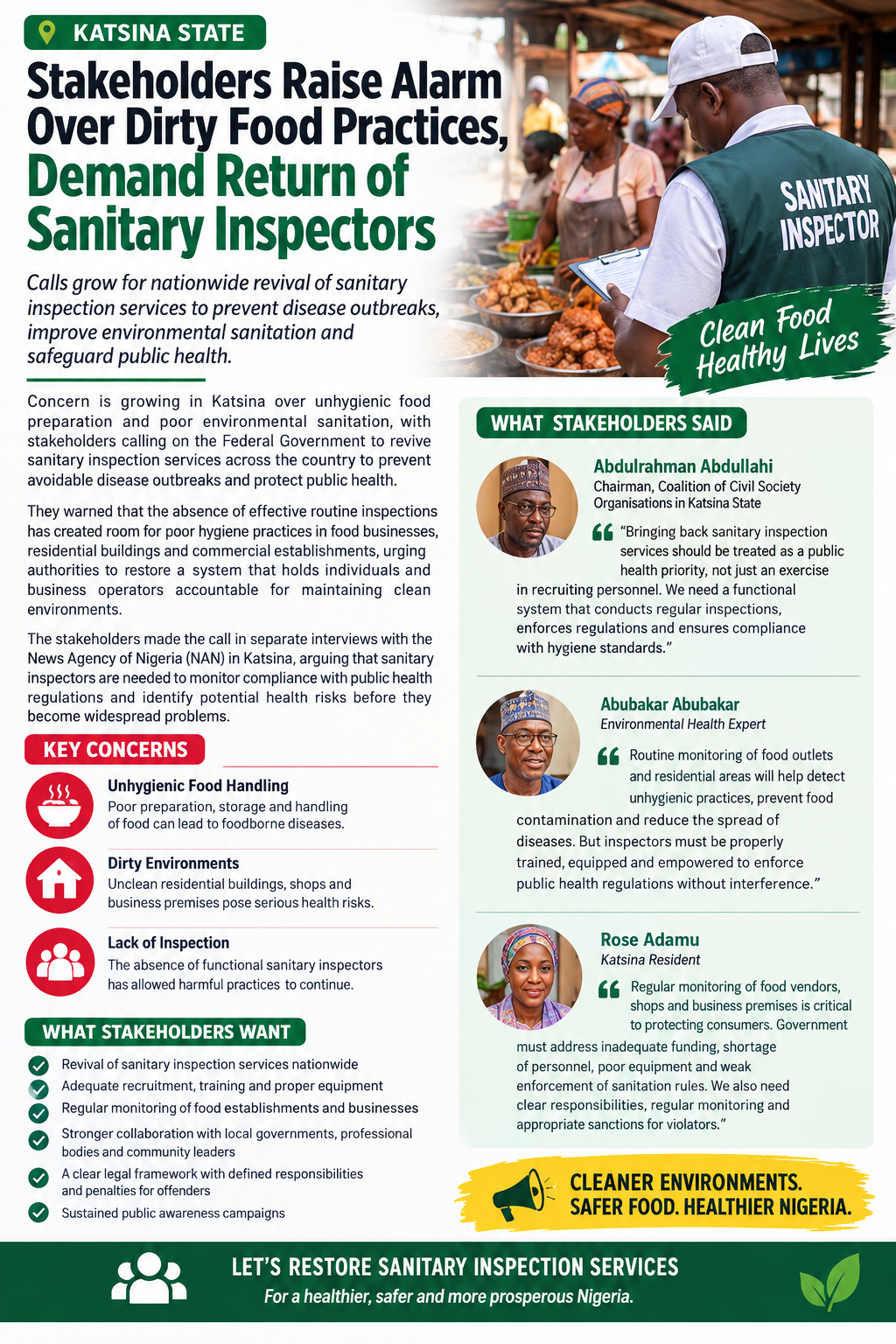
Concern is growing in Katsina over unhygienic food preparation and poor environmental sanitation, with stakeholders calling on the Federal Government to revive sanitary inspection services across the country to prevent avoidable disease outbreaks and protect public health.
They warned that the absence of effective routine inspections has created room for poor hygiene practices in food businesses, residential buildings and commercial establishments, urging authorities to restore a system that holds individuals and business operators accountable for maintaining clean environments.
The stakeholders made the call in separate interviews with the News Agency of Nigeria (NAN) in Katsina, arguing that sanitary inspectors are needed to monitor compliance with public health regulations and identify potential health risks before they become widespread problems.
Chairman of the Coalition of Civil Society Organisations in Katsina State, Abdulrahman Abdullahi, said bringing back sanitary inspection services should be treated as a public health priority rather than simply an exercise in recruiting personnel.
He argued that the government must establish a functional inspection structure capable of carrying out regular visits, identifying violations and ensuring that those responsible comply with environmental health standards.
Abdullahi expressed particular concern about the conditions in which some food vendors prepare, store and sell meals, warning that poor handling practices could expose unsuspecting consumers to foodborne illnesses.
He said properly equipped sanitary inspectors would help monitor food establishments, enforce hygiene requirements and ensure that businesses do not compromise public health through careless handling of food and other sanitation practices.
He also emphasised the importance of public education, noting that government enforcement alone would not achieve lasting improvements unless residents and business operators understood their responsibility to maintain clean surroundings.
Environmental health expert Abubakar Abubakar shared similar concerns, describing sanitary inspection as an important part of preventing contamination and controlling diseases linked to poor environmental conditions.

He explained that routine monitoring of food outlets and residential areas would enable authorities to detect unhygienic practices early, reduce exposure to contaminated food and limit the spread of sanitation-related illnesses.
However, Abubakar stressed that simply bringing back sanitary inspectors would not be enough without providing the personnel with the resources and authority required to carry out their assignments.
He called for adequate recruitment, professional training, inspection equipment and logistical support, adding that officers must be allowed to enforce public health regulations without unnecessary interference.
A Katsina resident, Rose Adamu, also called for stronger government action, insisting that regular monitoring of food vendors, shops and other business premises was essential to protecting consumers.
She identified poor funding, inadequate staffing, a shortage of working equipment and weak enforcement of existing sanitation regulations as some of the major obstacles undermining environmental health management.
Adamu urged government authorities to work more closely with local government councils, professional environmental health organisations and community leaders to develop an effective system for restoring sanitary inspection services.
She further advocated a nationwide framework that would clearly define the responsibilities of inspectors, provide for regular monitoring and introduce appropriate penalties for businesses that disregard established hygiene standards.
The stakeholders maintained that reviving sanitary inspection services, alongside sustained public awareness campaigns and consistent enforcement, would help improve environmental conditions and reduce Nigerians' exposure to preventable diseases.

Comments (0)
No comments yet. Be the first to share your thoughts!