


BY TAIBAT UMMI YAKUBU
The Kautal Pulaaku Fulbe Association of Nigeria has called on President Bola Tinubu to order an independent investigation into the alleged killing of pastoralists across Nigeria, claiming that more than 20,000 people have died in farmer-herder conflicts over the past decade.
The association also wants the President to convene a national reconciliation conference involving pastoralists, farmers, traditional rulers, religious leaders, security agencies and state governments to address the violence and develop practical solutions to the recurring clashes.
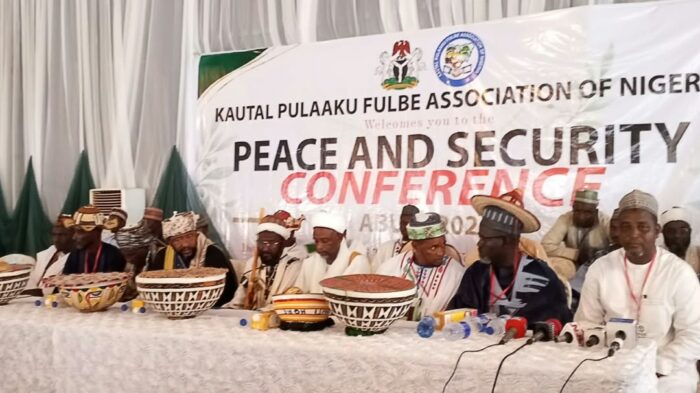
The demands were made by the association’s president, Dr Muhammad Hussein Buzaye, at a peace and security conference organised in Abuja on Sunday under the Confederation of Pastoralist NGOs (CONPA).
The group alleged that hundreds of pastoralists had been killed in attacks in Plateau, Niger, Sokoto, Kebbi, Zamfara and other states in recent months, with women, children and elderly people reportedly among the victims.
It further claimed that thousands of cattle had been rustled or killed, while settlements belonging to pastoralist communities had been destroyed, leaving families displaced and their livelihoods in ruins.
The association urged the Federal Government to investigate the reported attacks, prosecute those responsible and provide relief materials and other assistance to displaced pastoralist families.
It also appealed to the National Emergency Management Agency (NEMA) and the National Commission for Refugees, Migrants and Internally Displaced Persons (NCFRMI) to extend support to affected communities, insisting that pastoralists were entitled to the same protection and assistance as other Nigerians.
A major concern raised by the group was what it described as the growing tendency to associate Fulani identity with banditry, kidnapping and terrorism.
“For too long, the word ‘Fulani pastoralist’ has been profiled and criminalised as synonymous with banditry, kidnapping and terrorism,” the association said.
It argued that such stereotyping had encouraged hate speech, mob violence and alleged extrajudicial killings against people who had no connection with criminal activities.
The group, however, condemned banditry, kidnapping and other violent crimes, insisting that perpetrators should be identified and prosecuted individually rather than having an entire ethnic community blamed for their actions.
“Criminals are criminals and have no tribe. We call on security agencies and the media to stop ethnic profiling but arrest and prosecute criminals as individuals, not as an ethnic group. An entire community cannot be punished for the sins of a few,” the statement said.
The association called on security agencies to strengthen protection for vulnerable pastoralist communities and ensure that reports of attacks were investigated without discrimination.
It maintained that resolving insecurity required impartial law enforcement, accountability for human rights violations and cooperation among communities affected by farmer-herder disputes.
Group seeks 30% of agricultural budget for livestock ministry
The association also urged the Federal Government to increase investment in livestock development, commending Tinubu for establishing a dedicated ministry for the sector.
However, it expressed concern over what it described as inadequate funding and the lack of a sufficiently developed operational framework to ensure the ministry's programmes reached pastoralist communities.
It called on the President and the National Assembly to allocate at least 30 per cent of the agricultural budget to the Federal Ministry of Livestock Development.

The group also demanded the gazetting and protection of Nigeria’s 417 grazing reserves, as well as the establishment of pilot ranches and fodder production projects across the six geopolitical zones.
Describing livestock as an economic sector worth an estimated ₦30 trillion, the association argued that investment in animal production, processing, veterinary services and modern livestock management could improve livelihoods and strengthen food security.
It said practical programmes targeting pastoralist communities could also help reduce disputes over access to land, water and grazing routes.
Why the group wants a national dialogue
The association maintained that military operations alone would not provide a lasting solution to farmer-herder conflicts, which it claimed had resulted in more than 20,000 deaths over 10 years.
It called for a presidential initiative to establish a process for truth, justice, forgiveness, compensation and reconciliation, with the ultimate goal of preventing further violence.
According to the group, the proposed dialogue should bring together Miyetti Allah groups, farmers’ associations, traditional institutions, the Christian Association of Nigeria, Jama’atu Nasril Islam, security agencies, state governments and other relevant stakeholders.
It said the conference should address grievances on all sides, establish accountability for violence and develop practical mechanisms for resolving disputes before they escalate.
The association also acknowledged that pastoralist communities had responsibilities in preventing and resolving conflicts.
It urged pastoralist leaders, households and young people to respect the rights and property of farmers and other citizens, prevent cattle from straying into cultivated farmland, cooperate with lawful security investigations and report cattle rustling, kidnapping and other crimes.
It further called on pastoralists to reject retaliatory attacks and misinformation, encourage children to attend school, promote peaceful engagement with neighbouring communities and embrace responsible livestock management and environmental protection.
Nationwide awareness campaign planned
As part of its efforts to promote peace, the association disclosed plans to launch sensitisation campaigns across Nigeria’s six geopolitical zones.
It said the initiative would discourage criminality, encourage peaceful coexistence and promote constructive engagement between pastoralists, farmers and host communities.
The group also urged traditional rulers, government officials, security agencies, farmers’ associations and development partners to work together towards addressing insecurity and the marginalisation it said pastoralist communities faced.
“We are Nigerians. We are pastoralists. We are not bandits. We love this country. Our cattle feed this nation. Our children want to go to school,” the statement said.
The association insisted that lasting peace would require equal protection under the law, accountability for violence and development programmes that include pastoralists alongside farmers and other Nigerians.
Among those who attended the conference were the association’s President-General, Ardo Aliyu Liman Bobboi; its national secretary, Ardo Abdullahi; Sheikh Dahiru Usman Bauchi; Sheikh Sani Yahaya Jingir; Ustaz Abdulkarim Bayero Jos; Ibrahim Adamu, Mai Gunduma; and Alhaji Sani Juli.
Other participants included Ardo Tambari, Ardo Bello Kwairi, Ardo Lawal, Ardo Samaila Rabe, Ardo Salisu Garba Bashankai, Ardo Muhammad Lawal, Ardo Gotsho, the president of Gan Allah, and Alhaji Usman Geljarma, president of the cattle breeders’ association.
The organisers said the conference was aimed at promoting security, justice and peaceful coexistence while ensuring that criminal acts were addressed through lawful processes rather than ethnic generalisations.



Comments (0)
No comments yet. Be the first to share your thoughts!