


By Taibat Ummi Yakubu
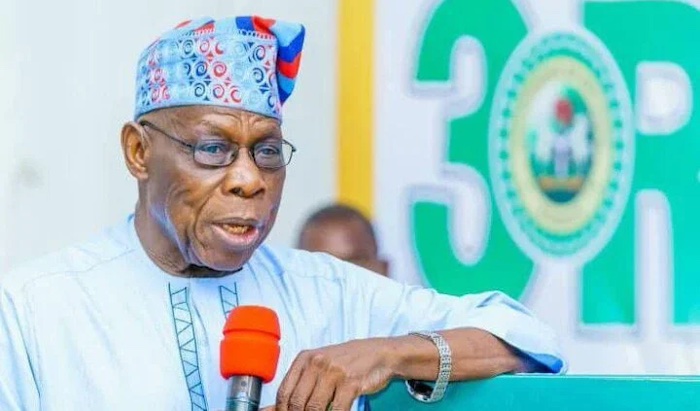
Former President Olusegun Obasanjo has appealed to survivors and families of victims of the 1967 Asaba Massacre to embrace forgiveness and reconciliation, as the community marked the 59th anniversary of one of the darkest episodes of the Nigerian Civil War.
Obasanjo made the appeal on Wednesday while participating virtually as chairman of the occasion at the anniversary memorial in Asaba, Delta State. He described the killings as one of the most painful chapters of the civil war, saying the tragedy had left a deep scar on the people and the nation.
Reflecting on the events, the former president said the civil war itself was an unfortunate chapter that Nigeria should never experience again. He disclosed that he was moved to tears after receiving documents detailing the massacre from Chief Chuks Nduka-Eze.
Obasanjo repeatedly urged the people to choose forgiveness as a pathway towards healing, while stressing that reconciliation should be pursued in a manner that prevents similar tragedies from happening again.
But while the call for forgiveness was welcomed as part of the healing process, the Asagba of Asaba, Prof. Epiphany Azinge, made it clear that forgiveness would not mean erasing the memory of those who died.
Azinge said the people of Asaba could forgive but would continue to remember the victims. He argued that genuine closure would require a sitting Nigerian president to publicly acknowledge the tragedy and apologise to the people.
The traditional ruler noted that former military Head of State, retired Gen. Yakubu Gowon, had previously apologised after leaving office, but insisted that a similar gesture from a serving president would carry significant meaning for the community.
Azinge also questioned Obasanjo’s reference to ensuring that such tragedies never happen again, recalling the killing of civilians in Odi during Obasanjo’s presidency.
“Never again” had to mean something, the traditional ruler argued, noting that the country had witnessed another controversial military operation decades after the Asaba killings.

Despite his demand for greater official recognition, Azinge made a significant gesture towards reconciliation by publicly declaring that the Asaba community had forgiven the family of Col. Ibrahim Taiwo, who was associated with the events surrounding the massacre.
He said the community had accepted an apology from retired Maj.-Gen. Ahmed Taiwo, the son of Col. Taiwo, who had expressed regret on behalf of his late father and the family over any actions or omissions that contributed to the tragedy.
Azinge said remembering the victims remained important, stressing that the passage of time should not erase the lessons of the massacre. He added that Asaba had moved forward but still needed remembrance, justice and reconciliation as preparations begin for the 60th anniversary next year.
Delta State Governor Sheriff Oborevwori, represented at the event by the Secretary to the State Government, Dr Kingsley Emu, said researchers and community historians had put the number of people killed during the massacre at more than 1,000.
The governor condemned the killing of unarmed civilians, describing such acts as indefensible, and pledged the state government’s continued support for efforts to secure national recognition of the massacre and establish a befitting memorial.
Chief Chuks Nduka-Eze, Isama Ajie of Asaba and convener of the Asaba Massacre Memorial, said preparations had already begun for the 60th anniversary. He disclosed that efforts were being intensified towards establishing a permanent memorial centre where the history of the tragedy could be preserved for future generations.
He said the central message of the memorial campaign remained that Nigerian lives matter, adding that the 60th anniversary would offer another opportunity to tell the story of Asaba to Nigerians and the international community.
Mr Enotie Ogbebor, whose father, then Col. Paul Ogbebor, was credited with intervening to save lives during the tragedy, also called for the massacre to be remembered beyond Nigeria.
According to him, the proposed memorial would serve as a permanent reminder that innocent people should never be deliberately denied their right to life because of war, ethnicity, politics or any other circumstance.
The Obi of Onitsha, Igwe Nnaemeka Achebe, also joined other speakers in emphasising the importance of restitution, reconciliation and forgiveness as the Asaba community continues to confront the painful memory of the massacre.
As the 60th anniversary approaches, the debate over how Nigeria should remember Asaba — through forgiveness, official acknowledgement, apology, restitution and a permanent memorial — is expected to remain central to the community’s efforts to preserve the history of the tragedy.

Comments (0)
No comments yet. Be the first to share your thoughts!