


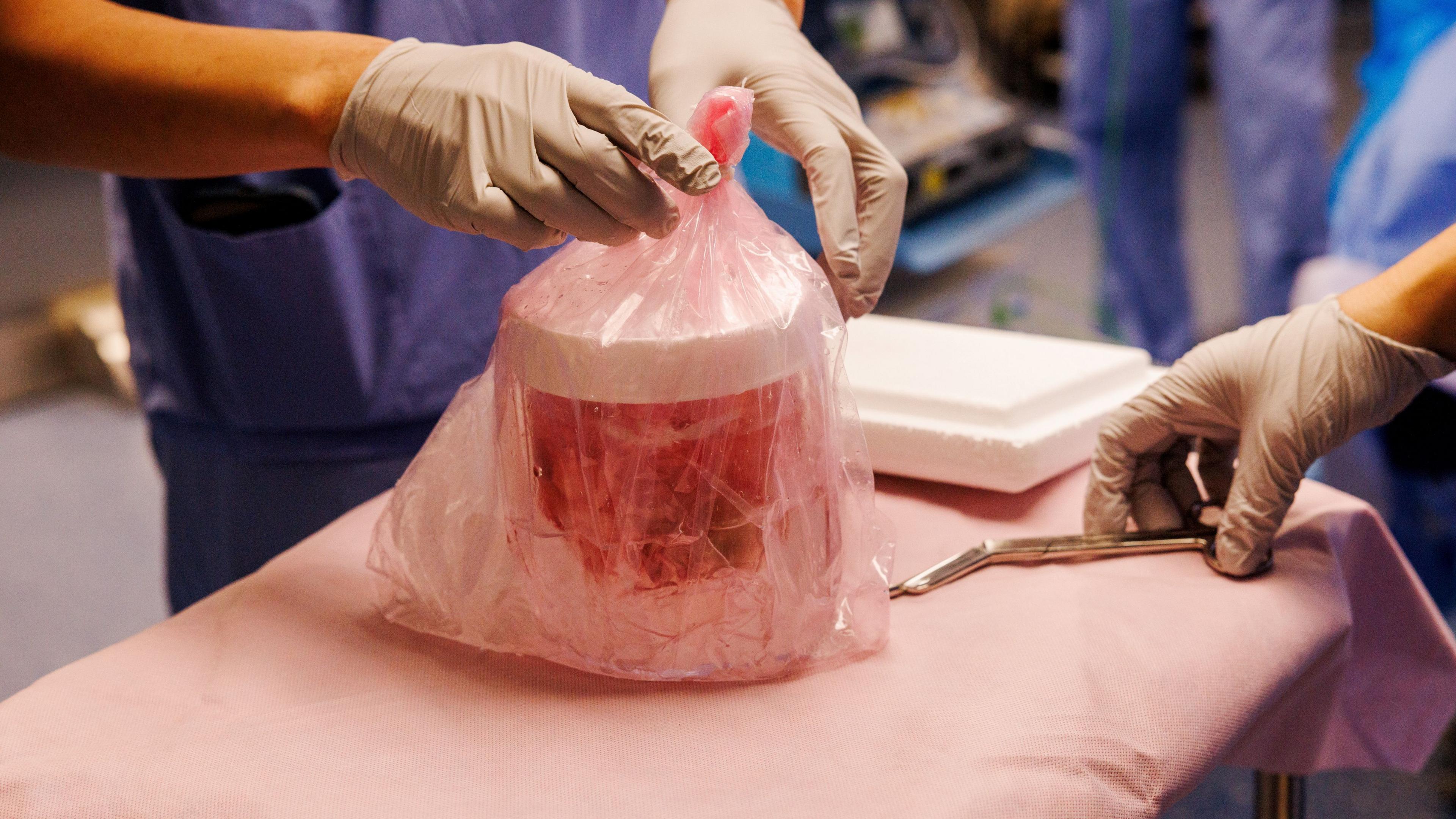
A groundbreaking medical experiment has brought fresh hope to thousands of patients waiting for life-saving organ transplants after a genetically modified pig kidney successfully functioned inside a human patient for a record 271 days.
Doctors at Massachusetts General Hospital in the United States announced that the transplant marks the longest period a pig organ has remained functional in a human, a development that could significantly advance efforts to address the global shortage of donor organs.
The recipient, 66-year-old Tim Andrews, was suffering from end-stage kidney disease caused by complications related to type 2 diabetes. Facing a lengthy wait for a human donor kidney and the prospect of years of dialysis treatment, Andrews opted for the experimental procedure in January 2025.
According to the medical team, the genetically modified pig kidney began working immediately after it was transplanted on January 25, 2025. The organ effectively filtered Andrews’ blood and enabled him to avoid months of dialysis, improving his quality of life while he awaited a human donor organ.
Reflecting on his experience, Andrews said the uncertainty of waiting for a transplant had been emotionally draining. He recalled being informed that it could take as long as seven years to receive a donor kidney through conventional channels.
For him, the experimental transplant offered something he had almost lost—hope.
“Hope is the biggest thing, the chance to be free from the dialysis machine and live your life,” Andrews said.
The transplanted pig kidney continued to function successfully for 271 days before doctors eventually removed it in October 2025 after signs of deterioration emerged. Following its removal, Andrews returned to dialysis for nearly three months before receiving a human donor kidney in January 2026. His doctors confirmed that the human kidney is functioning well.
Medical experts say the case represents a major milestone in the growing field of xenotransplantation—the transplantation of organs from animals into humans.
Dr. Leonardo Riella, a specialist at Mass General Brigham’s Centre for Transplantation Sciences, described the shortage of donor organs as one of the most pressing challenges facing modern healthcare.
He said researchers believe xenotransplantation could eventually provide a critical alternative for patients who do not have access to living donors and may otherwise spend years undergoing dialysis while waiting for a transplant.

Doctors disclosed that Andrews experienced early signs of immune rejection after the transplant, but the condition was successfully controlled through adjustments to his medication.
However, after approximately six months, blood vessels within the transplanted kidney began showing signs of damage. The organ later became inflamed and eventually failed. Despite extensive testing, researchers have not yet identified the exact cause of the failure, noting that there was no evidence that antibodies from Andrews’ immune system were attacking the pig organ.
The findings, recently published in the medical journal The Lancet, highlight both the enormous potential and the remaining scientific challenges associated with xenotransplantation.
Researchers explained that pigs are considered suitable organ donors because many of their organs are similar in size and function to those of humans. In addition, pigs can be bred in controlled environments, providing a potentially sustainable source of transplant organs.
To make the transplant possible, scientists used specially engineered Yucatan miniature pigs whose organs underwent 69 genetic modifications. The changes were designed to reduce the likelihood of rejection by removing pig-specific traits that trigger immune responses, adding human genes that help the organ function within the human body and eliminating dormant pig viruses that could pose infection risks.
The breakthrough comes amid a worsening shortage of donor organs worldwide.
In the United States alone, nearly 100,000 people are currently waiting for kidney transplants, while only about 25,000 kidney transplants are performed each year. Similar challenges exist in other countries, including the United Kingdom, where more than 7,000 patients remain on transplant waiting lists.
Researchers believe Andrews’ case demonstrates that genetically modified pig kidneys could one day serve as a temporary bridge for patients awaiting human organs, potentially reducing or even eliminating the need for long-term dialysis.
While experts caution that more research is needed before pig-to-human transplants become a routine medical treatment, the success of the 271-day transplant is being viewed as a significant step forward in the quest to solve one of medicine’s most persistent challenges.
For thousands of patients waiting for a second chance at life, the achievement offers a glimpse into a future where the shortage of donor organs may no longer determine who receives lifesaving treatment and who does not.



Comments (0)
No comments yet. Be the first to share your thoughts!