


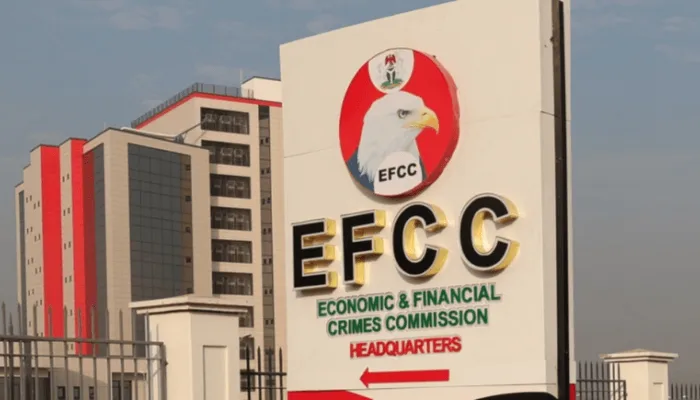
The Economic and Financial Crimes Commission (EFCC) has unveiled a new strategy aimed at preventing financial crimes before they occur, with a stronger focus on tracking suspicious transactions, freezing questionable funds and monitoring digital assets.
Chairman of the Commission, Ola Olukoyede, disclosed this on Monday in Abuja during a media interactive session held to mark his third year in office.
According to him, the anti-graft agency is moving away from the traditional approach of waiting for corruption and fraud to be completed before taking action, opting instead for early detection and intervention.
Olukoyede said the Commission established the Fraud Risk Assessment and Control Department (FRAC) to identify suspicious financial movements and act swiftly before public funds are diverted or laundered.
“Why should we wait for money to be stolen before taking action? Once we notice suspicious movement of funds, we step in and freeze the account. Within 72 hours, we begin to determine the source and intended destination of the money,” he said.
The EFCC boss cited instances where funds were allegedly moved from local government accounts through private companies and eventually converted into cryptocurrency, making recovery more difficult.
He warned that the growing use of digital assets by corrupt officials has created new challenges for investigators, noting that stolen funds are often transferred into cryptocurrency wallets within hours of being diverted.
According to him, some public officials now rely on younger individuals with technological expertise to conceal illicit proceeds through virtual assets.
“At the click of a button, huge sums can be moved beyond traditional banking channels. In many of the cases we investigate today, there are no visible physical assets that can easily be traced,” he said.
To strengthen oversight in the digital asset space, Olukoyede revealed that about 40 virtual asset platforms have been licensed in Nigeria, enabling authorities to monitor and trace transactions linked to registered cryptocurrency wallets.
He further disclosed that the Federal Government had approved the creation of a national cryptocurrency wallet to hold digital assets confiscated during investigations and prosecutions.
“One of the major challenges we faced in the past was where to keep seized virtual assets. Today, we have a national wallet where such assets are securely stored,” he said.

On legal reforms, the EFCC chairman said the Commission was increasingly relying on civil asset forfeiture provisions under Section 17 of the Advance Fee Fraud Act to recover suspected proceeds of crime without waiting for prolonged criminal trials.
He explained that the process allows the Commission to institute legal action against the asset itself, while anyone claiming ownership is required to prove the legitimacy of the funds used to acquire it.
According to him, the strategy has accelerated asset recovery efforts and reduced the risk of assets losing value or disappearing during lengthy court proceedings.
Olukoyede also clarified that the EFCC does not directly manage forfeited assets. Instead, professionals are appointed in accordance with the Proceeds of Crime Act 2022 to oversee different categories of recovered property.
“For real estate, we engage estate managers. For virtual assets, we use professionals in the financial market. If it is a broadcasting organisation, we bring in experts from that industry,” he said.
He added that the Commission had begun disposing of assets likely to depreciate while legal proceedings are ongoing, with proceeds paid into escrow accounts pending final court decisions.
The EFCC chairman disclosed that some high-profile hotels recently forfeited to the Federal Government in Lagos had been placed under new management, while revenues generated from the properties are being remitted through designated channels.
He also announced the establishment of a dedicated Process and Proceeds Management Directorate to strengthen transparency and accountability in the handling of recovered assets.
While highlighting the Commission's achievements, Olukoyede stressed that sustainable success in the fight against corruption requires more than arrests and prosecutions.
He called for stronger policies, institutional reforms and systems capable of preventing leakages before they occur.
“The most effective weapon against corruption is not law enforcement alone. Strong policies and effective institutions that block opportunities for abuse are even more important,” he said.
Olukoyede also urged the media and civil society organisations to intensify their oversight roles and support ongoing efforts to promote transparency and accountability in public affairs.



Comments (0)
No comments yet. Be the first to share your thoughts!