


By Dr. Aliyu Idris Maikaji
Collectively in a nut-shell, here is the summary of brief biographies and music structure of some indigenous poets originating from the present-day Katsina State, Nigeria.
1. Talking-Drum (Kalangu) Music Performers
There are much number of uncountable hausa musicians that use kalangu drum as instruments. Some among them are:
Dr. Mamman Shata Katsina:
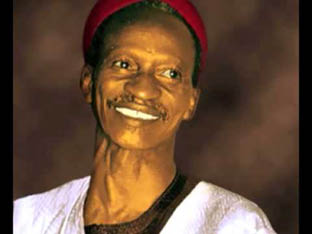
Dr. Mamman Shata Katsina was a famous and in fact the greatest artist in the entire Africa and sub-African suburb, who stood to distinguish himself with over ten thousand poems to his credit. He was regarded as the most sensational Hausa music song-bird. Born to Malam Ibrahim Yaro and Madam Binta as gis biological parents in Musawa town in Katsina State today in, perhaps 1922 as was mentioned in his book titled: Shata: Mahadi Mai Dogon Zamani by Professor Aliyu Ibrahim Kankara and the other twin book: Shata Ikon Allah, authored by Ibrahim Sheme, Aliyu I. Kankara, Tijjani Albasu and Ali Malami. .It was believed and gathered that Shata’s great grandparents migrated from Sanyinna, a village under Tambuwal in the preset-day Sokoto State, northwestern Nigeria.
Shata made a debut in kalangu music in the year 1936 during the reign of Emir Muhammadu Dikko (1906-1944) He had widely travelled across some African States, notably Ghana and Niger Republic. He was in Ghana in 1954, 1957, 1962 and otherwise. In 1989 Shata and his band travelled to USA and UK were he performed at the UCLA, in front of mammoth number of students, and was even honored by an award which was given to him by a renowned Professor of African studies and linguist, Professor Russell Schuh.
Additionally, Dr. Shata got, during successive stages of his music carrier many awards, and, the most effective being the honorary doctorate degree bestowed on him by the prestigious Ahmadu Bello University Zaria on Saturday, 23rd January, 1988.
Dankabo Mai Kalangu:
Malam Dankabo mai kalangu was a famous kalangu music player who hailed from Zangon Daura, Katsina State. He was born in the year 1951. He inherited the oral music play from his father. He made his debut in the singing scene in 1985. He composed his songs in both hausa and fulfulde. He used both kalangu and lute (gurmi) in the discharge of his music as his unique style.
Indo Adamu:
Hajiya Indo Adamu was born in Dutsin-Ma in Katsina State in the year 1960. At twelve, she was engaged into buying and selling by her father. It was due to that Indo began debuting local singings to praise the commodities she was selling out, together with her peer groups. That was the beginning of her carrier as a kalangu music poet. It was in 1982 that she formed her kalangu band and was later employed by the Katsina State History and culture Bureau as an artist.
Abdu Nagwagwa:
Abdu Nagwagwa was born in Dandume, Katsina State. He has spent over ten years while performing. He got the nick name: Nagwagwa from his senior brother who was called Gwagwa. Nagwagwa learnt Kalangu music from his master, Mu’azu mai kalangu Dandume. Abdu Nagwagwa died in the year 1996. He was using talkig-drum throughout the period of his carrier.
Haruna Isah Ilallah:
Haruna Isah was born in Dandume in the year 1978 and started kalangu music in 1996. He uses talking-drum and other supporting materials such as kuntuku in his music.
Hadi Jikan Dabo:
Hadi jikan Dabo was born in Daura, Katsina State. He read Quran and then later entered into primary school at his earlier stages of life. He inherited talking-drum music play from his father. He started the play made his debut in 1982. He was used to performing for traditional rulers, reknowned farmers and many more.

2. Membranophone (Taushi Drum) Music Performers
There were many membranophone (taushi) music poets who origined and lived in Katsina, some of which are discussed below:
Mamman Sarkin Taushi
He was born in Goran Namaye, under the present-day Maradun in the district of Kanta that was under a ruler, Sarkin Kayan Maradun in the present-day Zamfara State in 1911. He grew as a talented youth who knew how to manipulate and shape local poems then. Mamman never inherited hausa music from his parents. He was popularly nicknamed as Dan Sodangi, a cultural tag in Hausa society meaning, at birth all the four (4) grandparents, both two from paternal and maternal sides were alive.
He came to Katsina city in the year 1938 during the reign of Emir Muhammadu Dikko (1906-1944) and from thence his carrier bgan shaping and taking position. His first master while in Katsina was the Emir of Katsina Dikko himself who even made him the master of membranophone music (Sarkin taushi) Sarkin Taushi had other masters too in Katsina whom he sang for, like the emir Usman Nagogo of Katsina, emir Muhammadu Kabir of Katsina and elsewhere had other masters like the Emirs of Zazzau Ibrahim, Jafaru and Muhammadu Aminu. He also made the Sultan Abubakar III as his master too. Other master of his’ were Emirs of Kano Abdullahi Bayero and Sanusi I, so also Emir of Hadejia Alhaji Maje Haruna. Sarkin Taushi died in the year 1990.
Tunau Sarkin Taushi
He was born in Goran Namaye, under the present-day Maradun in the district of Kanta that was under a ruler, Sarkin Kayan Maradun in the present-day Zamfara State in 1929. He came to Katsina to meet his senior brother, Mamman Dan Sodangi also Sarkin Taushin Katsina in the year 1952. He lived there and continued supporting his senior brother in the dissemination of their taushi music together. However, after the demise of his brother in 1990 the Emir of Katsina, Muahhamdu Kabir Usman tuburned him as the next Sarkin taushi music in Katsina. He died in 2003.
Yahaya Sarkin Taushi
Alhai Yahaya was a son to Sarkin Taushi Tunau’s junior brother. His name at birth was Yahaya but was later called Yahaya Abubakar Mainasara during his turbuning as the next Sarkin Taushi after Tunau. Sarkin taushi Yahaya was born in Katsina city in the year 1963. He read the great Quran book at Rafindadi area under the teachings of Malam Bagobiri. Ahae then attended Vocational Training College where he specialized in plumbing and others.
After Tunau died in 2003 Yahaya picked singing as his carrier on the advice of the district head of Kurfi and Maradin Katsina, Alhaji Ahmadu Kurfi. Yahaya made his first debut in 2007, and in December 2009 the Emir of Katsina made him to wear the crown as the Sarkin taushi next. His band consists of : Abubakar, Muhammadu, Rabi’u, Kabir, Muhammadu Aminu, Ibrahim and Basiru.
3. Amada Music (a distinctly famine genre music) Performers
Hajiya Sa’adatu Barmani Coge
Hajiya Sa’adatu Barmani Coge was born in a village near Funtuwa town by the name ‘Yartukunya in the year 1945.in Funtua district in Katsina State today. She was regarded as one of the talented calabash music drummers or commonly termed as ‘amada’ She had many poems as composed by her and her band. Her band consist of : A’I ta Audu, ‘Yar Ja and Ladi (Ladi Kwana Kwarya)
Barmani never had a western education but was vast in the area of amada. She died in 2013. .
Hajiya Laure Iliyasu Yammawa:
Her full name was Laure Iliyasu Yammawa. She was born at Yammawa quarters in Katsina city. She was a merchant. She worked with Environmental Sanitation Agency in Katsina before switching to start making oral poetries. She started singing in around 2008 when she was introduced to amada poetry by the late Maizero. Later she joined another person, Diyar Wada which they continued together. And, by the year 2012 she made several albums on marital issues, naming ceremonies and local politics.
Translated from Hausa by Aliyu Ibrahim Kankara

Comments (0)
No comments yet. Be the first to share your thoughts!