


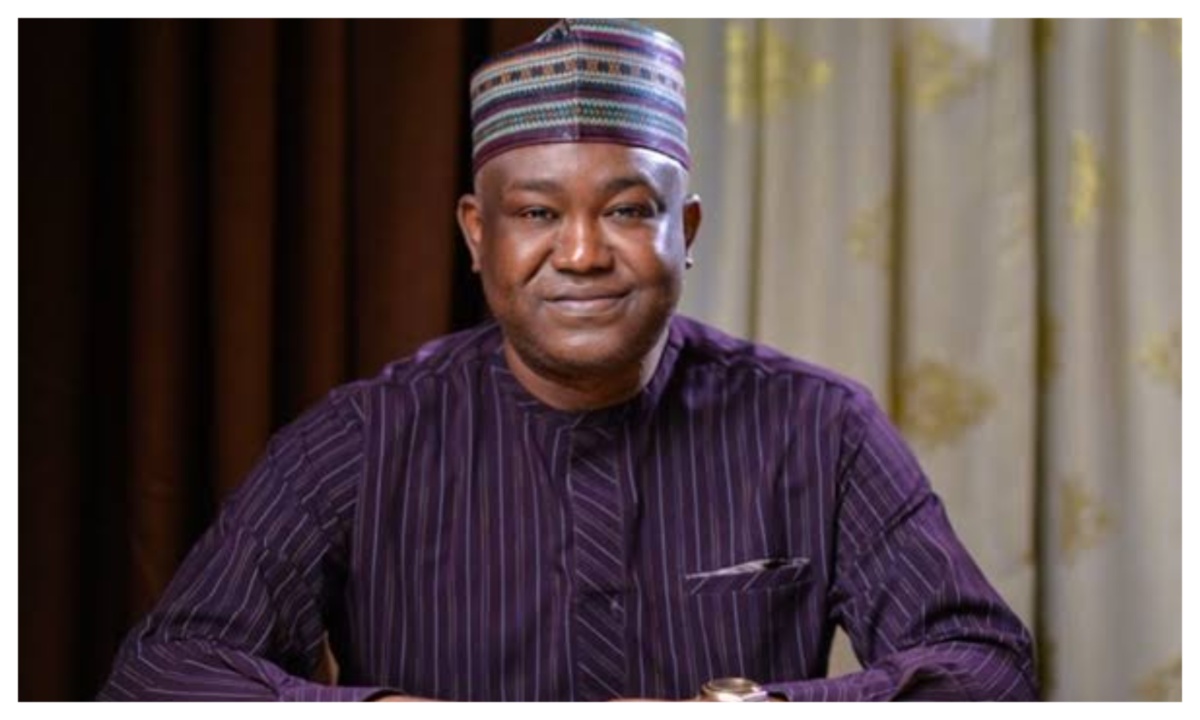
Presidential candidate of the Accord Party, Gbenga Olawepo-Hashim, has declared that petrol would not sell above ₦610 per litre under his administration, arguing that Nigeria can achieve significantly lower fuel prices without sacrificing government revenue or weakening the economy.
Hashim, who has consistently opposed the removal of fuel subsidy, outlined what he described as an alternative approach to petroleum pricing, insisting that Nigerians have been made to bear the burden of inefficiencies within the oil and gas sector.
According to him, a sustainable petrol price of about ₦605 per litre would serve as a starting point under an Accord government, with the possibility of prices dropping further to between ₦200 and ₦300 per litre if broader economic reforms are successfully implemented.
“₦605 per litre is our starting sustainable price for petrol. Nobody will buy petrol above ₦610 under our government. It could be as low as ₦200,” he said.
At the heart of Hashim’s argument is his belief that the debate around fuel subsidy has often been built on flawed assumptions. He dismissed previous justifications for subsidy removal as “accounting magic,” maintaining that the country must first establish the actual cost of producing, refining, transporting and distributing petroleum products before determining whether a subsidy truly exists.
According to him, comparing domestic fuel prices solely with international market benchmarks creates a distorted picture and ignores Nigeria’s unique position as a major oil-producing nation.
Hashim argued that a country should not be considered to be subsidising itself simply because it chooses to use its natural resources to provide affordable energy for its citizens. Rather than relying on theoretical market values, he said policymakers should focus on the real costs incurred throughout the petroleum value chain.
To achieve this, the Accord Party candidate called for a comprehensive forensic audit of the industry, covering every stage from crude oil production and refinery operations to transportation, insurance, storage and distribution.
He said Nigerians deserve complete transparency regarding how fuel prices are determined and challenged authorities to publicly disclose the true cost structure of the sector.
“Show Nigerians the books. Publish the production cost. Publish refinery cost. Publish transportation. Publish insurance. Publish every margin. Let the data speak,” he stated.
Hashim further argued that before government asks citizens to pay higher fuel prices, it must first explain why the cost of producing and refining Nigeria’s own crude oil remains so high.
According to him, if the costs are genuinely unavoidable, the evidence should be presented openly. However, if inefficiency, corruption, inflated contracts or systemic leakages are responsible, then those problems should be addressed rather than transferring the burden to ordinary Nigerians.
He maintained that consumers are effectively paying twice for inefficiencies in the sector—first through inflated production costs and then through high pump prices that reflect those inefficiencies.
“The Nigerian people should not pay for inefficiency twice. They should not pay for inflated costs inside the system and then be told that the resulting high price is the inevitable consequence of subsidy removal,” he said.
A key element of Hashim’s proposed strategy is exchange-rate stability. He argued that the value of the naira plays a critical role in determining fuel prices because many inputs in the petroleum industry are tied to foreign exchange.

The Accord candidate said his administration would pursue policies aimed at stabilising the naira within a range of ₦525 to ₦700 per dollar, a move he believes would significantly lower the cost of petroleum production and distribution.
“We will achieve this strictly by ensuring appropriate production cost and appropriate exchange rate,” he said.
Despite proposing lower fuel prices, Hashim insisted that his policy would not reduce government earnings or affect allocations shared among federal, state and local governments through the Federation Account Allocation Committee (FAAC).
“The reduction will not be at the detriment of government revenue or below current FAAC. We are not going to make petrol cheaper by making government poorer,” he stated.
According to him, the goal is not merely to lower the pump price of petrol but to create an economy where affordable energy drives production, stimulates industrial growth and ultimately strengthens government revenue through expanded economic activity.
“Our objective is not simply cheap petrol. Our objective is a productive Nigerian economy in which affordable energy, stronger production and stronger government revenue reinforce one another,” he explained.
Hashim also pledged to accelerate domestic refining capacity, improve transparency across the oil and gas industry and eliminate waste and leakages that contribute to rising costs.
He argued that government intervention in fuel pricing should not automatically be viewed as negative, provided such interventions are transparent, accountable and designed to support economic productivity rather than private interests.
“The issue is not whether government can intervene. The issue is whether government intervention is transparent, productive and accountable. Subsidy should protect Nigerians and the productive economy, not enrich intermediaries,” he said.
As political activities ahead of the 2027 general elections begin to gather momentum, Hashim said Nigerians should focus less on personalities and more on competing economic ideas and policy alternatives.
For him, the debate over petrol pricing is ultimately about economic management, transparency and the efficient use of national resources.
“Nigeria does not have to choose between affordable petrol and government revenue. We can have both. But we must stop using accounting to hide inefficiency and start using economics to build prosperity,” he said.
His remarks add a fresh dimension to the ongoing national conversation on fuel pricing and subsidy reforms, issues that remain among the most debated economic policies in the country as Nigerians continue to grapple with rising living costs and economic uncertainty.


Comments (0)
No comments yet. Be the first to share your thoughts!