


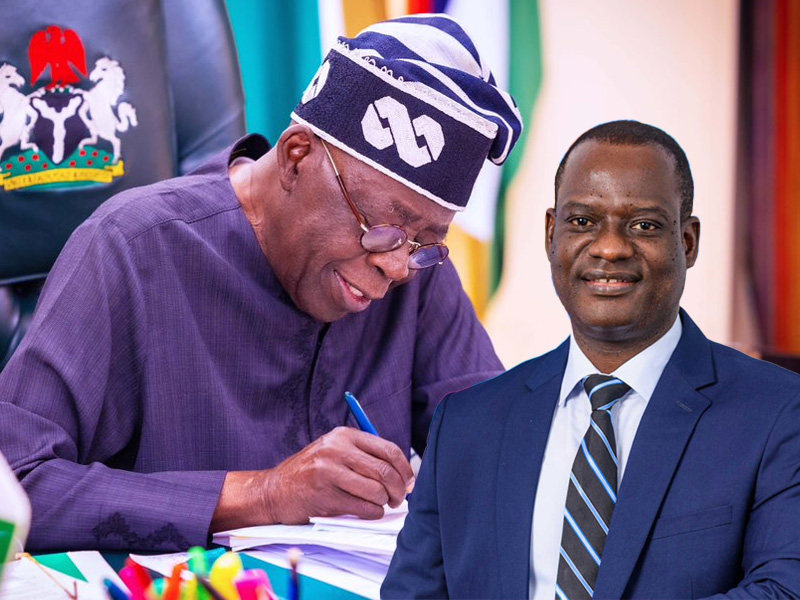
Nigeria’s controversial fuel subsidy removal and foreign exchange reforms have generated a staggering N15.8 trillion in additional resources for the federation, shedding new light on the financial impact of some of the government's most debated economic policies.
Minister of Finance and Coordinating Minister of the Economy, Taiwo Oyedele, revealed the figures on Wednesday while presenting the administration’s reform scorecard covering the period between 2023 and 2026.
According to Oyedele, the resources became available between June 2023 and December 2025 following the elimination of petrol subsidies and adjustments in the foreign exchange market. He explained that the reforms boosted government revenues, particularly as foreign currency transactions translated into higher naira earnings after exchange rate adjustments.
A breakdown of the figures showed that the Federal Government received N5.4 trillion from the savings, while states and local government councils shared the larger portion of N10.4 trillion.
Beyond the subsidy-related gains, Oyedele disclosed that the Federal Government also generated an additional N3.1 trillion in independent revenue, driven largely by improved remittances from government-owned enterprises.
Combined with borrowing, the government recorded a total of N20.4 trillion in additional resources during the review period. Of this amount, N11.9 trillion came from new borrowing, a figure the minister said could have been significantly higher if the reforms had not created additional fiscal breathing space.
However, the gains were matched by soaring government expenditures.
Oyedele revealed that the Federal Government incurred N30.64 trillion in additional spending over the same period. A substantial N9.39 trillion was devoted to salary adjustments, the implementation of the new minimum wage and various allowances for public sector workers.
Another N9.37 trillion was spent servicing Nigeria’s external debt, while N6.5 trillion was channelled into critical infrastructure projects aimed at supporting economic growth and development.

The finance minister noted that spending on workers’ welfare alone surpassed the Federal Government’s entire share of the resources generated from subsidy reforms, underscoring the growing fiscal pressures facing the administration.
He also highlighted the severe impact of naira depreciation on debt servicing costs. While Nigeria’s foreign debt stock in dollar terms remained largely unchanged, the local currency cost of meeting those obligations increased sharply.
To illustrate the challenge, Oyedele explained that an interest payment of $1 million, which previously required about N460 million, now costs approximately N1.415 billion due to the weaker naira.
He cautioned against suggestions that the country could simply postpone debt repayments, warning that defaulting on obligations would carry significant economic risks and potentially damage investor confidence.
Addressing public concerns over the rationale behind the reforms, the minister insisted that the policies were never intended primarily as revenue-generating measures.
Instead, he said the government’s objective was to dismantle entrenched corruption, eliminate inefficiencies and correct distortions that had long plagued the fuel subsidy regime and foreign exchange market.
His remarks come as debates continue over the economic consequences of the reforms, with supporters pointing to improved public finances and critics citing the rising cost of living and inflationary pressures experienced by Nigerians since their implementation.



Comments (0)
No comments yet. Be the first to share your thoughts!