


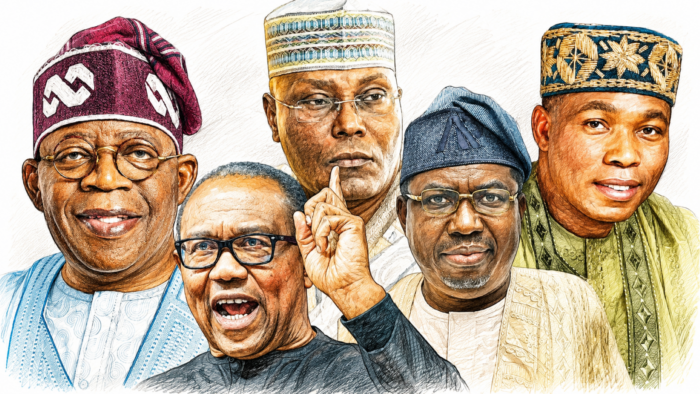
Months before the official kickoff of campaigns for the 2027 general elections, Nigeria’s political landscape is already buzzing with activities that look, sound, and feel like campaigns—even though the law says otherwise.
Across the country, politicians are crisscrossing states, unveiling support groups, holding town hall meetings, consulting stakeholders, commissioning political structures, and flooding public spaces with billboards and branded materials. Yet, most of them insist they are not campaigning.
The development has triggered a fresh national debate: Are political parties exploiting loopholes in the Electoral Act to begin campaigning ahead of schedule, and does the Independent National Electoral Commission (INEC) have the power—or the will—to stop them?
Under INEC’s timetable, presidential and National Assembly campaigns are not expected to begin until August 19. However, evidence from across the political spectrum suggests that the battle for Aso Rock may have quietly started long before the official whistle.
Campaigns Without Calling Them Campaigns
From the ruling All Progressives Congress (APC) to opposition parties such as the African Democratic Congress (ADC), National Democratic Congress (NDC), Social Democratic Party (SDP), Allied Peoples Movement (APM), and Peoples Democratic Party (PDP), political actors have intensified grassroots engagements nationwide.
What makes the situation controversial is that these activities are rarely presented as campaigns. Instead, they are packaged as consultations, stakeholder meetings, policy discussions, thank-you visits, youth engagements, or community outreach programmes.
Political insiders argue that there is a thin line between political engagement and outright electioneering. According to them, unless a politician openly asks voters for their support or organises campaign rallies, it is difficult to conclusively declare such activities illegal.
Yet, for many observers, the distinction is becoming increasingly meaningless.
The atmosphere across the country suggests that political parties are already positioning themselves for the biggest electoral contest in the nation, months before the legal campaign window opens.
Tinubu’s Second-Term Drive Gains Momentum
Perhaps no party has been more visible than the APC.
Leveraging the advantages of incumbency, the ruling party has sustained a nationwide mobilisation effort around President Bola Ahmed Tinubu’s anticipated second-term bid.
Support groups have multiplied. Endorsements continue to pour in from governors and party leaders. Town hall meetings, political consultations, strategic gatherings, and grassroots campaigns have become common features of the political landscape.
Across major cities, billboards promoting Tinubu’s leadership and highlighting the achievements of the “Renewed Hope Agenda” have reappeared, despite previous attempts by the Presidency to distance itself from some of the campaign materials.
The APC recently went a step further by inaugurating the national executives of the PBAT Door-to-Door Movement, a structure specifically designed to engage voters directly at the grassroots level ahead of the 2027 elections.
To critics, it looks very much like a campaign.
To supporters, it is merely a celebration of government achievements and an effort to keep citizens informed.
Opposition Parties Refuse to Stay Quiet
The opposition is hardly sitting back.
The ADC has intensified activities around former Vice President Atiku Abubakar, who emerged as the party’s presidential candidate. His consultations with traditional rulers, political leaders, and stakeholders across the country have generated significant political attention.
Likewise, the NDC has maintained strong public visibility through activities involving its presidential candidate, Peter Obi. Town hall meetings, policy engagements, youth forums, and public interactions have continued across several states.
The party further fueled political discussions when its vice-presidential candidate, Senator Rabiu Musa Kwankwaso, recently revealed that Obi had committed to a one-term presidency if elected—a statement many analysts interpreted as a direct campaign message.
Meanwhile, SDP presidential candidate Adewole Adebayo has been aggressively promoting his anti-poverty message through engagements, particularly in Northern Nigeria. During several meetings with voters, he has criticised the current administration while presenting the SDP as the preferred alternative.
The Allied Peoples Movement (APM), despite being relatively new to the presidential contest, has also increased mobilisation around Oyo State Governor Seyi Makinde. Across Ibadan and other parts of Oyo State, posters, billboards, and promotional materials featuring Makinde have become increasingly difficult to ignore.
Governors Join the 2027 Conversation
One of the clearest signs that political calculations are already underway is the growing number of governors openly endorsing President Tinubu for a second term.
Governors under the Progressive Governors Forum (PGF), alongside several first-term APC governors, have publicly pledged support for Tinubu’s re-election.
In the South-West, governors including Babajide Sanwo-Olu, Dapo Abiodun, Lucky Aiyedatiwa, and Biodun Oyebanji have all expressed confidence in the President and promised strong electoral backing in 2027.
The endorsements have not been limited to APC-controlled states.

Kano State Governor Abba Yusuf, despite belonging to the New Nigeria People’s Party (NNPP), has publicly urged residents to support Tinubu, describing him as deserving of another term.
Other governors, including those from Niger, Kwara, Edo, and Kebbi states, have also openly associated themselves with efforts aimed at strengthening the President’s political position ahead of the next election cycle.
INEC’s Surprising Admission
Perhaps the most startling aspect of the controversy is INEC’s position.
Rather than threatening sanctions, the electoral commission has admitted that its hands are largely tied.
INEC’s Director of Voter Education and Publicity, Victoria Eta-Messi, acknowledged the increase in political activities but stated that the commission lacks the legal authority to stop consultations and similar engagements before the official campaign period begins.
According to her, while INEC establishes campaign timelines under the Electoral Act, enforcement against activities regarded as premature campaigns does not fall squarely within the commission’s statutory powers.
That admission has raised uncomfortable questions about whether Nigeria’s electoral laws contain a loophole large enough for political parties to drive entire campaign structures through.
Critics Warn of Unequal Political Battlefield
Political analysts and civil society groups argue that the current trend threatens the principle of fair competition.
Their concern is simple: parties with access to state resources, stronger financial muscles, and broader political networks can dominate public attention long before official campaigns begin, leaving smaller parties struggling to compete.
They warn that prolonged unofficial campaigning could dramatically increase election costs, weaken campaign spending regulations, and undermine the credibility of electoral guidelines.
Former presidential candidate and political economist, Prof. Pat Utomi, described the situation as evidence of a deeper institutional crisis.
He questioned which agency is responsible for enforcing electoral rules if INEC claims it lacks the authority to intervene.
For Utomi, the issue reflects a broader breakdown of accountability and respect for regulations.
Former ADC National Chairman Ralph Nwosu also expressed concerns, accusing the ruling party of using its influence and access to state institutions to gain an early advantage ahead of the elections.
The Loophole Nobody Wants to Fix
At the centre of the controversy lies what many legal experts describe as a blind spot in Nigeria’s Electoral Act.
While Section 94 clearly outlines when campaigns should begin, the law is less clear on where consultations end and campaigns begin.
As a result, politicians continue to exploit the ambiguity.
A town hall meeting can be called a policy discussion. A rally can be described as stakeholder engagement. A campaign structure can be branded as a support movement.
Without a clear legal definition or enforcement mechanism, political parties appear free to test the boundaries of the law while maintaining plausible deniability.
A Long Campaign Before the Campaign
As Nigeria edges closer to 2027, one reality is becoming impossible to ignore: the race has already begun, whether politicians admit it or not.
From endorsements and consultations to billboards and grassroots mobilisation, the country is witnessing a prolonged season of unofficial electioneering.
The bigger question is no longer whether politicians are campaigning early.
The real question is whether Nigeria’s electoral laws are strong enough to stop them—or whether the nation is heading into a two-year presidential campaign disguised as consultations and stakeholder engagements.
For now, the billboards are up, the endorsements are flowing, the political calculations are intensifying, and the battle for 2027 is unfolding in plain sight—long before the official campaign season arrives.
.jpg)
Comments (0)
No comments yet. Be the first to share your thoughts!