By A. I Musa, Katsina Times.
Sixteen years after the passing of former President Umaru Musa Yar’Adua, his leadership philosophy continues to influence Nigeria’s governance and public service culture, the Minister of Housing and Urban Development, Eng. Dr. Muttaqa Rabe Darma, has said.
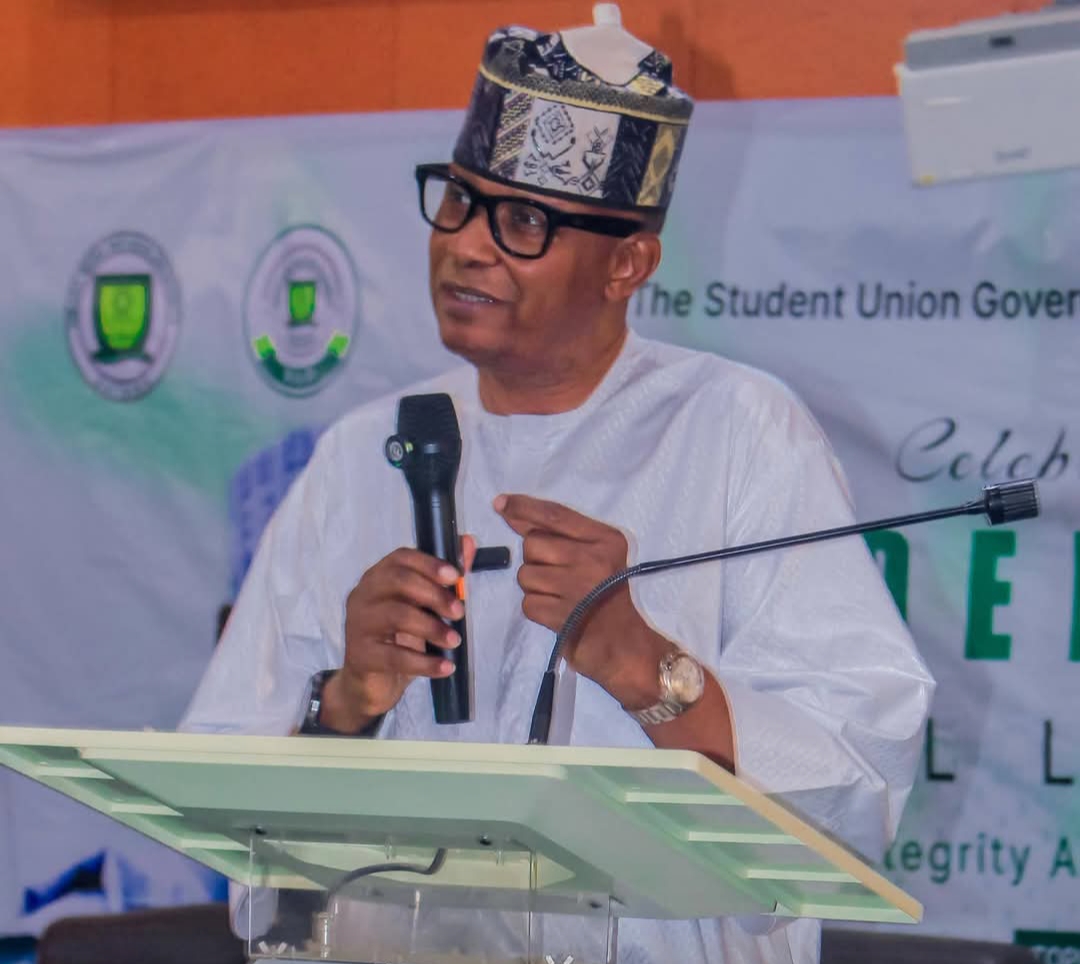
Darma made this known while delivering the keynote address at the Yar’Adua Leadership Excellence Summit held at Umaru Musa Yar’Adua University, as part of activities marking the 16th anniversary of the late president’s death. The event, organised by the Students’ Union Government (SUG) of the institution, was themed “Integrity and Public Service.”
In his address, Darma described Yar’Adua as a leader whose style of governance was rooted in trust, humility, and accountability to both God and the people.
“His life remains a reference point for integrity-driven leadership. He was a leader whose governance was anchored on trust, humility, and accountability before God and the people,” he said.
The minister traced Yar’Adua’s leadership philosophy to his deep historical and religious upbringing in Katsina, which he characterised as a centre of learning and faith with a long-standing tradition of Islamic scholarship and governance.
He further highlighted the influence of Yar’Adua’s family background, noting that his father, Alhaji Musa Yar’Adua, was a teacher, administrator, and politician whose values significantly shaped the former president’s commitment to public service and education.
“Umaru Musa Yar’Adua did not emerge from nowhere; he was shaped by a lineage of scholarship, public duty, and moral responsibility,” Darma stated.
Central to the keynote, Darma emphasised that Yar’Adua’s integrity was not a political strategy but a reflection of his personal character. He recalled instances from Yar’Adua’s tenure as governor, including reports of how he gave away expensive gifts, underscoring his belief that leadership is about service rather than personal gain.
“Integrity was not something he wore; it was something he lived,” he said, adding that Yar’Adua believed moral authority could only be earned through honesty, sincerity, and hard work.
Darma also underscored Yar’Adua’s conviction that political authority is an Amanah (a trust from God) rather than a means for personal enrichment. According to him, this belief informed the former president’s emphasis on transparency, asset declaration, and adherence to the rule of law.
“Leadership, in his view, was not ownership of power but stewardship of trust,” he added.
On education, the minister highlighted Yar’Adua’s strong commitment to reforms, teacher development, and expanding access to schooling, particularly in Northern Nigeria. He described education in Yar’Adua’s philosophy as “a tool for citizenship, not just certification.”
Addressing governance, Darma pointed to Yar’Adua’s firm belief in the rule of law as a foundation for fairness, accountability, and institutional stability. He cited the administration’s handling of the Niger Delta crisis where dialogue and amnesty were prioritised over military confrontation, as a defining example of principled leadership.
Darma concluded by challenging students and young leaders to uphold the values exemplified by the late president.
“You are not just students of this university; you are carriers of its moral legacy,” he said, urging them to embrace integrity in their academic and professional pursuits.
He warned that leadership without character would ultimately lead to national decline, and called for sustained reflection on Yar’Adua’s enduring legacy.
“Sixteen years on, his life still asks us one question: will we choose service over self-interest?” Darma asked.