


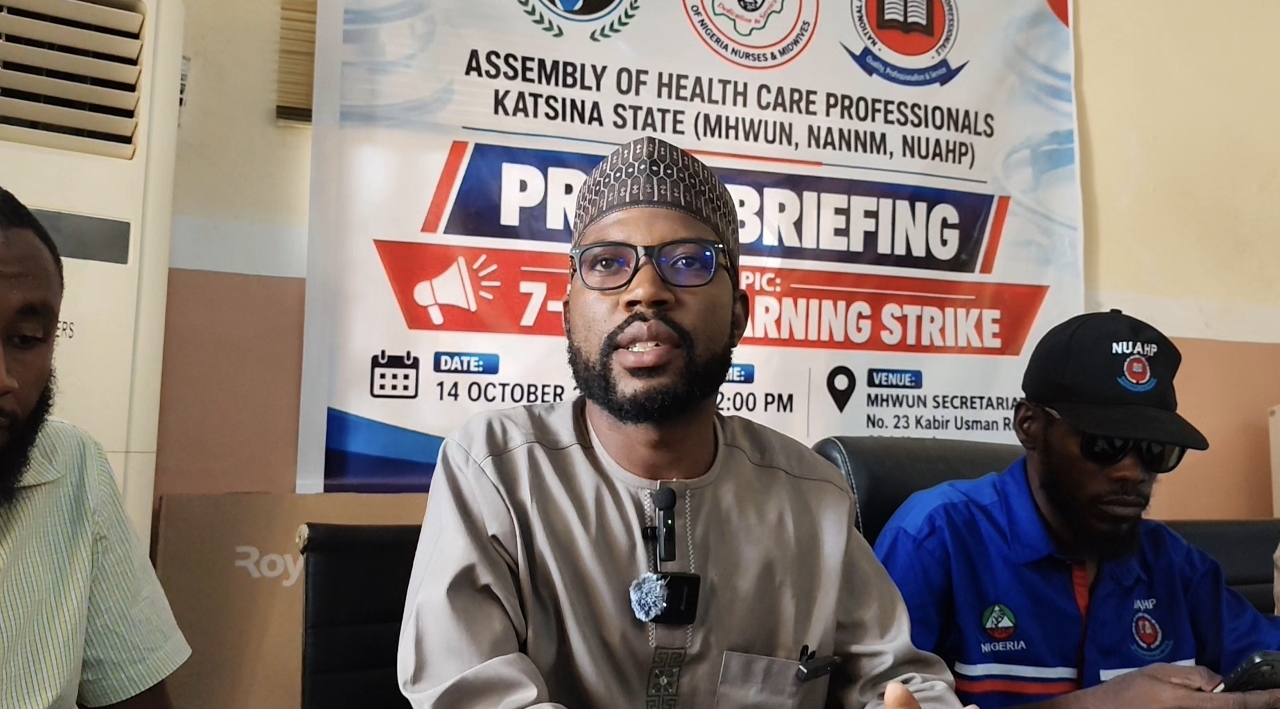
Katsina State is at risk of losing more skilled healthcare professionals to federal institutions as salary disparities widen, with some workers reportedly willing to accept appointments several grades below their current positions in exchange for better pay.
Umar Lawal-Bawale, Chairman of the Katsina branch of the Association of Radiographers of Nigeria (ARN), raised the alarm on Wednesday during a briefing by the Assembly of Healthcare Professionals on the ongoing strike in the state.
He said some healthcare workers on Grade Level 14 in Katsina were opting for Grade Level 8 positions in federal institutions because the remuneration offered by the latter was significantly higher.
According to Lawal-Bawale, the strike goes beyond demands for improved salaries and allowances. It is also aimed at protecting healthcare delivery and drawing attention to the growing difficulty of retaining qualified personnel in the state’s health system.
He warned that the state government’s plan to recruit 109 healthcare workers might not solve existing staffing shortages if the welfare concerns driving professionals away remained unresolved.
Recalling the previous recruitment exercise, the radiographers’ chairman said the state offered employment to four or five radiographers, but some secured appointments with federal institutions before resuming their duties in Katsina and chose the federal jobs instead.
He described the development as evidence of the challenges facing the state in retaining skilled medical personnel, warning that continued departures could further weaken services in government-owned hospitals.
Lawal-Bawale cited cases in which a single nurse was reportedly left to attend to patients in a ward at a state hospital, contrasting the situation with federal facilities where several nurses could be available to care for a similar number of patients.

He attributed the growing attraction of federal employment to the widening gap in pay, despite workers having similar qualifications, professional responsibilities and licensing requirements.
The chairman recalled that when many of the affected professionals began their careers about six or seven years ago, the difference between state and federal salaries was between N17,000 and N20,000. He said the gap had since increased to approximately N150,000.
“You went to the same school, you use the same licence and pay the same professional dues, yet you are being paid half of what your counterpart in a federal institution receives,” he said.
He stressed that building more general hospitals would not automatically improve healthcare delivery if the government failed to provide the personnel needed to run them effectively.
As an example of the staffing challenge, he referred to a recent media report alleging that General Hospital, Batsari, had only one doctor serving the facility, describing the situation as a cause for concern.
Lawal-Bawale also pointed to a recent salary increase in neighbouring Zamfara State, saying it had encouraged some healthcare workers in Funtua to seek employment with the Zamfara State Health Services Management Board, including through contract appointments.
He warned that Katsina could face deeper staffing shortages if it failed to improve salaries and working conditions, potentially leaving government hospitals struggling to provide essential services.
The ARN chairman urged the state government to address the workers’ grievances, arguing that competitive remuneration and better welfare were essential to retaining experienced professionals and ensuring sustainable healthcare delivery across Katsina State.



Comments (0)
No comments yet. Be the first to share your thoughts!