


The Katsina State Government has commenced plans to overhaul the administration of Tahfeez schools across the state, in a move aimed at strengthening Qur’anic education, improving standards and creating better opportunities for students who memorise the Holy Qur’an.
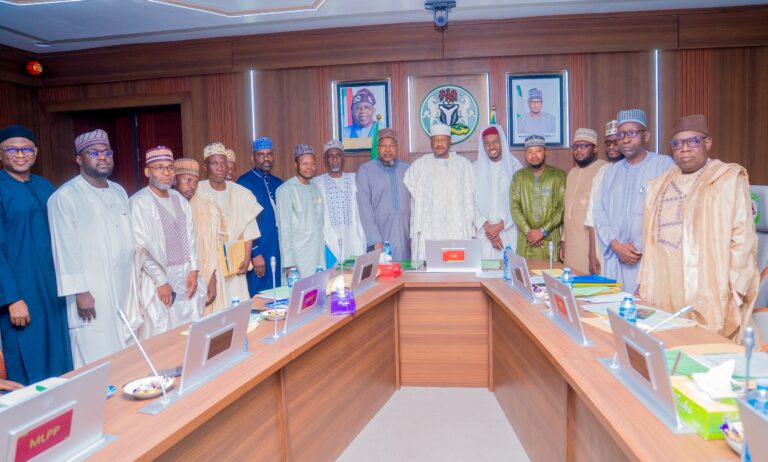
The proposed reforms emerged following the submission of a comprehensive report by a state-appointed committee tasked with reviewing the operations of Tahfeez schools. The report was presented to Governor Dikko Umaru Radda during the State Executive Council meeting held on Wednesday.
Speaking on behalf of the committee, Dr. Bashir Ruwan-Godiya said the recommendations were designed to tackle longstanding challenges affecting Qur’anic education, including weak regulatory mechanisms, inconsistent teaching standards, inadequate monitoring systems and the absence of a structured certification process for graduates.
According to him, the committee embarked on extensive consultations and fact-finding missions before arriving at its recommendations. The team, chaired by Dr. Ahmad Filin Samji, visited several northern states, including Kaduna, Kano, Yobe and Zamfara, to study successful models of Qur’anic education administration and identify best practices that could be adapted to Katsina.
Ruwan-Godiya explained that stakeholders from across Katsina State were also engaged during the review process, while existing policies and educational frameworks were carefully examined to develop a system capable of addressing current realities.
He noted that Tahfeez schools play a critical role in preserving Islamic values, promoting Qur’anic knowledge and nurturing moral discipline among young people. However, he stressed that the institutions require stronger structures and government-backed regulation to enhance their effectiveness and relevance in modern society.
One of the major objectives of the proposed reforms, he said, is to ensure that students who successfully memorise the Qur’an receive recognised qualifications that can enable them to pursue higher education and improve their career prospects.
“The fact that a child has memorised the Qur’an should not limit his or her opportunities. With proper certification, educational support and additional skills, these students can continue their academic journey and make meaningful contributions to society,” he said.
Among the key recommendations is the transformation of the State Islamic Education Bureau into a more comprehensive agency to be known as the Katsina State Qur’anic, Arabic and Islamic Education Bureau. The proposed institution would oversee specialised departments dedicated to Qur’anic education, Arabic and Islamic studies, as well as school services and administration.
The committee also recommended the establishment of a comprehensive database covering Almajiri, Islamiyya and Tahfeez schools across the state. The database is expected to support planning, regulation and effective monitoring, while also helping authorities identify and certify qualified graduates.
To improve learning outcomes, the committee proposed regular training and capacity-building programmes for teachers, alongside enhanced welfare packages for both educators and students. It further recommended the establishment of zonal offices to ensure closer supervision and implementation of policies at the grassroots level.

As part of efforts to test the new framework, the committee suggested the introduction of pilot Tahfeez schools in Katsina’s three senatorial districts. The pilot programme would be anchored on upgraded facilities in the Katsina, Daura and Funtua zones before eventual expansion to other parts of the state.
The report also emphasised the importance of partnerships with relevant institutions, including the National Board for Arabic and Islamic Studies, Umaru Musa Yar’Adua University and other educational agencies. Such collaborations, according to the committee, would strengthen certification processes, research activities, academic documentation and pathways for students seeking further education.
The implementation plan proposed by the committee is expected to be carried out in phases. The first stage would focus on legal reforms, registration exercises and data collection within the next 12 months. Subsequent phases would address curriculum development, teacher training, quality assurance, certification and integration of Qur’anic education into broader educational programmes.
Responding to the presentation, Governor Radda commended the committee for what he described as a thorough and thoughtful effort to reposition Qur’anic education in the state.
He said the recommendations offered practical solutions for improving the administration, quality and impact of Tahfeez schools, assuring that the government would carefully study the report before taking necessary action.
“We sincerely thank the chairman and members of the committee for a job well done. We will thoroughly review the report and ensure that justice is done to the recommendations, Insha Allah,” the governor said.
Radda, however, directed that the proposed implementation timeline be reassessed, noting that some of the recommendations could be fast-tracked to accelerate reforms and deliver benefits to students, teachers and communities across the state.
The planned reforms are widely seen as a significant step towards modernising Qur’anic education in Katsina while preserving its religious and cultural foundations, creating a system that combines traditional Islamic learning with opportunities for academic and professional advancement.


Comments (0)
No comments yet. Be the first to share your thoughts!