


President Bola Ahmed Tinubu has applauded the emergence of a Nigerian-owned company as a key driver of Africa’s trade transformation, describing its selection for a major continental customs modernisation project as a testament to the growing strength of Nigerian innovation and enterprise.
The President said the award of a 20-year, multi-billion-dollar African Continental Free Trade Area (AfCFTA) Customs Modernisation Project to a subsidiary of Bergmans Security Consultant and Supplies Limited represents a significant milestone not only for Nigeria but for the continent’s economic integration agenda.
Tinubu, in a statement issued on Monday by his Special Adviser on Information and Strategy, Bayo Onanuga, said the development reflects Africa’s increasing confidence in indigenous solutions and demonstrates how innovations developed in Nigeria are beginning to influence trade and customs operations beyond the country’s borders.
The project will be executed by AfriTrade CMP Limited, a subsidiary of Bergmans, which has been tasked with deploying both digital and physical infrastructure aimed at modernising customs administration across participating African countries. The initiative is expected to enhance cargo monitoring, improve border management, strengthen trade-data exchange systems and streamline customs procedures throughout the continent.
According to the President, the selection of the Nigerian company signals a new chapter in Africa’s push for economic integration, where local expertise and technology are increasingly being relied upon to solve continental challenges.
He noted that solutions conceived, developed and tested in Nigeria are now being recognised as viable models for broader African implementation.
“What has been built and tested in Nigeria is now providing a model for the continent. This is how African integration should work: Africans building African solutions for African opportunities,” Tinubu said.
The President stressed that Nigeria must continue to position itself at the forefront of efforts to build the technological and institutional infrastructure required to support Africa’s single market under the AfCFTA framework.
He added that his administration’s Nigeria First policy remains focused on creating opportunities for Nigerian businesses to thrive locally while expanding their footprint across Africa and the global marketplace.
“Under our Nigeria First policy, we will continue to create opportunities for capable Nigerian businesses to compete at home, across Africa and globally,” he stated.
Tinubu also praised Bergmans Security Consultant and Supplies Limited, its subsidiaries, and the Nigeria Customs Service for their roles in driving customs modernisation efforts. He specifically commended the Comptroller-General of Customs, Bashir Adewale Adeniyi, alongside Nigerian professionals whose contributions helped secure continental confidence in the project.
The President said the achievement underscores the expertise available within Nigeria and demonstrates the country’s capacity to export innovative solutions capable of addressing Africa’s developmental needs.

The endorsement comes amid growing recognition of Nigeria’s indigenous customs management system, known as B’Odogwu, which has attracted attention from policymakers and trade stakeholders across the continent.
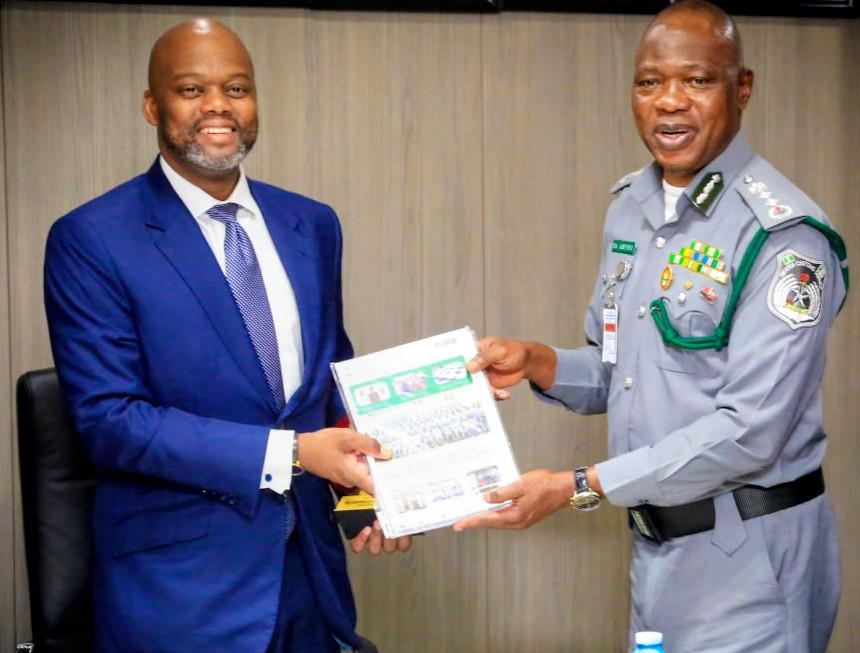
During a recent visit to the headquarters of the Nigeria Customs Service in Abuja, AfCFTA Secretary-General Wamkele Mene inspected the customs modernisation programme and expressed admiration for the progress achieved.
Mene described B’Odogwu as a model system capable of supporting customs reforms across Africa, noting that although several foreign companies had offered similar services, AfCFTA ultimately opted for an African-developed solution.
He said the decision reflects increasing confidence in African expertise and highlights the continent’s ability to generate homegrown innovations capable of driving economic growth and integration.
Members of the Senate Committee on Customs, led by Senator Jibrin Isah, also participated in the inspection after concluding a two-day retreat focused on customs reforms and modernisation.
Senator Isah said lawmakers who witnessed the system in operation left convinced of its effectiveness, describing members of the committee as ambassadors of the initiative.
Introduced through a pilot phase in October 2024, the B’Odogwu platform forms a central component of Nigeria’s broader customs modernisation agenda. The programme incorporates advanced cargo tracking systems, data infrastructure, surveillance technology, risk management mechanisms and non-intrusive inspection tools designed to facilitate trade while improving security and compliance.
The platform is also being integrated into the National Single Window initiative, launched in March 2026, which serves as a unified digital gateway for cross-border trade transactions and regulatory processes.
Tinubu maintained that Nigeria’s experience in customs reform and digital trade facilitation could help accelerate the goals of AfCFTA by reducing bureaucratic bottlenecks and lowering the cost of doing business across African borders.
“The promise of AfCFTA will be realised when goods can move across African borders faster, at lower cost and with fewer barriers. Nigeria is ready to contribute its experience, innovation and enterprise to that future,” the President said.
The development is being viewed as a major endorsement of Nigeria’s growing role in shaping Africa’s trade architecture and a signal that indigenous solutions are increasingly gaining prominence in the continent’s drive toward economic integration and shared prosperity.

Comments (0)
No comments yet. Be the first to share your thoughts!