By Professor Uwaisu Iliyasu
The creation of Radda District and the appointment of Mohammed Dikko Umaru as Gwagwaren Katsina, District Head of Radda is an important landmark in the history of the town. This is true because the creation elevated Radda to the status of a District in Katsina emirate. This was done as the recognition and the contribution of the town as an important agricultural centre and a trade route/highway which linked Katsina with the emirate of Zamfara and indeed the caliphate headquarters at Sokoto in the 19th century.
However, Radda is geographically located at approximately 12.28.37N latitude and 2.39.00E longitude. The town is located some 50 kilometers south-east of Katsina city, with many streams and rivers that emptied their contents in Koramar Kudu and Yamma. Interms of territorial boundary, Radda is surrounded by many villages and hamlets. In the east it shares border with Kartaka. In the west is bordered with Sabuwar Hanya. While in the south it shares border with Kiliya a small village of Fulani origin. At the northern part, Radda is bordered by Dan Shirwa, Bagga, Zana and Goyo hamlets.
The land of Radda is flat to gently undulating plain typical of that of the central plains of Katsina emirate. The nature of the land is a mixture of sandy and loamy soil with scattered rocky out-crops. This help the people in the town to cultivate different types of crops like millet, guinea corn, groundnut, beans and vegetables during the dry season. The geology of the area consists of complex rocks of sedimentary type which supported farming activities during the year, with an approximate temperature of 30.90C with high reaching 38-40C. In terms of rainfall, Radda received an annual rainfall of about 700mm. This helps the land to retain moisture during the rainy season and after.


As regards to demography, Radda town has an estimate population of 11,633 people according to the 2006 National Population Census. Out of which 5,948 are males, while the remaining 5,685 are females. Interms of ethnic configuration, the town is predominantly inhabited by Hausa-Fulani, and Islam is the major religion of the town. However, there are other Nigerian tribes like Yoruba, Igbo etc who were said to have being in the area since 1960. On social organization, the Hausa-Fulani structure of kinship serve as the form of social organization and mode of production in the town.
Historically, the word Radda is derived from a Fulani word Radam which means the place where the founders of the town believed that it is alright/ok for them to live. Therefore, instead of people to maintain the name Radam, they begin to call it Radda owing to so many reasons. This notwithstanding, Radda is one of the towns that were established after the jihad of 1804 in Katsina emirate under the leadership of Sarkin Katsina Malam Umarun Dallaje (1806-1835). Thus, it is on record that the jihad brought about so many developments in Katsina emirate. One of such was the introduction of the policy on urbanization which transformed the emirate into the larger Sokoto caliphate. It is within this context that the policy led to the establishment of many villages and towns in the emirate. Thus, Radda was among the towns that were established after the jihad and Malam Kawaje was appointed as Magaji Radda under Yandaka District.
Since that period, the town remains an important agricultural hub in the district where different types of crops are cultivated for import and export. To further boost agricultural activities in the town, a new trade route was established linking Radda with the major high way of Kano-Katsina-Sokoto. To this end, Usman reports that, the emergence of Birnin Kano-Farin Ruwa-Gyaza-Radda-Birchi-Zurmi-Sokoto route became an important highway which linked Katsina and the emirate of Zamfara with the caliphate.
However, during the colonial period, Radda was moved to Kaura District following the district re-organization policy of 1910. Despite this move, Radda maintained its position as an agricultural hub in the new District. As part of the policy of the new emir, Sarkin Katsina Muhammadu Dikko (1907-1944) appointed one of his lieutenants and trustee Mijinyawa as Beri-beri, village head of Radda. From that period to date, the descendants of Beri-beri Mijinyawa are the one heading the affairs of the town. After the death of Mijinyawa in 1924, his brother Umar I succeeded him. When Umaru died, the son of Mijinyawa Umaru II, the father of the present Governor was made the Beri-beri of Radda.
At independence, Radda also witnessed development especially in the areas of infrastructures, healthcare services, education, and water supply among others. These have greatly impacted on the town and the neighboring villages. With the creation of Charanchi Local Government Area in 1994, Radda was moved to Sarkin Shanu District. This movement also helps Radda to enter another era in its history. This is because one of its sons became the local government chairman of Charanchi. With him, Radda gain another upper hand over the neighboring villages and towns in the Local Government Area. Thus, a foundation of development was laid which greatly transformed the town into an important area in the local government. This was seen in the aspects of infrastructural development which greatly add value to the lives and people of the town.
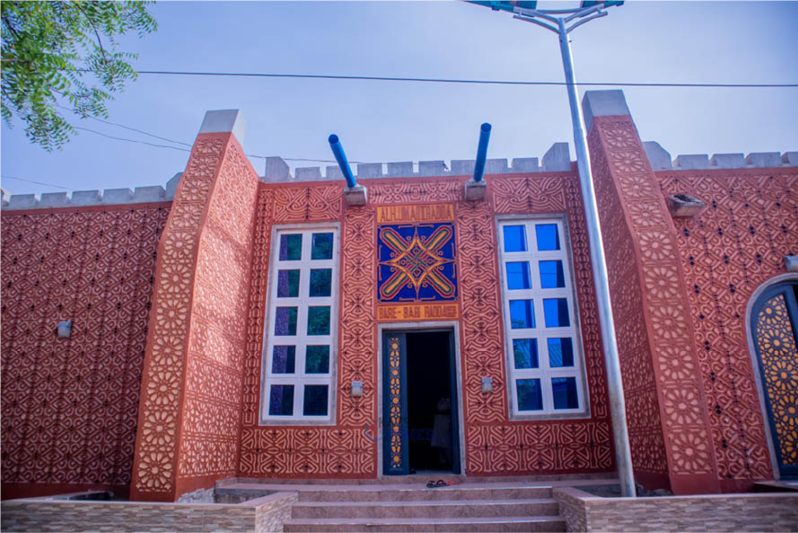
Today, Radda has been upgraded to a District Head with the title of Gwagwaren Katsina in which the son of His Excellency, Mohammed Dikko Umaru Radda was appointed as the new district head. The new district has six village heads that include Beri-beri, Kadanya, Kartaka, Gamda, Maje, Dallawa and Tsakatsa.
Therefore, a town with these parameters of development needs to be portrayed as a jewel in the central plains of Katsina emirate. This is attest to its rich history and the developmental stages which it passed from that period to 2026 when it is upgraded to a district headquarters. This is quite remarkable if one look at the trajectories of the history of Radda as it has been shown in the article. It is hope that as a new district, Radda will continue to witness series of development that would transform the town into an important district in Katsina Emirate and indeed Northern Nigeria as a whole.
Waisu is a Professor of History from Umaru Musa University Katsina.