


by Taibat Ummi Yakubu
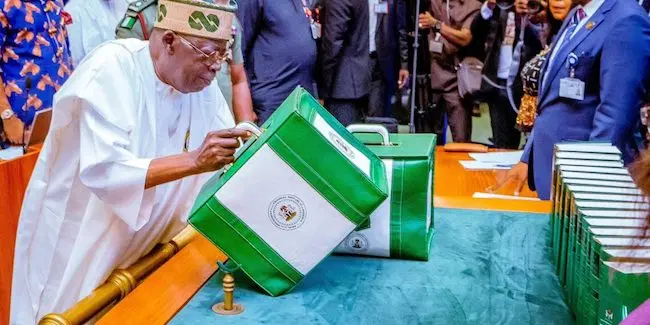
Nigeria’s 2026 capital budget is facing another major implementation crisis, with billions of naira in previous-year projects still awaiting funding and growing indications that part of this year’s capital allocation could be pushed into another fiscal year.
The development comes as the September 30 deadline for implementing about N16.8 trillion in outstanding 2024 and 2025 capital expenditure approaches, raising fresh questions over whether the Federal Government will be able to clear the backlog and fully activate the 2026 capital budget before the end of the year.
A senior official of the Budget Office of the Federation reportedly told Financial Vanguard in Lagos that another roll-over was possible, describing the practice as normal. Vanguard’s findings across Ministries, Departments and Agencies also indicated that releases for some outstanding 2024 and 2025 capital projects remained below 50 per cent.
The latest development would extend a pattern that has already seen previous capital allocations carried forward beyond their original fiscal years.
How the backlog swallowed the 2026 budget
About N16.8 trillion from capital expenditure appropriated for 2024 and 2025 had already been carried into the 2026 fiscal year after the National Assembly approved extensions to allow the Federal Government to complete outstanding projects.
The first extension was later followed by another, with the current deadline set for September 30, 2026.
The size of the backlog is significant because the 2026 Appropriation Act provides N32.287 trillion for capital expenditure out of total expenditure of N68.323 trillion.
This means that a substantial portion of the resources earmarked for capital spending is tied to obligations from earlier budgets, rather than being available exclusively for new projects.
Indeed, the Federal Government had already instructed MDAs in its 2026 budget call process to carry over 70 per cent of their 2025 capital budgets into 2026 and focus on completing existing projects instead of introducing new ones.
House committees expose growing implementation gap
The National Assembly has repeatedly raised concerns over the slow release and utilisation of capital funds.
The House Committee on Appropriations, chaired by Abubakar Bichi, found that N16.765 trillion had to be carried into 2026 because of funding constraints, following engagements with senior economic officials over why the funds had not been released.
The problem resurfaced during consideration of the 2026 budget, with the enlarged N68.323 trillion spending plan containing more than N32 trillion in capital expenditure. Part of the allocation was intended to address outstanding obligations from previous projects.
In June, lawmakers again extended the implementation period for the 2025 capital budget from June 30 to September 30 after being told that substantial amounts released to MDAs remained unspent because of administrative bottlenecks, procurement delays and other implementation challenges.
Health sector records dramatic shortfall
One of the clearest illustrations of the problem emerged during the 2026 budget defence of the Federal Ministry of Health.
Coordinating Minister of Health and Social Welfare, Prof. Muhammad Ali Pate, reportedly told the House Committee on Healthcare Services that only N36 million had been released from the N218 billion appropriated for the ministry’s 2025 capital projects.
That represented just about 0.02 per cent of the capital allocation, with the minister further indicating that the released amount had not been utilised.
Pate attributed the delay partly to the government’s cash-planning arrangements and also pointed to delays in counterpart funding, which affected some donor-supported programmes.

The disclosure prompted the committee, chaired by Amos Gwamna Magaji, to demand detailed documentation of donor funds received and their utilisation, creating a separate line of scrutiny over health-sector financing.
Eight ministries, N1.2trn allocation, just N9.13bn released
The problem was not limited to health.
Vanguard’s review of budget-defence disclosures showed that eight ministries had collectively received only N9.13 billion out of N1.218 trillion appropriated for capital expenditure, representing roughly 1.3 per cent.
Among the figures cited were N394.8 million released from N89.8 billion allocated to the Ministry of Women Affairs, N202 million out of N353 billion for Marine and Blue Economy, N2.5 billion from N256.7 billion for Transportation, and N2 billion out of N100 billion for Housing and Urban Development.
The Ministry of Water Resources reportedly received N1 billion from an N80 billion capital provision, while Agriculture and Food Security received N3 billion out of N120 billion.
Public Accounts Committee takes harder line
While the Appropriations and Healthcare Services committees have focused largely on identifying the causes and extent of the funding gaps, the House Committee on Public Accounts has taken a tougher approach toward agencies accused of failing to account for public funds.
In February, the committee recommended that 22 MDAs be excluded from the 2026 budget process over what it described as persistent failure to respond to audit queries and provide required financial records.
The affected agencies included the Nigerian Meteorological Agency, Federal Housing Authority, Standards Organisation of Nigeria, National Insurance Commission and National Business and Technical Examinations Board.
Committee chairman Bamidele Salam said some agencies had failed to respond to repeated invitations and directives and had also not submitted audited financial statements for several years.
The committee’s action reflects a broader concern in the National Assembly that releasing funds without adequate accountability creates another layer of risk in an already strained budget implementation system.
Government faces a growing fiscal dilemma
The Federal Government’s challenge is therefore no longer simply about passing an annual budget. The bigger question is how to release, cash-back and execute appropriations within the period for which they were approved while simultaneously clearing obligations accumulated from previous years.
The Budget Office has continued to publish official budget documents and implementation reports, while the 2026 Appropriation Act formally provides N32.287 trillion for capital expenditure.
But civil society groups have also raised concerns over the pace of implementation. In September, the Centre for Social Justice called for the immediate release of funds for both outstanding 2025 capital projects and the 2026 capital budget, alleging that the 2026 capital budget had not yet received releases at the time of its statement.
If the outstanding projects are not substantially funded before the September 30 deadline, another extension could deepen the cycle in which one budget year carries unfinished projects into the next.
For contractors, ministries and Nigerians waiting for roads, hospitals, water projects, schools and other infrastructure, the consequence is straightforward: money may be appropriated on paper, but the real test remains whether it is released, spent and converted into completed projects.
And with the 2026 fiscal year already well advanced, the pressure is mounting on the Federal Government to resolve the backlog before another budget becomes another carry-over.
.jpg)
.jpg)
Comments (0)
No comments yet. Be the first to share your thoughts!