


The World Health Organization (WHO) has raised concerns over the continued transmission of yellow fever across Africa and the Americas, revealing that 95 confirmed human cases were recorded between January and May 2026.
In a statement released on Wednesday, the global health body said six countries in the Americas accounted for 79 confirmed infections, alongside multiple outbreaks among non-human primates, while three African countries reported 16 confirmed cases during the same period.
WHO also disclosed that 32 suspected cases are currently under investigation in five additional countries, a development that has heightened concerns about underreporting and ongoing virus circulation, particularly in areas with weak disease surveillance systems.
According to the organisation, unvaccinated populations living in regions with a history of yellow fever transmission remain the most vulnerable.
“WHO’s rapid risk assessment concluded that unvaccinated populations in areas with a history of yellow fever transmission face the greatest threat, especially where low vaccination coverage overlaps with active virus circulation,” the statement said.
The agency noted that transmission in the Americas extended into 2026 following a rise in cases recorded in 2025, indicating sustained circulation of the virus and increasing public health concerns across affected countries.
WHO added that several outbreaks among non-human primates have confirmed ongoing sylvatic transmission, a cycle involving forest mosquitoes and animal hosts that continues to pose a risk of spillover infections in humans.
In Africa, the organisation said yellow fever activity remains persistent, particularly in 13 high-risk countries participating in the Eliminate Yellow Fever Epidemics (EYE) Strategy, a programme designed to reduce outbreak risks across the continent.

The health agency explained that outbreaks reported between October 2025 and May 2026 coincided with favourable environmental conditions such as increased rainfall, temperature fluctuations and a rise in mosquito populations.
“These conditions increase vector density and human exposure, especially where vaccination coverage is low,” WHO stated.
Although no cases have been detected outside the affected WHO regions, the organisation warned that rapid urbanisation, climate change, expanding mosquito habitats and increased human movement could facilitate the international spread of the disease.
WHO stressed the need for stronger surveillance systems, timely laboratory testing, enhanced cross-border collaboration and improved information sharing to ensure early detection and swift containment of outbreaks.
The organisation further emphasised that monitoring both human and animal populations remains critical to preventing urban transmission of the virus.
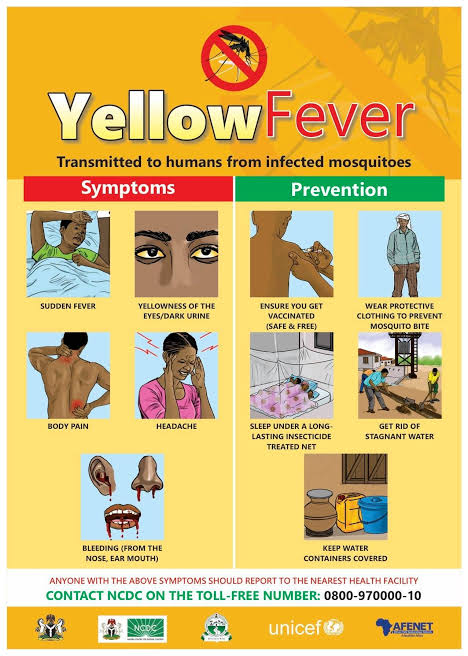
“Vaccination remains the most effective tool for preventing and controlling yellow fever,” WHO said, adding that it continues to support countries in expanding routine immunisation programmes and preventive vaccination campaigns to strengthen population immunity and reduce the risk of future outbreaks.



Comments (0)
No comments yet. Be the first to share your thoughts!