


By Taibat Ummi Yakubu
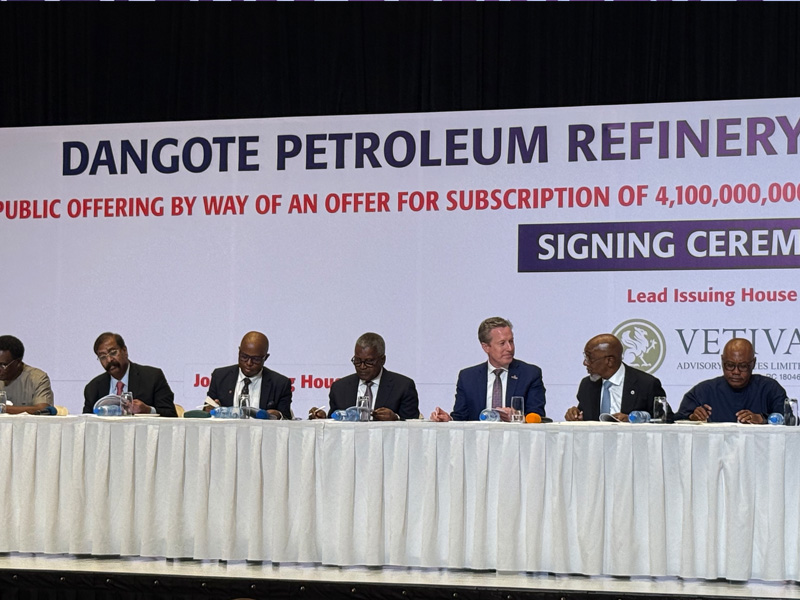
As millions of Nigerians weigh whether to buy into the much-publicised Dangote Petroleum Refinery Initial Public Offering (IPO), financial analyst Hesed Sign has delivered a blunt message: ignore the hype, study the numbers.
With social media discussions, investment groups and financial advisers increasingly promoting the offer as a rare opportunity to own a stake in Africa’s largest refinery, Sign said investors must remember that buying shares is fundamentally different from receiving financial assistance or participating in a government empowerment programme.
According to her, the central question should not be whether Aliko Dangote is giving ordinary Nigerians a chance to become wealthy, but whether the refinery represents a sound investment capable of delivering sustainable returns over time.
"When a multi-billion-dollar company opens ownership to the public, investors should focus on what they are buying, how the company plans to grow and what returns they can realistically expect," she said.
The analyst noted that many of the conversations surrounding the IPO have focused heavily on Dangote's reputation and the refinery's strategic importance to Nigeria, while paying less attention to the financial realities that ultimately determine whether shareholders make money or lose it.
IPO Is About Raising Capital, Not Charity
Sign explained that an Initial Public Offering is a mechanism through which a company raises fresh capital by selling a portion of its ownership to investors.
She said companies generally raise money through debt or equity financing. While debt requires repayment with interest regardless of business performance, equity financing allows companies to obtain capital by selling shares and bringing in new investors.
The Dangote Refinery project, one of the largest industrial investments in Africa, was financed through a combination of debt and equity over several years.
According to Sign, the refinery's decision to offer shares to the public should be viewed through that commercial lens.
"This is not a charity programme. Investors are committing their own money with the expectation of earning returns, and like every investment, there are risks involved," she said.
She argued that describing the offer as an opportunity for "poor Nigerians" risks creating a misleading impression about the nature of stock market investing.
"When people buy shares, they become investors and part owners of a company. They assume financial risks and hope to benefit from future profits. That is completely different from receiving a grant or financial aid," she added.
What Investors Are Actually Buying
Under the ongoing public offer, investors can purchase shares in the refinery at ₦525 per share.
The minimum subscription is 10 shares, meaning an individual can participate with as little as ₦5,250.
However, Sign stressed that investors should not focus solely on the affordability of the entry point.
Instead, she urged Nigerians to examine the refinery's earnings history, debt profile, future expansion plans, cash flow position, corporate governance structure and competitive outlook.
According to her, understanding these fundamentals is critical because the value of a share ultimately depends on the company's ability to generate profits and create value for shareholders.
The Refinery's Financial Turnaround
One area Sign believes deserves close attention is the refinery's recent financial performance.
The analyst noted that the company reported significant losses during its early years of operation before posting a strong profit in the first half of 2026.
She said the turnaround is encouraging but should prompt further questions.
"What caused the improvement? Is it sustainable? Can the refinery continue generating profits under different market conditions? These are the issues investors should investigate," she said.

The refinery has benefited from rising production volumes, growing domestic fuel demand and improved operational efficiency, factors many analysts believe could strengthen profitability in the coming years.
Nevertheless, Sign warned that future performance is not guaranteed and could be affected by changes in crude oil prices, foreign exchange movements, government policies, competition and global economic conditions.
How Much Could Investors Earn?
One of the most frequently asked questions surrounding the IPO is how much money investors could make.
Unlike fixed-income investments such as treasury bills or savings products, shares do not offer guaranteed returns.
Instead, investors can potentially earn through two channels: dividends paid from company profits and appreciation in the share price after listing.
If the refinery were to distribute an annual dividend equivalent to 10 per cent of the IPO price, an investor holding 1,000 shares purchased for ₦525,000 could receive approximately ₦52,500 annually in dividends.
At that rate, it would take roughly 10 years to recover the original investment through dividends alone.
If annual returns reached 15 per cent, the same investor could earn about ₦78,750 yearly, reducing the payback period to around seven years.
For an investor purchasing the minimum 10 shares worth ₦5,250, a 10 per cent annual dividend would translate to approximately ₦525 per year, while a 15 per cent return would yield around ₦788 annually.
Financial experts, however, caution that these figures are illustrations rather than guarantees because actual dividends will depend on future profits and decisions by the company's board of directors.
Share Prices Can Rise — And Fall
Beyond dividends, investors could also profit if the market value of the shares increases after listing on the Nigerian Exchange.
For example, if shares purchased at ₦525 later trade at ₦700, investors could realise gains by selling their holdings.
But the opposite is also possible.
Should market sentiment weaken or investors begin selling in large numbers, the share price could fall below the IPO price, resulting in losses.
Sign noted that many first-time investors focus exclusively on potential gains while ignoring the possibility of losing part of their capital.
"Investing always involves risk. Share prices move up and down depending on market conditions and investor sentiment," she said.
Investors Must Read Beyond the Headlines
The analyst urged Nigerians to study the company's prospectus carefully before making any commitment.
She advised prospective investors to pay attention to the refinery's valuation, earnings outlook, debt obligations, expansion strategy, competitive position and risk factors.
According to her, informed investing requires more than confidence in a famous founder.
"The public can participate in ownership without treating it as charity. Nigerians who invest are not beneficiaries of generosity. They are shareholders putting their money at risk in pursuit of returns," she said.
As the subscription window continues to attract interest across the country, the Dangote Refinery IPO is shaping up to be one of the most closely watched investment offers in Nigeria's history.
Whether it ultimately delivers substantial rewards to shareholders may depend less on the excitement surrounding the offer and more on the refinery's ability to sustain profits, manage its debt burden and continue growing in an increasingly competitive energy market.
For now, analysts say the message is simple: buy because the numbers make sense, not because the name does.


.jpg)
Comments (0)
No comments yet. Be the first to share your thoughts!