


POSTSCRIPT
By Professor Mohammed Al-Amin
There are political endorsements, and there are endorsements that carry the weight of experience. When President Bola Ahmed Tinubu speaks about the quality of a governor, Nigerians have a particular reason to listen. Few contemporary Nigerian politicians have traversed the difficult terrain of democratic politics with the breadth, longevity and institutional influence that Tinubu has. From his years as a senator to his transformational tenure as Governor of Lagos State, through his role as one of the most consequential political strategists of the Fourth Republic and now as President of the Federal Republic of Nigeria, Tinubu has spent decades studying, practising and shaping governance at different levels. His political career has been defined by institution-building, economic reform, political organisation, infrastructure development and an insistence that government must create an environment in which people and businesses can prosper.
His Lagos experience is particularly relevant to the assessment he has now offered of Governor Dikko Umar Radda.
As Governor of Lagos State from 1999 to 2007, Tinubu pursued a governance philosophy that placed planning, popular participation, institutional reform, revenue mobilisation and long-term development at the centre of government. Lagos State itself records that the Tinubu administration upgraded the economic planning machinery of government to ministerial status in 1999, with planning and popular participation deliberately placed at the centre of governance and development.The transformation of¹ Lagos’s internally generated revenue capacity during and after that period became one of the most frequently cited examples of subnational fiscal reform in Nigeria. Lagos’s own resilience documentation records that internally generated revenue grew from about ₦10 billion in 1999 to ₦313 billion by 2016, reflecting the cumulative impact of revenue reforms initiated during that era.
It is against this background that President Tinubu’s description of Governor Dikko Umar Radda deserves more than the passing attention normally given to a birthday congratulatory message.
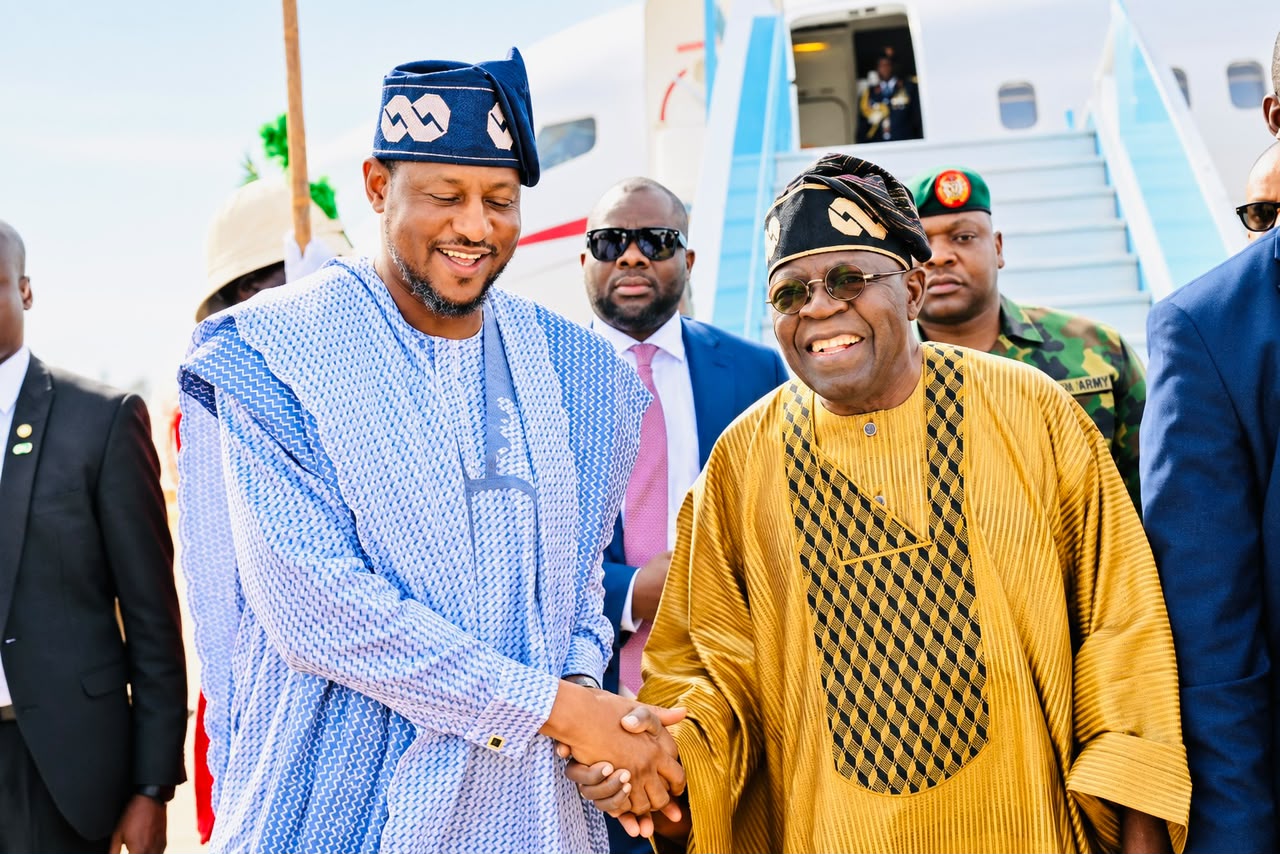
On September 11, 2026, President Tinubu did not merely congratulate Governor Radda on attaining 57. He offered a remarkable political and developmental assessment of the Katsina Governor. He described him as a “committed progressive,” a “seasoned economist” and a “grassroots administrator”; praised his uncommon courage, focus and empathy; described him as a model of how deep local knowledge and technocratic competence can combine for transformative leadership; and singled out his approach to security, education, agriculture and inclusive governance.
These are not casual compliments. They are, in many respects, a description of the governing philosophy that has increasingly become visible in Katsina since May 29, 2023.
A President Recognising a Familiar Leadership DNA
President Tinubu’s assessment becomes particularly interesting because some of the qualities he attributes to Governor Radda are qualities that Nigerians associate with the President’s own political and administrative career.
Tinubu knows the difference between a politician who merely occupies an office and a leader who uses public office to construct systems. He knows the difference between announcing programmes and building institutions capable of sustaining them. He understands the importance of local intelligence in governance, but he also understands that local knowledge becomes transformational only when combined with technical competence, planning, financial discipline and political courage.
That is precisely why the President’s description of Radda as a leader in whom “deep local knowledge and technocratic competence” have been combined for transformative leadership is perhaps the most significant sentence in the entire birthday message.
Radda’s career gives substance to that description. Before becoming Governor, he served as Chairman of Charanchi Local Government, Chief of Staff at Katsina Government House and Director-General of the Small and Medium Enterprises Development Agency of Nigeria, SMEDAN. President Tinubu specifically recalled these positions in describing him as a leader whose grassroots experience and technocratic background have converged in public service.
The trajectory is important. The former local government chairman understands the village, the ward and the local political economy. The former Chief of Staff understands the machinery of government. The former SMEDAN Director-General understands enterprise development, entrepreneurship and the constraints confronting small businesses. The economist understands numbers, incentives, markets and resource allocation.
The Governor has subsequently brought these experiences together under his “Building Your Future” agenda.
“Uncommon Courage, Focus and Empathy”
President Tinubu’s first major observation was that Governor Radda has demonstrated “uncommon courage, focus, and empathy” since assuming office, particularly in confronting Katsina’s security and educational challenges.
The significance of that assessment can only be understood against Katsina’s starting point.
Security in the North-West is not a problem that can be solved through conventional policing alone. It has economic, social, demographic and environmental dimensions. Banditry, displacement, rural poverty, unemployment, weak access to education and the disruption of agricultural livelihoods reinforce one another. Radda’s response has therefore increasingly combined security measures with interventions designed to rebuild the economic and social foundations of vulnerable communities.
The Katsina Community Watch Corps is one expression of this approach. The Governor has repeatedly emphasised that security requires intelligence, community participation and trust, not merely weapons and deployments. His administration has consequently pursued both kinetic and non-kinetic responses.
The non-kinetic dimension is equally important. The administration’s investments in education, agriculture, youth employment, skills development and community resilience reflect an understanding that sustainable security must address the conditions that make communities vulnerable to violence.
That is where the President’s reference to empathy becomes significant. Empathy in governance is not simply compassion expressed in speeches. It is the ability to understand the circumstances of ordinary citizens and design public interventions around those realities.
Education as a Weapon Against Poverty and Insecurity
President Tinubu specifically praised Governor Radda’s investment in education “as a weapon against poverty and insecurity.”
The phrase is powerful because it captures one of the defining features of the Radda administration.
Since 2023, education has received extraordinary attention in Katsina’s public expenditure priorities. At the administration’s three-year milestone, Governor Radda reported that more than ₦120 billion had been invested in education.
But the significance is not only the amount of money spent. It is what the investment is producing.
The administration has recruited more than 7,300 teachers, while more than 18,000 teachers have received professional training. More than 20,000 Samsung Galaxy tablets and laptops have also been distributed to teachers as part of the drive towards digital literacy. Scholarships valued at more than ₦7 billion have been awarded to students within and outside Nigeria.
On infrastructure, the transformation is equally substantial. More than 75 new secondary schools had been constructed under Phase I of the education intervention, with 65 already completed and handed over by May 2026. A further 581 secondary schools had received School Improvement Grants, benefiting more than 778,000 students. The programme had renovated 3,099 classrooms and constructed 279 new ones.
The Governor subsequently announced the approval of another 70 new secondary schools, demonstrating that the administration sees educational infrastructure not as a one-off project but as a continuing response to population growth and demand for access.
There is also a deeper philosophy at work. The three model smart schools in Radda, Damurkul and Jikamshi are conceived around a modern educational model incorporating science, technology, ICT, residential facilities, solar power and internet connectivity.
This is why President Tinubu’s description of education as a weapon against poverty and insecurity resonates with what is happening on the ground. The strategy is not simply to put more children into classrooms. It is to equip the next generation with knowledge, skills, confidence and opportunities that can reduce the attraction of poverty, criminality and violent extremism.
Agriculture as the Mainstay of Katsina
If there is one sector in which President Tinubu’s description of Governor Radda’s philosophy is especially difficult to dispute, it is agriculture.
The President described agriculture as “the mainstay” of the people of Katsina and praised Radda’s investment in the sector.
The numbers tell the story.
The Radda administration has procured 20,000 metric tonnes of fertiliser for the 2024 farming season and another 20,000 metric tonnes for 2025. It distributed 722 motorcycles and knapsack sprayers to extension workers across all 361 wards, while establishing an Agricultural Mechanisation Centre and procuring 400 tractors, 1,000 hand planters and 10 combine harvesters. Mechanisation centres have also been established across all 34 local government areas.
The administration has gone beyond wet-season agriculture. Through the Katsina State Irrigation Development Authority, more than ₦8 billion has been invested in dry-season agriculture, including 4,000 powered tillers, 4,000 solar-powered pumps and 48,000 bags of fertiliser. A further ₦3.3 billion has been invested in equipment for irrigation infrastructure.
In 2026, the Governor further decentralised fertiliser distribution across 6,652 polling units, selling fertiliser at a heavily subsidised price and designing the distribution system to reduce the role of middlemen and improve direct access for farmers. The administration also conducted the distribution of 4,000 solar-powered irrigation pumps in the previous year and an additional 4,000 gasoline-powered irrigation pumps in 2026. More than 3,000 tube wells were being drilled free of charge to expand year-round agricultural production.
This is agriculture being treated not merely as a traditional occupation, but as an economic system.
It involves inputs, mechanisation, irrigation, extension services, digital platforms, processing, market access and youth participation. The establishment and deployment of KASPA - the Katsina State Sustainable Platform for Agriculture - fits into this broader strategy of moving agricultural governance towards data, coordination and value-chain development.
The President’s assessment therefore captures a central reality: Governor Radda is attempting to convert Katsina’s agricultural identity into an economic advantage.
Listening to the People: The 361-Ward Revolution in Governance
Perhaps the most revealing part of President Tinubu’s message is his statement that Governor Radda has demonstrated that “leadership is about listening to the people.”

He specifically cited the decision to take budget consultations to all 361 wards of Katsina State and allow each ward to choose its priority project.
This is more than a budgetary technique. It represents a philosophical shift in the relationship between government and citizen.
In conventional public administration, government officials often sit in offices, identify projects and subsequently announce them to communities. Under the Radda model, the direction is reversed: government goes to the communities, listens to their needs and incorporates those priorities into the development process.
The 2026 budget was subsequently built around community needs assessments, with each of the 361 communities receiving more than ₦10 million for locally identified priority needs.
In practical terms, this means that the citizen in a remote community is not merely a recipient of government policy. He or she becomes part of the process through which government determines what should be done.
That may ultimately prove to be one of the most enduring institutional innovations of the Radda administration.
From Grassroots Administration to State Transformation
There is a compelling symmetry in President Tinubu’s description of Governor Radda.
The President identifies a former local government chairman who understands the grassroots; an economist who understands development; a former Chief of Staff who understands government machinery; and a former head of SMEDAN who understands enterprise and economic empowerment.
The Governor’s record since 2023 increasingly reflects the convergence of those experiences.
Healthcare has expanded through the upgrading of primary healthcare facilities across the state’s 361 wards, with 268 facilities upgraded by February 2026 and ₦26.7 billion deployed to healthcare infrastructure. The administration has also established a major public dialysis centre and advanced a state-of-the-art imaging centre.
The administration has also cleared more than ₦45 billion in inherited pension liabilities, an intervention that has direct consequences for the dignity and welfare of retired public servants.
Beyond conventional infrastructure, Radda has pursued a broader development architecture encompassing climate resilience, renewable energy, land restoration, water security, green investment and agricultural transformation. Katsina’s climate governance performance provides an interesting example: the state moved from 25th position nationally in the 2024 baseline to second position in the 2025 Climate Governance Performance Rating, according to the federal Ministry of Environment climate governance record.
That is important because it illustrates the Governor’s attempt to institutionalise development rather than merely execute isolated projects.
Why Tinubu’s Verdict Matters
There is a reason President Tinubu’s words about Governor Radda have attracted attention.
The President is not simply commenting on a colleague in office. He is speaking as a politician who has personally governed a complex Nigerian subnational jurisdiction and whose Lagos experience has become one of the most influential governance case studies of Nigeria’s democratic era.
Tinubu understands what it means to inherit a difficult environment and attempt to change its trajectory.
He understands the political cost of reform. He understands that revenue, infrastructure, human capital, security, institutional capacity and citizen confidence cannot be treated as isolated compartments.
His recognition of Radda therefore creates an interesting political mirror.
In Lagos, Tinubu championed planning, participation, institutional reform, revenue mobilisation and infrastructure as instruments of transformation. In Katsina, Radda is pursuing a development model built around grassroots consultation, agricultural modernisation, education, security, human capital development, institutional reform and emerging green economic opportunities.
The contexts are obviously different. Lagos is Nigeria’s commercial capital, while Katsina is predominantly agrarian and situated within the increasingly vulnerable Sahelian belt. The resources, demographics and economic structures are not comparable.
But leadership principles can travel across geography.
Planning matters.
Listening matters.
Institutions matter.
Human capital matters.
Revenue and resource mobilisation matter.
Security matters.
And perhaps most importantly, the ability to connect immediate problems with long-term development matters.
The President’s Birthday Message as a Governance Testimony
President Tinubu concluded his message by urging Governor Radda to remain steadfast in his commitment to peace, development and the upliftment of the most vulnerable.
That final exhortation may be as important as the praise itself.
It suggests that, in the President’s assessment, the central test of Radda’s leadership is not simply the number of roads constructed, schools built, tractors procured or budgets approved. The deeper test is whether the most vulnerable citizen feels the impact of government.
That is also the measure by which the Radda administration will ultimately be judged.
Three years into the administration, the evidence points to a government attempting to redefine the development possibilities of Katsina: education as human-capital formation; agriculture as an economic engine; security as a prerequisite for development; participatory budgeting as a mechanism of inclusion; healthcare as a social investment; and climate action as part of the state’s long-term economic resilience.
President Tinubu’s birthday message therefore reads almost like a compact assessment of the philosophy behind the Radda administration.
He sees a progressive.
He sees an economist.
He sees a grassroots administrator.
He sees courage.
He sees focus.
He sees empathy.
He sees local knowledge combined with technical competence.
And, most importantly, he sees a governor whose approach to security, education, agriculture and participatory governance aligns with the national Renewed Hope Agenda.
For Governor Dikko Umar Radda, perhaps there could be few more politically significant birthday tributes.
For Katsina State, the President’s words provide something equally valuable: an external affirmation from a President whose own political career was forged in the demanding laboratory of subnational governance.
And for the people of Katsina, the real significance of the tribute lies not in the celebration of a birthday, but in the challenge embedded within it.
If leadership is indeed about listening to the people, as President Tinubu says, then the continuing task before Governor Radda is to keep listening; and to keep converting what he hears into institutions, investments, opportunities and measurable improvements in the lives of the people.
That, ultimately, is what turns political leadership into a legacy.
POWERED BY: BuildBeyond2027

Comments (0)
No comments yet. Be the first to share your thoughts!