


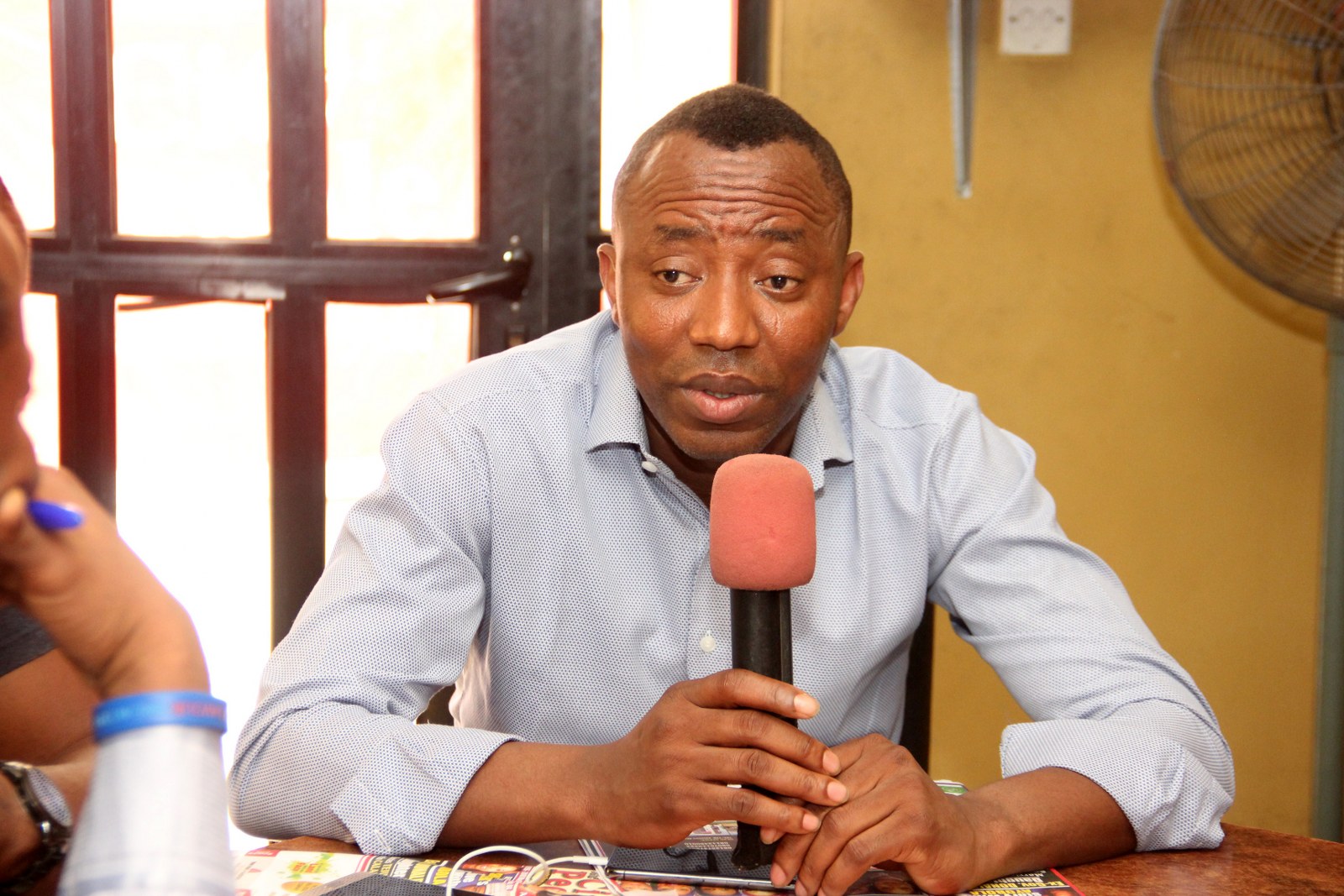
Senior Advocate of Nigeria (SAN), Adeyinka Olumide-Fusika, has called on the Department of State Services (DSS) to either withdraw its case against activist and former presidential candidate Omoyele Sowore or transfer the prosecution to the Attorney-General of the Federation (AGF), arguing that Nigeria’s security institutions must not become entangled in political contests.
Olumide-Fusika made the remarks during an interview with ARISE NEWS while reacting to the DSS’ recent decision to seek an adjournment in the case involving Sowore, who is facing charges arising from comments allegedly made about President Bola Ahmed Tinubu.
For the senior lawyer, the issue goes beyond the fate of a single defendant. Rather, it raises a broader question about the role of state institutions in a democratic society and whether security agencies should be seen as participants in political disputes.
According to him, the DSS’ explanation for requesting an adjournment appeared thoughtful, even though he believes the agency arrived at that position much later than it should have. He noted that while the court had previously dismissed a no-case submission in the matter, the DSS’ recent statement suggested an awareness of the need to avoid perceptions of political interference.
Olumide-Fusika revealed that he had discussed the development with Sowore and advised that the reasons advanced by the DSS appeared reasonable on the surface. However, he argued that the agency should go further by reassessing its involvement in the entire case.
He stressed that the DSS is a national institution established to serve the Nigerian state and not an extension of any political office or ruling party. In his view, agencies charged with safeguarding national security must remain neutral and avoid actions capable of creating the impression that they are taking sides in political battles.
The senior advocate expressed concern that the agency’s handling of the matter could undermine public confidence in democratic institutions. He particularly faulted the manner in which the DSS communicated its intention to seek an adjournment, saying the public statement created the impression that the agency had the authority to determine court proceedings.
According to him, decisions regarding adjournments are the exclusive preserve of the court, and litigants should avoid presenting requests as though they have already been granted. Such actions, he warned, could fuel suspicions about undue influence and weaken public trust in the independence of the judiciary.
While refusing to discuss the legal merits of the case because it remains before the court, Olumide-Fusika questioned what he described as selective responses to political speech in Nigeria. He observed that politicians frequently exchange insults, accusations and harsh criticisms without attracting criminal prosecution, making it difficult for many observers to understand why certain remarks become the subject of legal action while others do not.

He noted that political disagreements and heated rhetoric are common features of democratic systems across the world and argued that Nigeria should not be an exception. Democracy, he said, requires tolerance for criticism, even when such criticism is uncomfortable or offensive.
The SAN maintained that if the government genuinely believes there is a case to answer, then the matter should be tested in court. However, he insisted that the more pressing issue is whether the DSS should have become involved in the first place.
To preserve its institutional credibility, he suggested that the agency either discontinue the prosecution entirely or allow the Attorney-General of the Federation to assume responsibility for the matter. Such a move, he argued, would distance the DSS from political controversy and reinforce its image as a professional security institution.
Beyond the Sowore case, Olumide-Fusika used the opportunity to advocate greater neutrality among Nigeria’s security agencies, including the police, the DSS and military intelligence organisations. He said these bodies exist to defend the interests of the nation rather than the interests of individuals occupying positions of power.
He also raised concerns about the enforcement of laws governing cybercrime and online conduct. According to him, there are numerous instances of sustained online harassment and cyberbullying that receive little attention from law enforcement agencies, while cases involving politicians often attract swift action.
The lawyer argued that laws should be applied consistently and fairly, regardless of a person's social status or political influence. Selective enforcement, he warned, risks eroding public confidence in both the justice system and security institutions.
As the legal battle involving Sowore continues, Olumide-Fusika maintained that his comments should not be interpreted as a judgment on the merits of the case. Rather, he said, they reflect a concern about protecting the integrity and neutrality of institutions that are vital to Nigeria’s democracy.
For him, the lesson is clear: security agencies must remain focused on their constitutional responsibilities, resist political pressures and uphold the principles of fairness and professionalism. Only then can they maintain the confidence of the citizens they are sworn to serve.


Comments (0)
No comments yet. Be the first to share your thoughts!