


TAIBAT UMMI YAKUBU
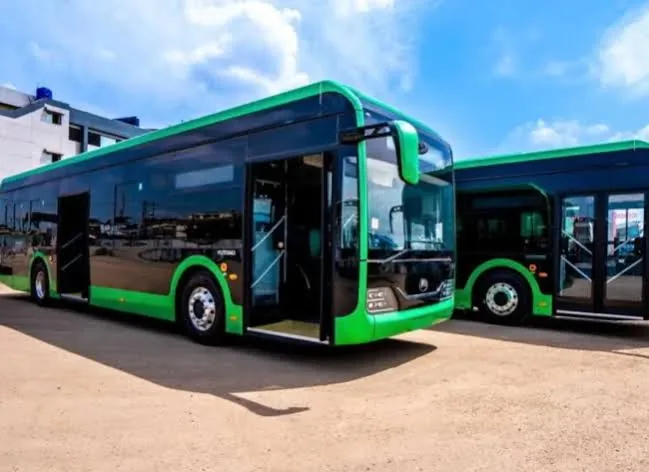
President Bola Tinubu has unveiled a fresh plan to reduce transportation costs across Nigeria, with Chinese automotive giant Yutong set to establish a compressed natural gas (CNG) bus assembly operation in the country.
The initiative is expected to support the Federal Government's affordable mass transit programme, which targets a reduction of about 40 per cent in transport fares on participating routes.
Under the arrangement, Yutong, described as the world's largest manufacturer of electric and CNG-powered buses, will initially supply 300 gas-powered buses, while subsequent units will be assembled locally to strengthen Nigeria's automotive industry.
The development was announced on Thursday by Bayo Onanuga, Special Adviser to the President on Information and Strategy, who said Tinubu invited the Chinese company to support efforts to expand affordable public transportation across the country.
According to the statement, the investment will be implemented through the National Affordable CNG Transit Programme (NACTP), in partnership with state governments, as part of the administration's Renewed Hope Agenda 2.0 covering 2027 to 2031.
The first batch of 100 buses is expected to arrive in Lagos by the end of December 2026, while the remaining vehicles will be supplied through subsequent phases.
A major component of the arrangement is the planned local assembly of the buses at YP Automobiles Bus Assembly, located at the former Leyland Automotive plant in Ibadan, Oyo State.
The government said the move would help revive the country's local vehicle manufacturing capacity, reduce dependence on imported buses and create employment opportunities for Nigerian engineers, technicians and other skilled workers.
Tinubu said the investment was intended to do more than increase the number of buses available for public transportation. He explained that it would also encourage technology transfer, strengthen local manufacturing and ensure a more sustainable supply of commercial vehicles.

The President stressed that the ultimate success of the CNG initiative would be determined by the amount of money ordinary Nigerians save when using public transportation.
He noted that millions of citizens depend on commercial buses to commute to work, take their children to school, access markets and transport goods between communities, making transportation costs a significant part of household expenditure.
Tinubu argued that the lower operating costs associated with CNG-powered vehicles must reflect in the fares paid by passengers rather than remaining solely as savings for transport operators.
He said the expected reduction would give workers, traders and families more money to spend on food, education and other essential needs.
The agreement was reached in collaboration with the Presidential Initiative on Compressed Natural Gas and Electric Vehicles (Pi-CNG & EV), which is coordinating efforts to expand the use of alternative-energy vehicles in Nigeria.
The latest investment comes as the Federal Government continues to push for cheaper transportation options following its earlier promise to significantly reduce fares nationwide before October 1, 2026.
The government maintains that expanding CNG-powered public transportation, encouraging local vehicle assembly and working with state governments will be critical to reducing the financial pressure transportation places on Nigerians.


Comments (0)
No comments yet. Be the first to share your thoughts!