


BY TAIBAT UMMI YAKUBU
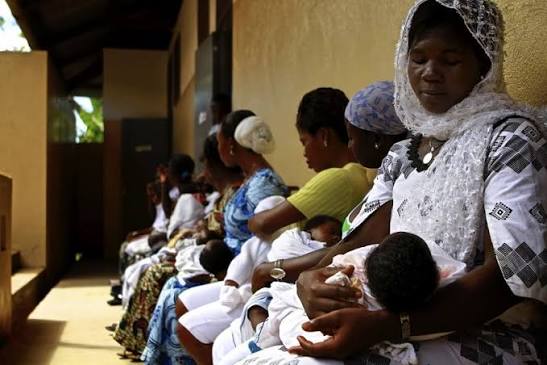
For thousands of women in northern Nigeria, giving birth remains a life-threatening experience, with the region accounting for roughly three out of every four maternal deaths recorded in health facilities across the country.
Kano, Borno, Jigawa, Yobe and Katsina are among the states carrying the heaviest burden, according to the 2026 Joint Annual Review (JAR) Statistical Book, which exposes deep inequalities in access to maternal healthcare between northern and southern Nigeria.
The findings present a troubling picture of maternal health in a country where thousands of women continue to die from complications associated with pregnancy and childbirth, despite improvements recorded in some parts of the health sector.
The report, produced by the Federal Ministry of Health and Social Welfare, was unveiled on November 10 during the third Nigeria Health Sector Joint Annual Review in Abuja.
One of its major findings is the sharp difference between maternal health outcomes in rural and urban communities. Women in rural areas face a maternal mortality ratio of 656 deaths per 100,000 live births, compared with 444 deaths per 100,000 live births in urban areas.
The figures suggest that where a woman lives continues to have a significant bearing on her chances of surviving pregnancy and childbirth, particularly in communities where access to skilled healthcare, emergency treatment and well-equipped hospitals remains limited.
Nationally, Nigeria's maternal mortality ratio stands at 572 deaths per 100,000 live births, far above the Sustainable Development Goal target of fewer than 70 deaths per 100,000 live births by 2030.
Maternal mortality refers to the death of a woman during pregnancy, childbirth or within 42 days after the end of pregnancy due to complications related to or aggravated by pregnancy and its management.
Many of these deaths can be prevented through regular antenatal visits, skilled assistance during delivery, timely emergency obstetric care and proper medical attention after childbirth.
The scale of the crisis extends beyond Nigeria's borders. A 2023 World Health Organisation report estimated that the country recorded 82,000 maternal deaths, 181,000 stillbirths and 277,000 neonatal deaths in 2020.
Together, the 540,000 deaths represented 12 per cent of all maternal, stillbirth and neonatal deaths worldwide, despite Nigeria accounting for only six per cent of global live births. The country ranked second globally, behind India, in the combined burden of these deaths.
Although the latest JAR report indicates that maternal deaths recorded in health facilities have declined nationally, the improvements have not been shared equally across the country.
Facility records show that Nigeria recorded 5,391 maternal deaths in 2024, before the figure dropped to 4,455 in 2025. The report also indicates a further decline in 2026, although the exact annual total requires confirmation from the final statistical table.
Quarterly figures similarly show progress, with the maternal mortality ratio falling to 128 deaths per 100,000 live births in the third quarter of 2026. This represented a reduction of approximately 46 per cent from its earlier peak.
The number of maternal deaths recorded during the same period also fell by about 40 per cent to 947.
However, the national improvement masks a more difficult situation in northern Nigeria, where deaths have continued to rise in the Northwest and Northeast, even as several southern states recorded reductions.

By 2026, the two northern geopolitical zones together accounted for approximately 75 per cent of maternal deaths documented in health facilities.
Kano, Borno, Jigawa, Yobe and Katsina were identified among the five northern states with the highest recorded burden.
In contrast, most southern states reported fewer than 50 maternal deaths. Osun recorded four, Abia five, Enugu eight, while Ekiti and Bayelsa each recorded nine.
The ministry cautioned that its figures were based on deaths captured through the health facility reporting system and might not represent the complete national picture. It acknowledged the possibility of underreporting or overreporting but maintained that the data remained useful for tracking developments in the health sector.
Beyond maternal deaths, the report also drew attention to complications that leave many women with long-term health problems and serious social consequences.
One of these conditions is vesicovaginal fistula (VVF), a childbirth-related injury that creates an abnormal opening between the bladder and vagina, causing women to experience continuous and involuntary leakage of urine.
The condition is commonly associated with prolonged or obstructed labour and can have devastating effects on a woman's health, dignity, family relationships and ability to participate in everyday activities.
Nigeria recorded approximately 3,060 new VVF diagnoses in 2026, down from 4,350 cases in 2025.
However, access to corrective surgery remains a concern. Of the women diagnosed in 2026, only 1,737 underwent surgical repair, representing 56.8 per cent of the reported cases.
This was lower than the 2,564 women, or 59 per cent, who received surgical repairs in 2025.
The Northwest and Northeast again recorded the highest numbers, with 1,420 and 982 cases respectively.
The findings highlight the need for stronger maternal healthcare services, particularly in rural and underserved communities, where women often face difficulties accessing properly equipped facilities and emergency medical attention.
They also point to the importance of improving referral systems, expanding skilled birth attendance and ensuring that women suffering from childbirth-related complications can obtain timely surgical treatment.
With Nigeria still recording maternal mortality levels far above international development targets, the latest figures show that reducing deaths will require more than improvements in national statistics. Greater attention must be given to the communities and women who continue to face the greatest risks.



Comments (0)
No comments yet. Be the first to share your thoughts!