


By: Kabir Ahmed S/Kuka
In Katsina State, the Pilgrims Welfare Board (PWB) begins preparations for the next Hajj immediately after the conclusion of each exercise — right from the Holy Land. This is done by reviewing and assessing everything that occurred during the just-concluded Hajj, similar to how Saudi Arabia itself operates. The Board starts planning for the following year by holding meetings with its officials even before receiving any circular from the National Hajj Commission of Nigeria (NAHCON).
Some of the key issues the Board usually begins reviewing include how to commence the collection of deposits. Once a directive is issued, there is no delay — the Board announces it and immediately starts collection. It also reviews cases of those who paid but were unable to travel, those who made deposits but failed to complete payment before the deadline, and other related challenges. This ensures timely action is taken so the Board is not overwhelmed when full-scale operations begin.
For the 2026 Hajj that just ended, our correspondent conducted a special investigation into how Katsina State pilgrims performed, the efforts of the State Pilgrims Welfare Board, and the role played by the State Government itself before departure, during the Hajj rites, and upon return. Our correspondent gathered these details in the Holy Land just days after the completion of the rites, before the airlift of pilgrims back home.
As is well known, Saudi authorities distribute responsibilities for managing Umrah and Hajj operations. Information we obtained shows that Saudi authorities recruit special staff to handle crucial duties during Hajj. These officials are assigned to oversee continents, regions, and different countries participating in the exercise.
Alhaji Abdurrahman Abubakar Sadiq is one of the officials in charge of the African continent. He falls under the team overseeing West Africa and he is responsible for Nigeria, Niger, Benin, Burkina Faso, and Ghana. Within these countries, he was specifically assigned to Nigeria, particularly the North-West states — Katsina being one of them.
Speaking to our correspondent via WhatsApp call, he said: “Last year, I wasn’t among those who oversaw this zone, but I worked adjacent to it. Kano, Katsina, Kaduna, Zamfara, and Sokoto were among the states I worked close to. I am also Hausa, and I have lived in this country for 55 years. I’ve spent 25 years in this job of overseeing countries during Hajj. You know this country carries out extensive planning and prioritizes security above all. And with security work, you don’t want to be known publicly if you’re a field operative. I know you reached me through a friendship of about 8 or 9 years, and you asked me to explain — for Allah’s sake. So, some of the things we monitor, which sometimes lead to a country’s citizens being barred or praised for their conduct, and even rewarded, include the following...”
Alhaji Abdurrahman listed several factors: “We monitor interpersonal relations among the pilgrims themselves, the training they received before coming, how they live with their neighbors, how they comply with the country’s laws and regulations, what they are satisfied with, and where they experience concerns. Let me give you an example: some Katsina pilgrims faced a slight issue during the Madinah leg when they were not scheduled to enter Rawdah. But this did not agitate them. Again, during the Mina stay, when a group planned a protest over food, Katsina pilgrims showed no interest. In fact, they said they weren’t even aware it was happening. We observed that.”
The official didn’t stop there. He added: “Healthcare, the vigilance of officials overseeing their people, preaching, guidance on how rites are performed, low reports of missing pilgrims, and almost no cases of currency exchange fraud — all these are things we monitor from each state. They show us the effort put in and how well a state trained its people before Hajj. Then there is the cooperation between staff and representatives. Although we did record a few minor issues that weren’t deal-breakers, which I hope will be corrected going forward. The first issue is with preachers.
My colleague told me that very few of your pilgrims’ preachers knew what they were doing or understood the responsibility on their shoulders. This is a major issue that must be looked into. Then, the guides assigned to direct pilgrims — they also didn’t know their roles. He told me he heard about 80% of pilgrims complaining about this. There must be reform here. Wherever the problem lies, it should be addressed. I’ll leave that to you, the journalist. But the good news I’ll give you is this: all those things I’ve listed to you, and even the ones I haven’t mentioned — honestly, your state, Katsina, did what was right and deserves commendation.
The sacrifice, Hadaya and Sallah gifts the Governor provided — for the third time this year it was recommended — I won’t say for certain, but Insha Allah, you will hear of some goodwill this country will extend to your state for fully complying with all rules and observing regulations during this year’s Hajj. It has even become a challenge to the country itself.”

Anna’im, one of the drivers transporting pilgrims, told us he was among those who conveyed Katsina pilgrims. “First, I took them from Jeddah to Madinah, just as I did last year. Honestly, they are obedient and law-abiding people. You know we have driving laws here, but since I came to understand them, I’ve never heard any of them complain about how I drive — unlike some other states.”
Our correspondent also sought the views of non-Katsina pilgrims who were neighbors to Katsina pilgrims on how they saw the state’s performance.
Hajiya Lubabatu, from Kano State, said: “The biggest thing that shocked me and got me thinking — and further confirmed to me that Katsina people have "kunya gare su ba tsoro ba" as it was said in Hausa, and are truly obedient and respectful. During one of the airlifts, here in Kano, we protested when some of us were to be taken to Katsina to fill up seats there. Our leaders got involved after we heard that Katsina pilgrims were already in the Airport waiting for the flight. But instead of hearing that they caused any uproar like we did, we heard that the people simply handed the matter over to Allah. They had the same thing done to them in the past, I was told — some were taken to another state to fill a plane, not because Katsina couldn’t fill its own. But out of magnanimity, they didn’t disturb the airlines by refusing. I’ve been thinking about that for a long time. It further showed me that the Katsina Pilgrims Board did serious sensitization on patience during Hajj. Another thing — I heard that despite the long waiting hours, they fed themselves. Neither Max Air nor the Board did. Honestly, I commend the Board, not just the people. Because if the Board hadn’t drilled patience into them regarding Hajj, no one knows what would have followed.
Let me tell you, I even visited the houses they were lodged in at Makkah just to see their condition. I went to visit friends, but the way I saw their men and women cooperating — you’d think they were from the same parents. Then the good things I saw coming in, especially food and care — honestly, if Allah gives me another chance next year, I’ll go pay my fare through Katsina State. They really impressed me. Hmm. The sacrificial rams I saw slaughtered — honestly, Katsina State was the champion in 2026.”
Malam Usman, one of the scholars sent to preach to pilgrims (state name withheld), said: “I sat among those listening to sermons and sensitization from Katsina State scholars, especially during our stay in Mina. There was Sheikh Dr. Muneer Ja’afaru, Dr. Ahmad Musa Abdullahi, Malam Safana, and others. Honestly, I got some points from them and went to teach my own people. I really benefited from Katsina’s system. I hope Allah allows us to meet them again next year.”
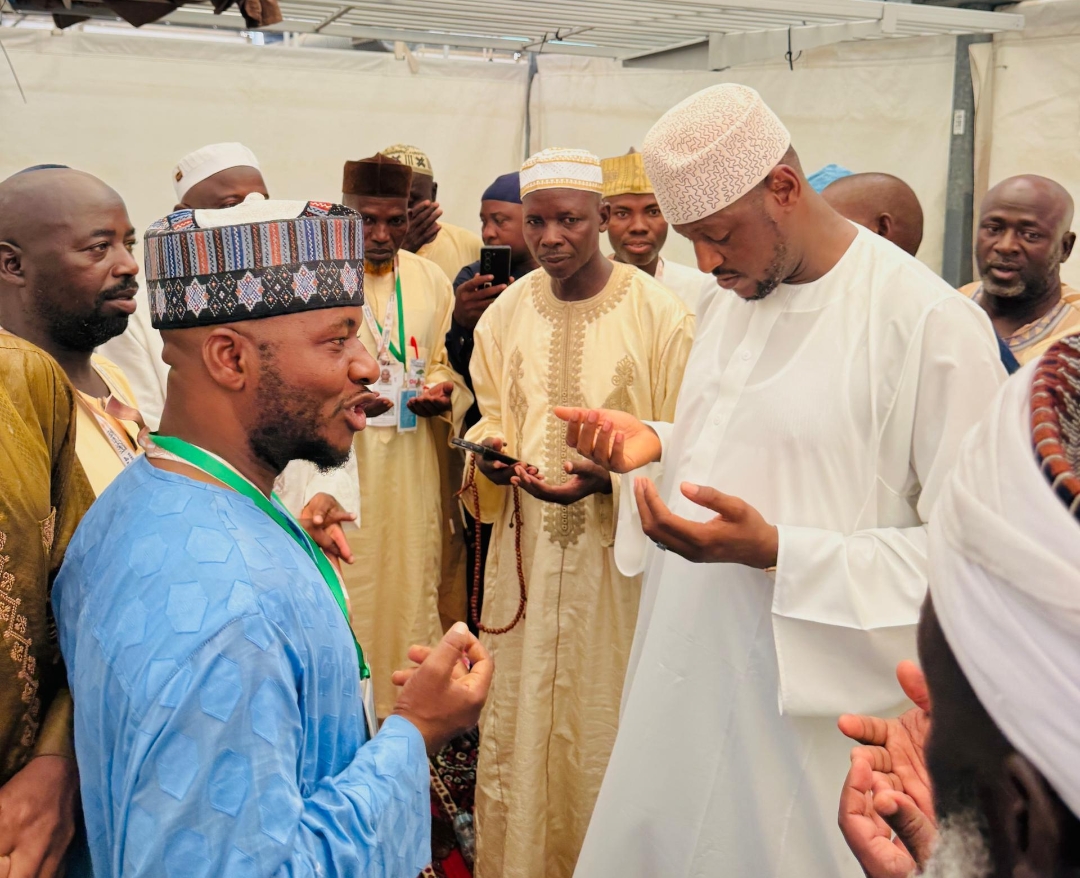
Governor Radda was the first Governor among others who used to visited his people tent by tent in Mina to see their condition and the way they were treated, chat with them and do prayer together for the success and peace keeping to the state.
If we continue to present information like this about Governor Radda regarding Hajj, we could publish a full 2,000-page book or more. Therefore, recognizing him as the Governor of the entire North — not just the North-West — for the 2026 Hajj is appropriate. He has become a leader for other governors to emulate.
Recommendation – One notable issue in this year’s Hajj, and in previous years, is that government often sponsors seats for certain individuals to support other pilgrims. But most times, it backfires. Although it’s a political season, it is better to appoint people with Islamic knowledge and understanding of Hajj rites, not just for political reasons. Most problems come from the preachers sent. Sometimes, pilgrims don’t even know who the preachers from their area are. Likewise, with the guides assigned to pilgrims — often those appointed end up needing guidance themselves. Their job isn’t too difficult, though. Then there are the luggage porters — they don’t have major issues. But for local government representatives appointed, there are problems too, because not all of them stay to oversee their pilgrims, and this happens even from back home.
Also, there is a shortage of media personnel reporting on Hajj from the Holy Land. It’s a job that requires the public to constantly hear about the condition of their people while performing Hajj. It is important for the government to note these issues in order to bring reform and ensure no aspect is left unchecked.
This media outlet, FRESH MEDIA GARDEN, commends Governor Radda for the way he contributes to this exercise, from which even other states benefit

Comments (0)
No comments yet. Be the first to share your thoughts!