


By Mahfuz Mundadu
There is something unsettling about a nation where those entrusted with protecting lives seem more preoccupied with securing another term than accounting for the one they already hold. Farmers abandon their fields, children lose their classrooms, and families flee their homes. Yet political consultations flourish, electoral alliances multiply, and the machinery of power remains energetic whenever its own survival is at stake. Has political office ceased to be an instrument of public service and become an end in itself?
What moral justification can authority claim when it enjoys the privileges of power while neglecting its obligations? A government cannot invoke the people's mandate to establish legitimacy and subsequently treat their suffering as somebody else's concern. Political authority is a trust, not a personal inheritance. Its worth must be measured by the lives it protects, not the applause it purchases.
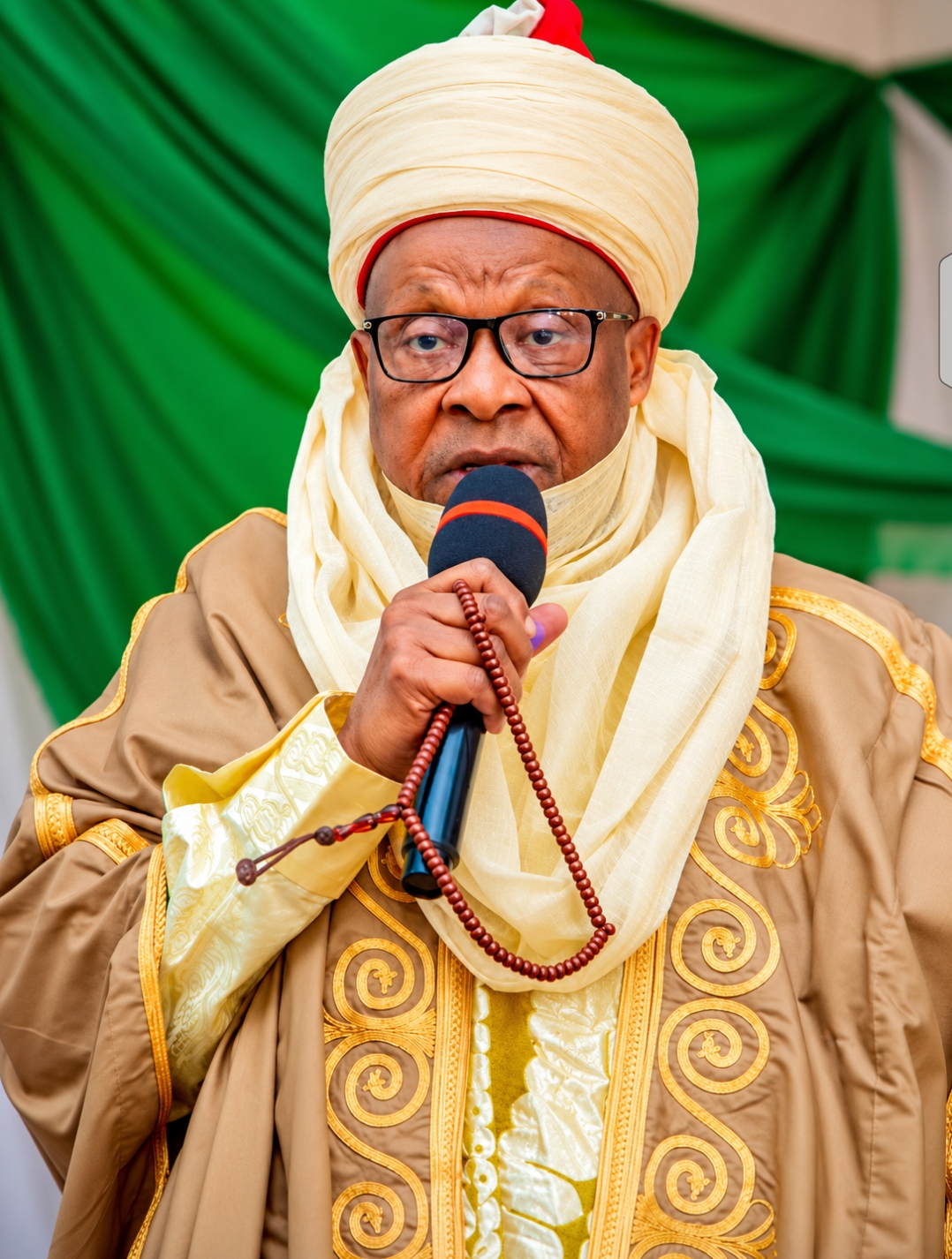
The reported intervention by the Emir of Katsina, His Royal Highness Alhaji Abdulmumini Kabir Usman, brought this contradiction into focus. His concerns about insecurity, political selfishness and public suffering deserve attention. Beyond the controversy lies a question of conscience. What becomes of our humanity when the pursuit of political office commands greater attention than the people whom that office exists to serve?
*Then Katsina witnessed a tragedy that made the question painfully immediate. Sheikh Yahaya Ibrahim Masussuka was shot dead alongside Adamu Abubakar*. A militant organisation has reportedly claimed responsibility, but that claim must be authenticated. Justice begins by distinguishing suspicion from evidence. Yet, those known to have issued threats to the deceased earlier, indeed have a case to answer.
Still, the moral question cannot wait for a courtroom verdict. What becomes of scholarship when disagreement gives way to threats? One may challenge a scholar's interpretation, expose weaknesses in his reasoning and reject his conclusions. That is the discipline of intellectual engagement. But whoever imagines that intimidation can settle a theological argument has mistaken fear for knowledge.
The Qur'an instructs believers to invite with wisdom, good counsel and the finest manner of disputation. That instruction loses its meaning when debate becomes a contest of threats. A scholar may be fallible; so may his critics. Neither possesses a licence to extinguish the other. Defending a person's right to speak peacefully does not require accepting his theology.
There is also a question for public institutions. If threats were reported before this assassination, who received the complaints, what assessment followed, and what protective steps were considered? The logical queation to ask is whether the machinery of protection responds adequately when danger is signalled. An investigation worthy of the name must examine both the murder and the warnings preceding it.
Consider the widening geography of fear. The farmer fears the bandit, the traveller the kidnapper, the pupil the road to school, and now the outspoken scholar may fear the consequences of him thinking aloud. Yet together they expose a nation struggling to secure the ordinary conditions of life. What exactly are we campaigning to govern if citizens cannot farm, travel, learn or disagree in peace?
Yours sincerely sometimes wonders whether democracy, supposedly government of the people, by the people and for the people, has become government of the few fools, by the few fools, and for the few fools. But who are the fools? Those who betray public trust, or those of us who repeatedly entrust them with it?

Our politicians did not descend from another planet. They emerged from our families, neigbourhoods, professions and congregations. We condemn corruption until its proceeds benefit our household; denounce nepotism until a relative receives the appointment; demand merit when excluded and celebrate connections when included. Our principles seem unshakable until personal advantage offers them a comfortable chair. *Religious tolerance can suffer the same selective application: we defend freedom for our own school of thought while demanding silence from another.*
Nevertheless, society's contradictions cannot absolve those entrusted with public power. A farmer cannot deploy security forces, nor can a displaced mother direct national institutions. The federal government controls the principal national security agencies; governors, councils and legislators possess distinct administrative, financial and oversight duties. Each must account for its mandate. Justice requires attention to power and circumstance.
Traditional rulers, religious authorities and intellectuals must likewise examine their influence. Some speak courageously against injustice; others cultivate proximity to power while exchanging public silence for private access. Against this background, the Emir of Katsina deserves appreciation for raising uncomfortable concerns. May the Most Merciful Lord deepen his wisdom, strengthen his courage and steadfastness, and protect him from the costs that principled candour may invite.
Yet moral concern must mature into practical action. Communities must continually hold the goverment accountable and responsible at all time. Cases of negligence and selective enforcement of law muct be properly documented and presented through appropriate channels. For officials, the questions remain elementary: what were you entrusted to accomplish, what resources did you receive, and what have you delivered?
Nigeria deserves a better deal. Economic expertise and international cooperation matter, but approval from the IMF or World Bank cannot substitute for citizens' lived realities. Let the farmer testify that cultivation is safe, the mother that her children can learn, and the trader that honest labour sustains a household. *Let a scholar speak without looking over his shoulder.*
History counsels attention to grievances before public confidence deteriorates further. When peaceful remedies appear ineffective, frustration may deepen and stability weaken. This is neither a prediction of anarchy nor an endorsement of upheaval, whose costs often fall most heavily upon the vulnerable. It is a call for credible protection, impartial justice and timely change while civic and civil avenues remain open.
The murder of Sheikh Masussuka and Adamu Abubakar must not disappear into the familiar cycle of outrage and forgetting. Nor should grief become an excuse for sectarian accusations unsupported by evidence. The deaths of both men demand equal seriousness. Every lost life deserves full justice. Let investigators establish the truth, let religious disputants recover the ethics of discourse, and let public officials answer for the safety of those they serve. A society that celebrates truth but tolerates intimidation has begun to surrender its conscience to gangsters long before it realise it.
The buck must stop where authority resides, but self-examination must begin with each of us. May we refuse to normalise fear, excuse injustice or confuse loyalty with surrender of judgment. When a farmer cannot cultivate, a child cannot learn and a scholar cannot speak without fear, the issue is no longer merely the performance of government. It is whether we are preserving the conditions that make civilisation possible.
*And for the miseabkes souls behind this heneious crime ... Allah ka mai da su mujiya cikin al'umma.*



Comments (0)
No comments yet. Be the first to share your thoughts!