


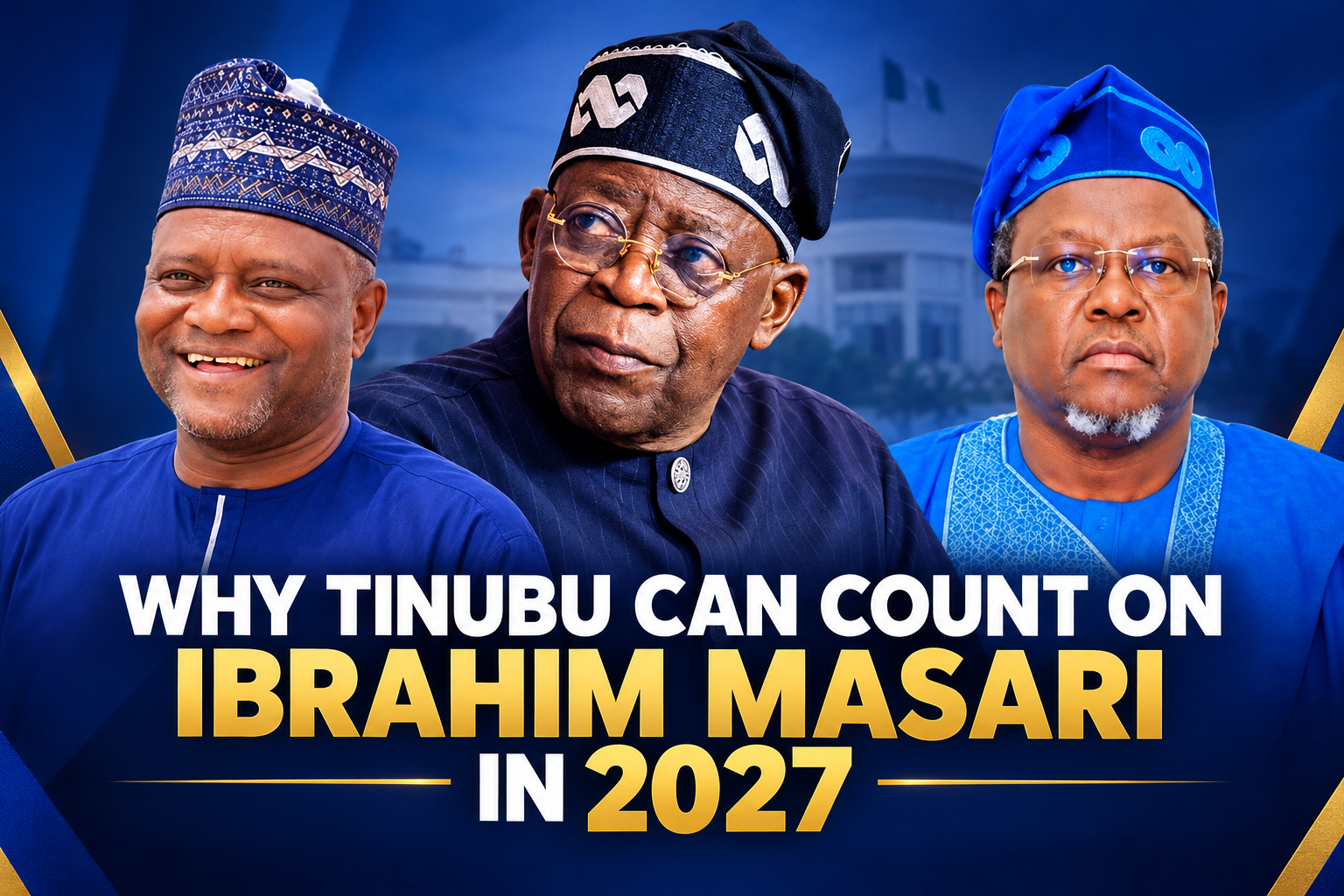
By Professor Armayau Hamisu Bichi
Directorate of Labour Union Relations, President Tinubu Presidential Campaign Council, 2027 General Election
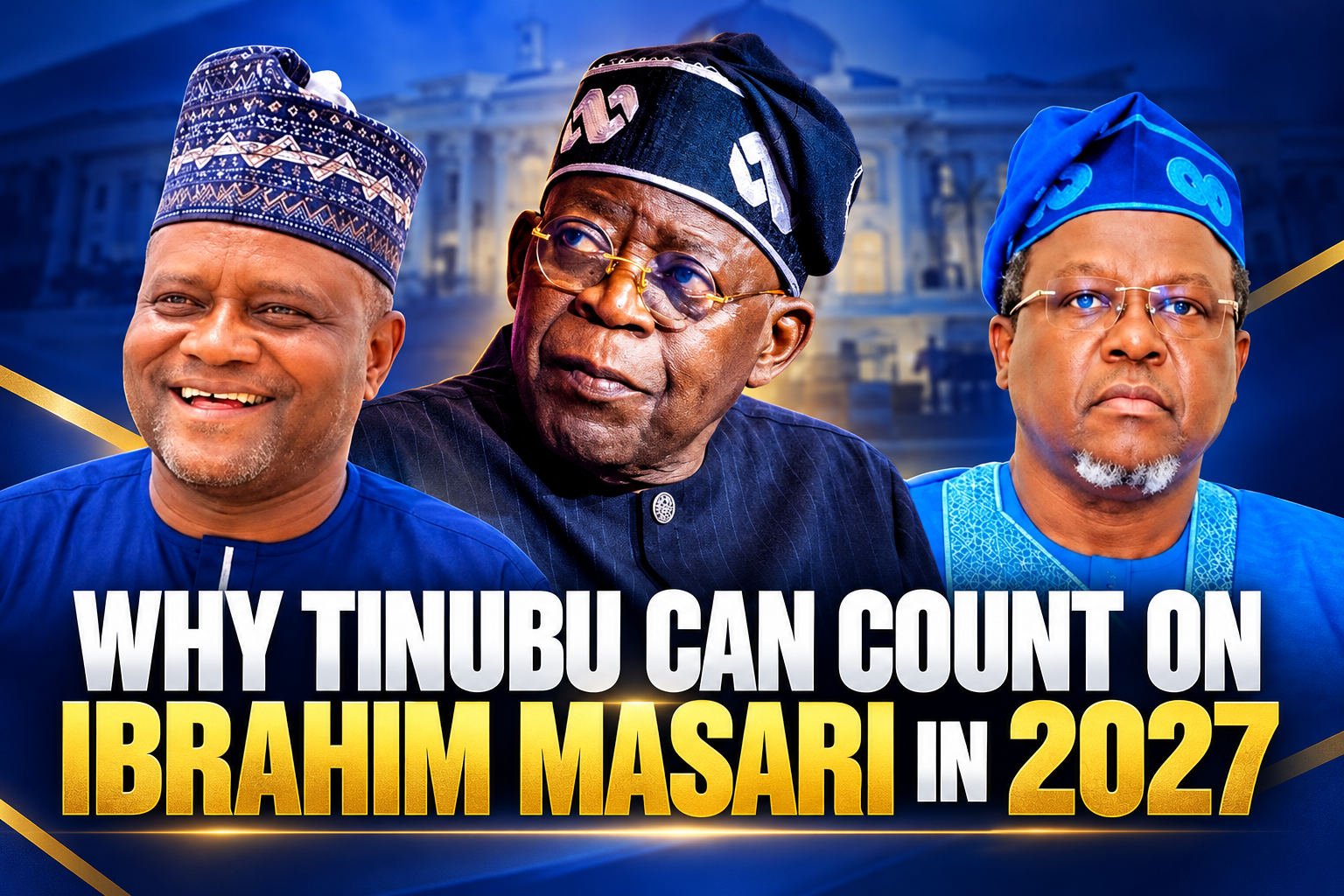
There is a fundamental truth in politics that no amount of campaign posters, television appearances, political slogans or grand rallies can erase; the most enduring political influence is built not merely on the promises politicians make, but on the lives they touch, the burdens they help to ease and the hope they restore among ordinary people.
As Nigeria approaches the 2027 general election, this truth deserves renewed attention, particularly when discussing the political influence and human-development philosophy of Ibrahim Kabir Masari, my principal, whose political journey offers an important perspective on the relationship between leadership, grassroots engagement and electoral confidence.
As someone who has observed the dynamics of political mobilisation and the importance of human relationships in public service, I believe President Bola Ahmed Tinubu's re-election prospects must be considered within the broader context of the people who believe in his leadership, the political structures supporting his administration and the individuals whose influence extends beyond the corridors of power. Among those whose political contributions deserve attention is Ibrahim Kabir Masari, widely regarded in political circles as a strategic mobiliser and an influential bridge between political leadership and grassroots constituencies.
My confidence in the political value of Masari's contribution is rooted in a simple conviction: politics becomes more powerful when influence is translated into meaningful human relationships and tangible development. The people are not merely names on a voters' register. They are citizens with expectations, families with aspirations, young people searching for opportunities and communities demanding leadership that listens. Any political strategy that recognises these realities stands a better chance of earning public confidence than one that treats elections as isolated contests of personalities and propaganda.
Masari: The Strategic Value of Grassroots Political Engagement
Ibrahim Kabir Masari's relevance to Nigeria's contemporary political conversation lies in the strategic importance of political networking, consultation, reconciliation and sustained engagement with stakeholders. In a political environment as diverse as Nigeria's, successful mobilisation requires more than the ability to assemble crowds. It demands patience, political intelligence, an understanding of local realities and the capacity to maintain relationships across competing interests.
This is where Masari's political profile becomes particularly significant. His association with President Tinubu's political project places him within a network of political actors whose responsibilities include strengthening party cohesion, engaging stakeholders and communicating the administration's vision to communities across the country. Such responsibilities are essential in a democracy where political support must continually be earned, nurtured and renewed.
Yet, I must emphasise that political influence should never be measured exclusively by proximity to the President or access to the seat of power. Its real value lies in what it enables a political actor to accomplish for the people. The ability to bring stakeholders together, resolve disagreements, encourage participation and direct attention towards community needs is what gives political influence lasting significance.
For Masari, therefore, the challenge and opportunity ahead lie in ensuring that his political relationships continue to serve a wider public purpose. The stronger the connection between political mobilisation and practical human development, the more credible the political message becomes.
Human Development: The Foundation of Lasting Political Loyalty
I have always maintained that human development occupies a central place in the relationship between citizens and government. Roads, hospitals, schools, employment opportunities, agricultural support, accessible healthcare and economic empowerment are not merely items on a policy document. They are the everyday realities through which citizens evaluate the sincerity of leadership.
For a young Nigerian seeking employment, development means a genuine opportunity to earn a living. For a farmer, it means access to inputs, security, markets and infrastructure. For a struggling family, it means economic conditions that make food, healthcare and education more accessible. For a community threatened by insecurity, it means the ability to sleep without fear and pursue legitimate economic activities without intimidation.
These are the issues that should inform the political conversation ahead of 2027. The Tinubu administration's achievements must be assessed against measurable outcomes, while its shortcomings should be acknowledged and addressed with urgency. Where policies have delivered benefits, those benefits should be communicated honestly. Where citizens continue to experience hardship, the appropriate response is not denial but practical solutions.
This is also where political leaders and mobilisers such as Masari can make a meaningful contribution. By listening to communities, communicating their concerns to the appropriate authorities and encouraging accountability, political influence can become an instrument of development rather than an end in itself.
I am convinced that the most persuasive argument for any administration seeking another mandate is the difference it has made in the lives of the people. Political loyalty becomes more sustainable when citizens can connect public policy with personal experience and community progress.
Why I Believe Tinubu Can Build a Strong Case for 2027
My confidence in President Tinubu's prospects for the 2027 general election is grounded in the possibility of consolidating political organisation, strengthening stakeholder relationships and demonstrating measurable improvements in the lives of Nigerians. I recognise, however, that an election is ultimately decided by voters, whose choices cannot responsibly be presumed or guaranteed in advance.
The President's political camp must therefore approach the coming contest with humility, strategic discipline and a clear understanding of the concerns confronting ordinary Nigerians. Economic pressures, the cost of living, unemployment, insecurity and public confidence in governance will remain critical considerations. No political structure, however influential, can permanently substitute for the people's lived experiences.
This is why I consider the contributions of trusted political intermediaries important. Individuals who understand the language of grassroots politics can help bridge the communication gap between government and citizens. They can explain policy decisions, gather feedback, identify areas of dissatisfaction and encourage constructive engagement. But their credibility depends on the accuracy of their communication and the seriousness with which the concerns of the people are conveyed.
Masari's political influence can contribute to this process by supporting dialogue, promoting unity within the political family and helping translate the President's agenda into conversations that resonate with local communities. Such efforts, when accompanied by demonstrable development and responsive governance, can strengthen the administration's case for a second term.
My assurance, therefore, is not that victory can be declared before Nigerians cast their ballots. It is that a well-organised political movement, supported by credible leadership and a demonstrable record of public service, can make a compelling case for electoral renewal.
Beyond Political Slogans: The Importance of Credibility
In Nigerian politics, it is easy to mistake noise for influence and public appearances for genuine acceptance. Yet, elections repeatedly remind political actors that public confidence is complex. Citizens may appreciate an individual politician's generosity or accessibility while still judging the performance of the government that person supports.

For this reason, the political capital associated with Masari should be deployed towards building trust, promoting responsible political communication and encouraging a culture of service. It should not be treated as an automatic guarantee of electoral outcomes.
The 2027 campaign must be about more than personalities. It must present a credible explanation of the administration's record, a realistic plan for unfinished business and a convincing account of how the next four years would improve the lives of Nigerians. Where achievements are claimed, they should be supported by verifiable evidence. Where policies require adjustment, the campaign should demonstrate a willingness to learn and improve.
This is the distinction between temporary mobilisation and enduring political legitimacy. The former may attract attention; the latter earns respect.
Unity, Reconciliation and the Responsibility of Leadership
One of the most demanding responsibilities in any political movement is the maintenance of unity among people with different ambitions, interests and expectations. Political disagreements are inevitable, particularly within a broad national coalition. What matters is whether leaders possess the patience and judgement to resolve disputes without sacrificing the larger public interest.
Masari's experience within the political environment surrounding President Tinubu makes stakeholder engagement and political reconciliation relevant dimensions of his public profile. Such work can help strengthen organisational cohesion, encourage constructive participation and reduce the distractions that arise when personal ambitions overshadow collective objectives.
Nevertheless, unity must be built on more than the distribution of political advantages. It should be anchored in shared objectives, fairness, mutual respect and a commitment to the welfare of Nigerians. A united political movement is most effective when its members understand that their ultimate responsibility extends beyond winning elections to delivering on the expectations that brought them to power.
For President Tinubu's political camp, this means ensuring that the interests of young people, women, workers, farmers, entrepreneurs and vulnerable communities are not relegated to the margins of political calculations. A campaign that listens broadly and responds seriously will be better positioned to communicate its message across Nigeria's diverse constituencies.
My Message to President Tinubu: The People Must Remain the Priority
Mr President, as the country approaches another defining electoral moment, the most valuable political investment remains the trust of the Nigerian people. Political structures matter. Experienced strategists matter. Grassroots networks matter. But all these assets achieve their highest purpose when they contribute to better governance and improved human welfare.
The political influence of Ibrahim Kabir Masari and other committed stakeholders can help strengthen your engagement with citizens, communicate your administration's priorities and mobilise support for your political programme. Yet the strongest foundation for re-election will be a record that Nigerians can examine, discuss and judge for themselves.
The concerns of citizens must remain central to the national conversation. Economic reforms must be accompanied by credible measures that ease hardship and expand opportunities. Security efforts must translate into safer communities. Investment in infrastructure must produce practical benefits. Young Nigerians must see pathways towards productive employment, while workers and vulnerable households must have reason to believe that their sacrifices are recognised.
These are not merely campaign considerations. They are the responsibilities of democratic leadership. When government demonstrates that it understands the difficulties confronting its citizens and is committed to addressing them, it strengthens the moral and political basis upon which it can seek another mandate.
2027: A Call for Service, Strategy and Responsible Mobilisation
As a supporter of President Tinubu's political project and an admirer of the strategic importance of Masari's role, I believe the road to 2027 should be approached with confidence, but also with realism. Confidence without evidence becomes complacency; mobilisation without listening becomes propaganda; and political influence without public benefit eventually loses its persuasive force.
The task before the President's supporters is therefore clear: organise responsibly, communicate honestly, strengthen internal cohesion and demonstrate how policies can translate into a better quality of life. The contribution of every political stakeholder should be judged not simply by the number of supporters assembled at a rally, but also by the quality of engagement with citizens and the seriousness with which their concerns are addressed.
Masari's role can be especially valuable where political relationships are used to promote dialogue, encourage participation and connect communities with the institutions responsible for public service. That is the kind of influence worth celebrating: influence that opens doors, builds understanding and directs attention towards the needs of ordinary Nigerians.
Ultimately, no responsible political observer can guarantee the outcome of a future election. What can be done is to build the conditions under which a candidate can earn public confidence. For President Tinubu, those conditions include credible governance, measurable progress, effective communication and a political organisation that understands the difference between demanding loyalty and deserving it.
My conviction remains that Ibrahim Kabir Masari's political relationships and organisational experience can contribute meaningfully to President Tinubu's 2027 re-election campaign. His influence, however, will have its greatest value when it complements a broader commitment to human development, responsive governance and the welfare of citizens.
The ultimate strength of any political leader is not measured solely by the number of influential allies standing beside him. It is measured by the confidence of citizens who believe that their future can improve under his leadership. Political allies can mobilise, strategists can coordinate and campaign organisations can communicate, but the people retain the final democratic choice.
That is why I believe President Tinubu's strongest path towards electoral success lies in combining the strategic value of political figures such as Masari with a demonstrable commitment to improving the lives of Nigerians.
As the 2027 general election approaches, our responsibility should be to turn political relationships into public value, campaign promises into credible commitments and political ambition into a renewed determination to serve.
Victory is never secured by influence alone. It is earned when influence serves the people, leadership delivers results and citizens freely decide that the journey deserves to continue.
Professor Armayau Hamisu Bichi
Directorate of Labour Union Relations
President Tinubu Presidential Campaign Council, 2027 General Election



Comments (0)
No comments yet. Be the first to share your thoughts!