


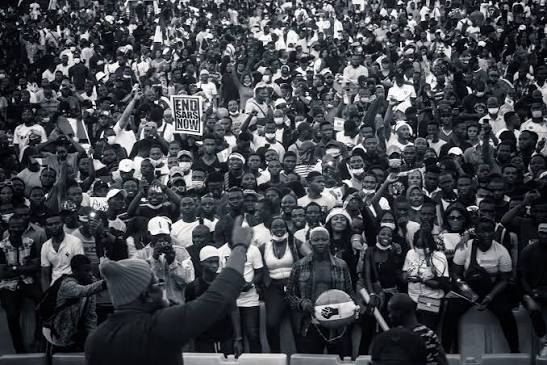
Six years after the #EndSARS protests shook Nigeria, human rights activist and protest frontliner Dabira Adeyinka says the struggle for justice remains unfinished, accusing authorities of failing to deliver accountability for those killed and meaningful reforms to address police brutality.
In an interview with ARISE News on Tuesday, Adeyinka said the memories of the demonstrations remained painful, arguing that Nigerians were still waiting for answers over the deaths recorded during the protests and the treatment of citizens who took to the streets to demand an end to police abuse.
She recalled how young Nigerians marched with the hope that their demands for fairness, good governance and respect for human rights would lead to lasting change. Instead, she said, the absence of accountability had left many victims and their families without the justice they expected.
“I came and I removed subsidy the first day. I knew Nigeria would go bankrupt. There was nothing left to pay subsidy,” she said, adding that political opponents’ promises to restore it could not persuade her to reverse course.
Adeyinka maintained that the movement had not achieved its major objectives, although she believes it served as a wake-up call for a generation of Nigerians. She also expressed concern that citizens still risk intimidation or arrest for speaking out against government actions or recording interactions with police officers.
According to her, the continued reports of police harassment suggest that the reforms many protesters hoped to see have yet to make a significant difference in their everyday experiences.
“Police brutality should stop—that is all,” she said, recalling that protesters had gone into the streets carrying Nigeria’s national flag and believing that their constitutional rights would be respected.
The activist also questioned why no one had been held accountable for the lives lost during the demonstrations, describing it as painful that citizens demanding good governance had yet to see the justice they sought.
White Paper, compensation still unresolved
Adeyinka said the failure to implement recommendations from the 2021 White Paper report had deepened the frustration of victims and their families. She also claimed that an investigation involving a United Kingdom parliamentary panel had resulted in a favourable outcome for representatives of the victims, but that promised compensation had not been paid.
“Justice was never served. The White Paper report was completely ignored,” she said, adding that survivors and families of those killed were still waiting for compensation and what she described as a proper investigation.
She further alleged that police reforms had produced no significant improvement, pointing to incidents of harassment and the intimidation of people who film police officers while carrying out their duties.

For Adeyinka, the problem goes beyond the failure to address past grievances. She argued that citizens cannot feel secure when documenting encounters with the very officers expected to protect them.
Although she acknowledged that some people who initially supported the movement had since abandoned its ideals, she insisted that others remained committed to demanding justice and better governance.
She said the actions of those who had changed their positions should not erase the sacrifices of Nigerians who participated in the protests or weaken the demands of families still seeking answers.
2027 election puts citizens’ participation in focus
With Nigeria heading towards another general election in 2027, Adeyinka urged young people to become more involved in politics rather than surrendering to the belief that their votes cannot make a difference.
She encouraged registered voters to collect their Permanent Voter Cards (PVCs) and participate in the electoral process, describing public disengagement as a major obstacle to efforts to hold political leaders accountable.
“Nobody will fix Nigeria for us—we have to fix it ourselves,” she said, reflecting on her own experience in politics, which she claimed exposed weaknesses in the system and eventually led her to resign rather than compromise her values.
She also challenged opposition parties to overcome their internal divisions and consider rallying behind a candidate with a demonstrable record of integrity, rather than allowing competing ambitions to undermine their collective efforts.
“Rather than remaining fractured by power ambitions, candidates should align behind a single, tested, and trusted individual—not based on campaign promises or acting, but on proven integrity,” she said.
Adeyinka’s remarks have brought renewed attention to the questions surrounding the legacy of #EndSARS: whether the demands that drove thousands of Nigerians into the streets have translated into meaningful change, and whether the victims and their families will eventually receive the justice they seek.
For the activist, the answer remains unresolved. As another election approaches, she believes the challenge is not simply to remember the protests, but to sustain public engagement with the issues that gave rise to them in the first place.
.webp)
Comments (0)
No comments yet. Be the first to share your thoughts!