


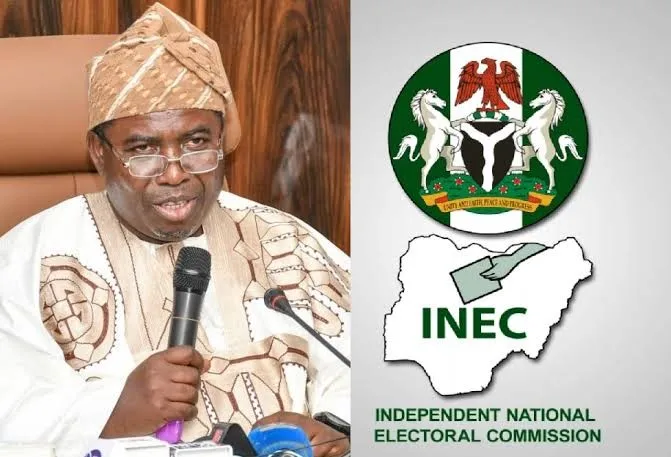
Nigeria’s next general election is still months away, but the Independent National Electoral Commission (INEC) has already begun rolling out plans that could significantly change how the 2027 elections are organised, monitored and experienced by voters.
From the possible use of Artificial Intelligence in election management to reforms targeting electoral personnel, voter registration and results verification, INEC is signalling that the next election will come with a stronger emphasis on technology and institutional reform.
For millions of Nigerians, however, the biggest question is not simply what INEC is planning.
It is what these changes will actually mean when voters walk into polling units in 2027.
AI is coming into the electoral process
One of the biggest announcements from the commission is its decision to establish a dedicated Artificial Intelligence Division under its Information and Communication Technology Department.
INEC Chairman, Prof. Joash Amupitan, said the commission was already integrating automated AI auditing tools into its results verification process.
“Artificial intelligence governance, the commission has established a dedicated artificial intelligence division with the ICT department,” Amupitan said.
He added that the commission was developing a five-pillar AI governance framework under which human oversight would remain central to the use of artificial intelligence.
This means AI is not expected to simply replace election officials. Instead, the technology is being positioned as another layer of verification and analysis within the electoral process.
If successfully implemented, AI could help INEC analyse large volumes of election information more quickly, identify inconsistencies and support the verification of results.
But the move also raises an important question: how transparent will the technology be?
For voters and political parties to trust AI-assisted election processes, INEC will need to explain clearly what the technology will do, what it will not do and how human officials will supervise its decisions.
What happens to voter registration?
One of the most important parts of the election process remains voter registration.
No matter how advanced the technology becomes, Nigerians cannot vote if they are not properly registered.
INEC has therefore continued to focus on the Continuous Voter Registration process, particularly among young Nigerians who have reached voting age or people who need to transfer their registration, correct their details or replace damaged cards.
This is particularly important because Nigeria has one of the world's largest youth populations, meaning millions of young Nigerians could become eligible to vote before the 2027 election.
For first-time voters, registration is only the beginning.
They will need to ensure that their information is correctly captured and that they understand where and how they are expected to vote.
The voter will have more responsibility
One lesson from previous elections is that technology cannot solve every electoral problem.
Voters themselves also have a role to play.
Nigerians will need to verify their registration information, protect their personal details and avoid relying on social media posts or political claims that have not been verified.
The closer the election gets, the more misinformation is likely to circulate online.
Fake polling-unit information, fabricated INEC statements, manipulated videos, false election dates and misleading claims about voting procedures can spread rapidly through WhatsApp, Facebook, TikTok and other platforms.
That means electoral literacy could become just as important as electoral technology.
INEC says its workers also need better welfare
Another reform that may receive less attention but could have significant consequences is INEC's plan to improve the welfare of its employees.
Amupitan recently said INEC workers were among the least-paid employees in Nigeria, arguing that better remuneration was necessary if the commission expected its personnel to remain accountable.
“INEC staff are the least paid in Nigeria. So, we felt if we want to demand and hold our staff responsible, we should give them a living wage,” he said.
The commission has also indicated that it is moving away from the conventional civil service payment structure towards a separate electoral and salary structure.
Why does this matter to voters?
Election officials are responsible for many of the activities that determine what happens at polling units and collation centres.
Better-trained, motivated and properly compensated personnel could potentially strengthen the administration of elections.
But remuneration alone will not guarantee credible elections.
Training, independence, accountability and strict enforcement of electoral rules will remain equally important.

Results verification is becoming a major focus
Results have always been one of the most sensitive aspects of Nigerian elections.
Disputes over polling-unit results, collation and transmission have repeatedly generated controversy.
INEC's decision to integrate automated AI auditing tools into its results verification process therefore represents one of the more significant technological developments ahead of 2027.
The important issue for voters will be whether these systems can make the process easier to verify and understand.
The commission will also need to ensure that political parties, observers and members of the public understand the safeguards surrounding the technology.
Will technology finally solve Nigeria's election problems?
This may be the biggest question surrounding INEC's preparations.
Technology can reduce certain forms of human error, improve data management and make some processes faster.
But it cannot by itself eliminate vote buying, intimidation, violence, political manipulation, misinformation or other problems that occur outside the technological side of elections.
The credibility of the 2027 election will therefore depend on more than machines and software.
It will depend on the conduct of political parties, candidates, security agencies, election officials, observers, the media and—perhaps most importantly—the voters themselves.
Young Nigerians could become decisive
Another major factor heading into 2027 is the country's youthful electorate.
Nigeria has a huge population of young people who increasingly consume political information through social media rather than traditional media.
This creates both an opportunity and a challenge.
Young voters could play a major role in determining the outcome of the election, but they are also among the groups most exposed to digitally generated misinformation.
With AI itself becoming part of the electoral process, Nigerians may increasingly encounter AI-generated images, videos, audio recordings and political messages designed to influence voters.
The ability to distinguish genuine information from fabricated content could therefore become one of the most important skills for voters in 2027.
What should Nigerians do now?
For ordinary Nigerians, preparing for the 2027 election should not begin on election day.
Voters should confirm their registration status, follow official INEC announcements, update their information where necessary and understand the voting process before election day.
They should also be cautious about sharing unverified political information online.
A message that looks like an official INEC announcement may not actually come from INEC.
A video showing a politician making a controversial statement may have been edited.
And a social media account using the INEC name or logo may have no connection whatsoever with the commission.
2027 may test more than INEC
The 2027 election will ultimately be a test of Nigeria's entire democratic system.
INEC will be expected to organise the election efficiently and transparently.
Political parties will be expected to respect the rules.
Security agencies will be expected to protect voters without interfering with the electoral process.
The media will face the responsibility of reporting accurately while countering misinformation.
And voters will have to make informed decisions while resisting inducement, intimidation and manipulation.
The technology may be new.
The political battles may be fierce.
But the fundamental question remains the same: can Nigeria deliver an election that voters believe is credible, transparent and worthy of their trust?
As INEC accelerates preparations for 2027, Nigerians will be watching—not only to see who wins the election, but also to see whether the country's electoral system itself has changed for the better.


Comments (0)
No comments yet. Be the first to share your thoughts!