


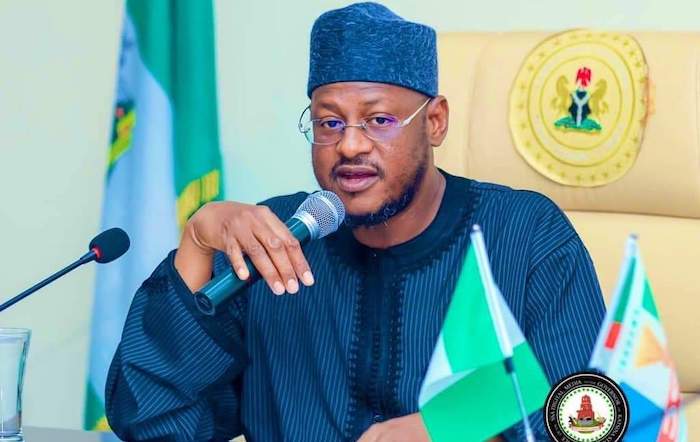
Katsina State Governor, Malam Dikko Umaru Radda, has presented a proposed ₦828.64 billion budget for the 2027 fiscal year, with a strong focus on infrastructure development, grassroots projects and people-driven governance, setting aside nearly 77 per cent of the total expenditure for capital projects.
The budget proposal, tagged “Building Your Future IV,” was laid before the Katsina State House of Assembly on Tuesday as the administration's fourth annual development blueprint aimed at accelerating growth and improving living conditions across the state.
A breakdown of the proposal shows that ₦637.91 billion, representing 76.98 per cent of the budget, is earmarked for capital expenditure, while ₦190.73 billion will cover recurrent expenditure.
In what could mark a significant shift in community participation in governance, Governor Radda announced that each of Katsina State’s 361 wards would benefit from a special development project chosen directly by residents through the Citizens’ Budget engagement process.
The governor explained that the 2027 budget was largely shaped by the priorities and demands expressed by citizens during consultations held across all wards of the state, describing the proposal as the most participatory budget in Katsina’s history.
According to him, the initiative is designed to ensure that government spending aligns with the actual needs of communities rather than decisions being made solely at the state level.
“This budget is built around the priorities of our people and reflects our commitment to inclusive and grassroots development,” Radda stated while presenting the appropriation bill.
Education emerged as the biggest beneficiary of capital investments, receiving a proposed allocation of ₦83.82 billion. The Works and Housing sector follows with ₦71.60 billion, while Agriculture and Livestock Development is allocated ₦65.88 billion.
The government also proposed ₦53.64 billion for the health sector and ₦50.51 billion for rural development, underscoring the administration’s commitment to improving social services and infrastructure in underserved communities.
The allocation pattern reflects the priorities of the Radda administration since assuming office in 2023, particularly in addressing challenges linked to insecurity, poverty, unemployment and inadequate infrastructure.
Katsina State, which shares borders with Niger Republic, Zamfara, Kaduna and Kano states, has continued to face security threats, especially banditry and kidnappings in several local government areas. The government has also been pursuing interventions aimed at improving agricultural productivity, expanding access to healthcare and education, and strengthening rural economies.

Sectoral analysis of the proposed budget shows that the Social Sector received the highest allocation of ₦317.73 billion, representing 38.34 per cent of the total budget. The Economic Sector follows with ₦303.17 billion, accounting for 36.59 per cent.
The Administrative Sector is expected to receive ₦198.55 billion, representing 23.96 per cent, while the Law and Justice Sector was allocated ₦9.19 billion, amounting to 1.11 per cent of the total proposal.
To finance the budget, the state government projects recurrent revenue of ₦583.58 billion and capital receipts of ₦234.30 billion.
Although the proposed 2027 budget is lower than the approved 2026 budget by 7.71 per cent, the governor expressed optimism about the state’s financial outlook, noting that recurrent revenue is expected to grow by 1.03 per cent.
Radda attributed the improved revenue projections to increased allocations from the Federation Account Allocation Committee (FAAC), reforms in internally generated revenue collection and ongoing measures to eliminate financial leakages through the Treasury Single Account (TSA).
The governor also provided an update on the implementation of the 2026 budget, revealing that as of August 28, the state had generated ₦267.47 billion in recurrent revenue, representing 44.16 per cent performance.
He added that total expenditure during the same period stood at ₦295.19 billion, translating to a budget performance rate of 32.88 per cent.
Reaffirming his administration’s commitment to sustainable development, Radda said security, education, healthcare, agriculture and rural infrastructure would remain at the heart of government policies and investments.
He called on members of the Katsina State House of Assembly to expedite consideration of the appropriation bill, expressing confidence that its passage and effective implementation would accelerate economic growth, deepen grassroots development and improve the welfare of citizens across the state.
The proposed appropriation bill will now undergo legislative scrutiny before its eventual passage and signing into law as the financial framework guiding government activities in 2027.

Comments (0)
No comments yet. Be the first to share your thoughts!