


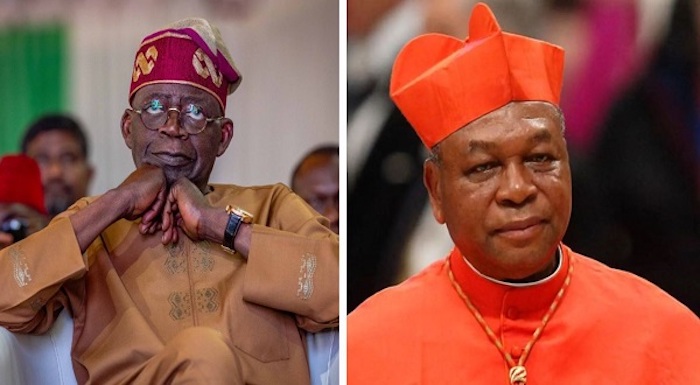
A fresh disagreement has emerged between the Presidency and Catholic cleric, Cardinal John Onaiyekan, following comments he made after a private meeting between President Bola Ahmed Tinubu and members of the Catholic Bishops’ Conference of Nigeria (CBCN).
The Presidency on Saturday accused the former Archbishop of Abuja of breaching the confidentiality of the engagement, describing his decision to publicly discuss the meeting as an inappropriate use of privileged access to the President.
In a statement titled “Cardinal Onaiyekan’s Abuse of Clerical Privilege,” Presidential Adviser Temitope Ajayi faulted the cardinal for granting a television interview in which he shared his interpretation of discussions held behind closed doors.
Ajayi argued that the meeting was a private engagement requested by the Catholic bishops to discuss pressing national issues, including the economy, insecurity and social challenges facing the country.
According to him, President Tinubu listened attentively to the concerns raised by the bishops and responded extensively to each issue, while also challenging what he considered an incomplete assessment of the nation's current situation.
The presidential aide said Tinubu acknowledged that Nigerians were still grappling with economic and security difficulties but maintained that his administration had made measurable progress since assuming office.
He noted that the President's position during the meeting was that Nigeria had moved beyond a difficult phase and that government reforms had begun laying the groundwork for recovery and long-term growth.
“The President's argument was not that all problems have disappeared,” Ajayi said. “Rather, he stressed that the country has emerged from a difficult period, foundations for recovery have been established, and the next task is ensuring that more Nigerians experience the benefits of those reforms.”
The Presidency also addressed the bishops’ appeal for the return of mission schools, saying Tinubu reminded the delegation that such decisions fall within the constitutional powers of state governments.
Ajayi pointed out that Tinubu had returned mission schools while serving as Governor of Lagos State, adding that the President's response was intended to clarify the limits of federal authority on the matter.
Defending the administration’s economic policies, the presidential aide said recent reforms had helped stabilise public finances and enabled many states to improve salary and pension payments.

He rejected suggestions that Tinubu was dismissive of the bishops’ concerns, insisting that the President merely cited available evidence to support his position that progress was being made.
“A difference in opinion over facts should not be mistaken for arrogance or indifference,” Ajayi stated.
On the issue of insecurity, the Presidency disagreed with the bishops’ assessment that Nigeria was “bleeding,” arguing that the President's evaluation was informed by intelligence reports and operational briefings unavailable to the public.
Ajayi stressed that, as Commander-in-Chief, Tinubu receives detailed security updates from military and intelligence agencies, giving him a broader picture of the situation across the country.
The presidential aide also dismissed claims that the President relies on external critics to understand conditions in Nigeria, saying Tinubu remains constantly informed through intelligence channels, media reports and consultations with individuals across different sectors of society.
While acknowledging the right of the bishops to express their concerns, the Presidency maintained that the confidential nature of the meeting should have been respected by all participants.
Ajayi said the spirit of mutual respect that guided the engagement required those present to refrain from publicly narrating or interpreting private discussions shortly after the meeting.
According to him, privileged access to the President should not be transformed into a platform for public commentary once deliberations have ended.
The latest exchange highlights growing debate over the content of the meeting and the broader conversation on the state of the nation, with both the Presidency and church leaders defending their perspectives on Nigeria’s economic and security realities.


Comments (0)
No comments yet. Be the first to share your thoughts!