


BY TAIBAT UMMI YAKUBU
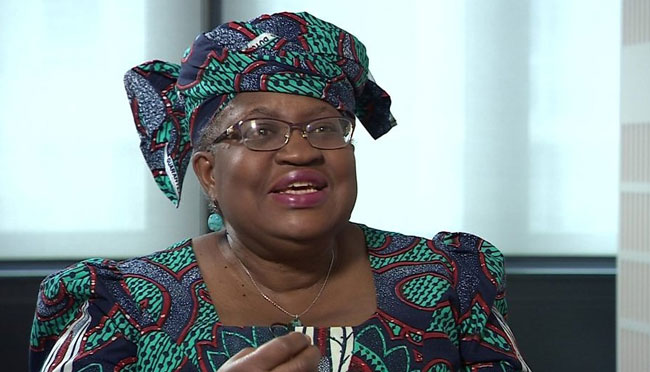
The Director-General of the World Trade Organisation (WTO), Dr Ngozi Okonjo-Iweala, has disclosed that the global trading system is proving far more resilient than many experts expected, despite mounting economic disruptions caused by tariff wars, geopolitical tensions and conflicts affecting key markets around the world.
Speaking during an interview with CNN’s Fareed Zakaria, the former Nigerian finance minister said the WTO itself had been surprised by the ability of global trade to withstand some of the most severe pressures seen in decades, including aggressive tariff measures introduced by the United States, growing rivalry between Washington and Beijing, and the impact of conflicts in the Middle East on global energy supplies.
According to Okonjo-Iweala, recent WTO assessments revealed that about 72 per cent of global goods trade is still being conducted under the organisation’s established rules, demonstrating that businesses and economies continue to depend heavily on a predictable and stable trading framework.
She noted that despite rising protectionist policies and increasing geopolitical uncertainty, the majority of international trade remains governed by the WTO’s Most Favoured Nation principles, which ensure equal trading conditions among member countries and provide businesses with the certainty needed for long-term investment and commercial planning.
The WTO chief described the current period as one of the most challenging moments for international commerce in nearly 80 years. She observed that the United States, once regarded as one of the strongest champions of the multilateral trading system, has increasingly embraced protectionist measures that have altered the global trade landscape.
Yet, contrary to expectations, global trade has continued to record stronger-than-anticipated growth. Okonjo-Iweala explained that the WTO had initially projected growth in global goods trade of around 2.5 per cent last year, but the actual figure climbed to 4.6 per cent, significantly outperforming forecasts.
A major factor behind that growth, she said, was the booming global demand for artificial intelligence-related products. The rapid expansion of trade in semiconductors, advanced processors and other technologies powering AI systems contributed substantially to the unexpected surge in international commerce.
According to her, AI-related products alone accounted for roughly 42 per cent of the growth recorded in global trade during the period, highlighting the increasingly important role of technology in driving economic activity across borders.
However, she cautioned against assuming that such impressive figures mean the global trading system is free from danger. The WTO, she noted, had projected global goods trade growth of just 1.9 per cent for 2026 because of continuing tariff disputes, geopolitical rivalries, energy market uncertainties and concerns over critical shipping routes such as the Strait of Hormuz. Yet even those forecasts were surpassed after first-quarter data showed growth reaching 3.2 per cent.

While welcoming the stronger-than-expected performance, Okonjo-Iweala warned that the AI-driven trade boom remains heavily concentrated in a few regions, particularly East Asia and North America. She said this concentration raises questions about whether the current pace of growth can be sustained over the long term or whether it could eventually resemble a market bubble.
The WTO boss expressed concern that many developing regions risk being left behind if access to emerging technologies remains concentrated among a limited number of countries. She stressed that ensuring broader participation in the benefits of digital and AI-driven trade would be essential for maintaining balanced global economic growth.
Despite the challenges, Okonjo-Iweala said recent trade data had strengthened her confidence in the core foundations of the multilateral trading system. She admitted that given the scale of current disruptions, she had expected far weaker results. Instead, the continued strength of global trade suggests that many of the principles underpinning the WTO remain effective.
She argued that the rules-based trading system has played a significant role in global economic development over the past decades, contributing to prosperity and helping lift an estimated 1.5 billion people out of poverty worldwide.
Nevertheless, she drew a clear distinction between resilience and long-term strength. While the system has shown a remarkable ability to absorb shocks, she warned that it remains vulnerable to deeper structural challenges that could threaten its future if left unaddressed.
For this reason, Okonjo-Iweala said WTO member states increasingly recognise the need for reforms aimed at modernising the organisation and ensuring it remains relevant in a rapidly changing global economy. According to her, there is growing acceptance among countries that strengthening the institution is necessary to preserve both the resilience and effectiveness of the global trading system.
Looking beyond traditional trade in physical goods, the WTO chief highlighted several sectors she believes will shape the future of international commerce. Among them are digital trade, technology-driven services and environmentally sustainable industries.
She pointed to the rapid growth of digitally delivered services and noted that green trade has now surpassed the $2 trillion mark globally, underscoring the emergence of new economic opportunities beyond conventional manufacturing and commodity exports.
As global markets continue to evolve, Okonjo-Iweala said the future of trade will increasingly be driven not only by the movement of goods across borders but also by technology, digital services, innovation and environmentally friendly products.
Despite the uncertainty surrounding global politics and economics, she remains optimistic that the international trading system can adapt and survive , provided nations embrace reforms and work together to ensure that the benefits of future growth are shared more broadly across the world.
.jpg)
.jpg)
Comments (0)
No comments yet. Be the first to share your thoughts!