


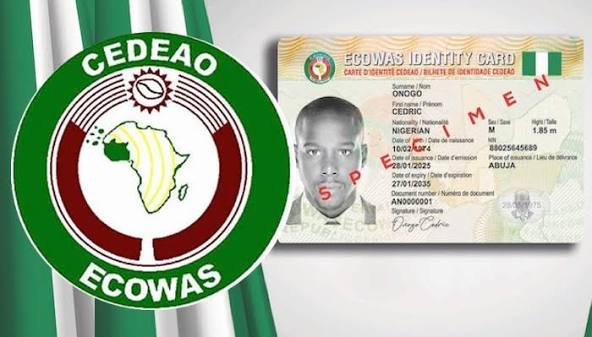
The newly introduced ECOWAS National Biometric Identity Card (ENBIC) is being positioned as a major step towards making movement, trade and residence across West Africa easier, safer and more organised.
At a media sensitisation workshop in Lagos on Thursday, the Economic Community of West African States (ECOWAS), International Organization for Migration (IOM), Nigeria Immigration Service (NIS) and other stakeholders explained the potential benefits of the biometric identity card while urging the media to help Nigerians understand how the new document works.
The ENBIC is expected to strengthen the implementation of the ECOWAS Protocol on Free Movement of Persons by providing citizens of member states with a harmonised means of identification as they travel across the region.
The card, which is expected to cost N35,000 in Nigeria, is designed to support legitimate cross-border movement while strengthening identity management and border security.
For millions of West Africans who regularly cross national borders for business, employment, education, family reasons and other activities, the initiative is being presented as more than simply another travel document.
The ECOWAS Director of Free Movement of Persons, Migration and Tourism, Obinna Ajugwo, described the ENBIC as one of the cornerstones of the region’s integration agenda.
He explained that although ECOWAS had made considerable progress since adopting its Free Movement Protocol, increased mobility had also created challenges involving identity management, irregular migration and cross-border crime.
It was against this background, he said, that the biometric identity card was conceived and subsequently endorsed by ECOWAS Heads of State and Government.
“The ENBIC is not just a card. It is a symbol of belonging. It is a tool for inclusion. And most importantly, it is an enabler of safe, secure, and efficient movement across our region,” Ajugwo said.
According to him, the harmonised identification system is expected to make it easier for citizens to exercise their right to free movement while strengthening border management and security cooperation among member states.
He added that the initiative could also contribute to deeper economic and social integration by making legitimate movement within the region more efficient.
But for the ECOWAS official, the success of the project will depend on more than the technology behind the card.
“It depends on people. It depends on trust and information,” he said.
That is why the media sensitisation workshop was considered important. Ajugwo urged journalists and media organisations to take accurate information about ENBIC to the public, particularly at a time when misinformation can quickly spread across communities and social media platforms.
He described the media as a critical link between institutions and citizens, saying responsible reporting would help build confidence in the new system and prevent confusion at border points.
The Head of the IOM Sub-office in Lagos, Ali Ali Ibrahim, also welcomed the initiative, commending the ECOWAS Commission and the Nigerian Government, particularly the Nigeria Immigration Service, for their efforts towards regional integration and lawful mobility.
Ibrahim said ENBIC aligns with the ECOWAS Protocol on Free Movement of Persons, Residence and Establishment, while also supporting wider international commitments under the Global Compact for Safe, Orderly and Regular Migration.
He explained that the initiative could strengthen identity systems, improve regular migration pathways, enhance border management and deepen cooperation among West African countries.

At the national level, he said, ENBIC complements Nigeria’s efforts to improve migration governance, identity management and border administration.
By providing stronger identity assurance for legitimate travellers, Ibrahim said, the card could contribute to a mobility system that is both more secure and more efficient.
He, however, stressed that the real measure of the initiative should not simply be the number of cards issued.
Rather, its success should be judged by whether it makes cross-border movement safer, creates more economic opportunities, strengthens regional integration and improves the experience of citizens travelling within West Africa.
For the Nigeria Immigration Service, the introduction of ENBIC represents a significant development in the management of regional travel.
The Assistant Comptroller General in charge of Passports and Other Travel Documents, ACG T. O. Olaiya, described the deployment of the biometric card as a watershed moment for regional integration.
She said the document goes beyond serving as a travel credential, describing it as an instrument designed to facilitate legitimate and seamless movement across West Africa.
For the NIS, however, the initiative comes with a delicate responsibility: making movement easier without compromising the security of Nigeria’s borders.
Olaiya said the service remains at the centre of that balance, as it works to facilitate the movement of ECOWAS citizens while protecting the integrity of the country’s borders.
She also emphasised the importance of public understanding, noting that even a sophisticated identity system could encounter difficulties if citizens do not know how to use it or understand its requirements.
“The media remains our most critical bridge to the public,” she said, urging journalists to provide accurate information on the card, including eligibility requirements and how it is expected to simplify cross-border travel.
She warned that misinformation at border posts could create unnecessary difficulties for travellers and undermine confidence in the initiative.
The stakeholders therefore called for sustained public education as ECOWAS moves towards wider implementation of the biometric identity system.
For West African citizens, the promise is straightforward: easier and more secure movement across borders, stronger recognition of identity and greater opportunities to live, work and trade within the region.
For governments and security agencies, the expectation is equally significant — a more reliable system for identifying legitimate travellers while improving cooperation against irregular migration and cross-border crime.
And for the media, the task now extends beyond simply reporting the launch. Journalists are expected to help citizens understand what ENBIC means, who can obtain it, how it works and what rights and responsibilities come with using it.
If effectively implemented and properly understood, the stakeholders believe the biometric card could become an important tool in turning the long-standing ECOWAS vision of regional free movement into a more practical reality for ordinary West Africans.


.jpg)
Comments (0)
No comments yet. Be the first to share your thoughts!