


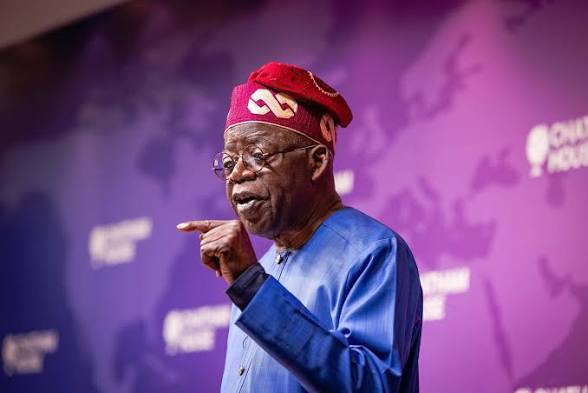
President Bola Tinubu has dismissed allegations that the Federal Government’s investments in judicial and legal institutions amount to executive interference in the affairs of the judiciary, insisting that strengthening the nation's justice system is a constitutional obligation rather than an encroachment on judicial independence.
The President made the clarification on Monday during the commissioning of a new Office Annex for the Body of Benchers and 10 units of four-bedroom staff quarters at the Nigerian Law School in Bwari, Abuja.
Represented by the Secretary to the Government of the Federation, Senator George Akume, Tinubu said the executive arm has a responsibility to provide the facilities and support required for the judiciary and legal profession to function effectively.
According to him, building modern infrastructure for the legal community should be seen as a collaborative effort aimed at deepening democracy and enhancing the administration of justice.
“Providing infrastructure for the judiciary and legal profession is not an attempt to undermine the independence of another arm of government. It is part of our constitutional responsibility to create an environment that enables those who uphold and interpret our laws to perform at their best,” he said.
The President linked the projects to his administration’s Renewed Hope agenda, stressing that democratic governance can only flourish when institutions are adequately equipped and empowered to serve the public.
He noted that the newly completed Body of Benchers’ Office Annex goes beyond bricks and mortar, describing it as a symbol of the government's commitment to the rule of law, institutional integrity and the continued growth of Nigeria’s legal profession.
Tinubu also underscored the importance of quality facilities for the Nigerian Law School, arguing that the country cannot aspire to a world-class justice system while neglecting the infrastructure that supports legal education.
He revealed that the staff housing project is only the first phase of a wider intervention programme for the institution. Ongoing projects, he said, include the construction of a modern auditorium, additional student hostels and the digitisation of the Law School’s academic and administrative processes.
The President further disclosed that similar infrastructure projects are being implemented across the justice sector, including new court facilities, judges’ residences and the ongoing construction of the Abuja Division of the Court of Appeal.
According to him, the projects reflect his administration’s determination to move beyond promises and deliver concrete reforms capable of strengthening the foundations of governance.
“We did not come into office merely to govern; we came to rebuild institutions and reform systems that are critical to national development,” he said.
Tinubu also used the occasion to defend the controversial decision to exempt the Federal Capital Territory Administration (FCTA) from the Treasury Single Account (TSA), arguing that the policy has provided the financial flexibility needed to accelerate infrastructure development across Abuja.
He maintained that despite initial criticism, the rapid transformation taking place in the nation’s capital has validated the decision, describing it as a strategic move that has enabled the execution of critical projects aimed at modernising Abuja and improving service delivery.
The President expressed confidence that continued investment in legal, judicial and public infrastructure would strengthen democratic institutions and support Nigeria’s long-term development goals.


Comments (0)
No comments yet. Be the first to share your thoughts!