


In a major push to improve learning outcomes and address Nigeria’s growing education challenges, the Federal Government has announced that the National Learning Assessment (NLA) will now be conducted every three years as a permanent feature of the country’s education system.
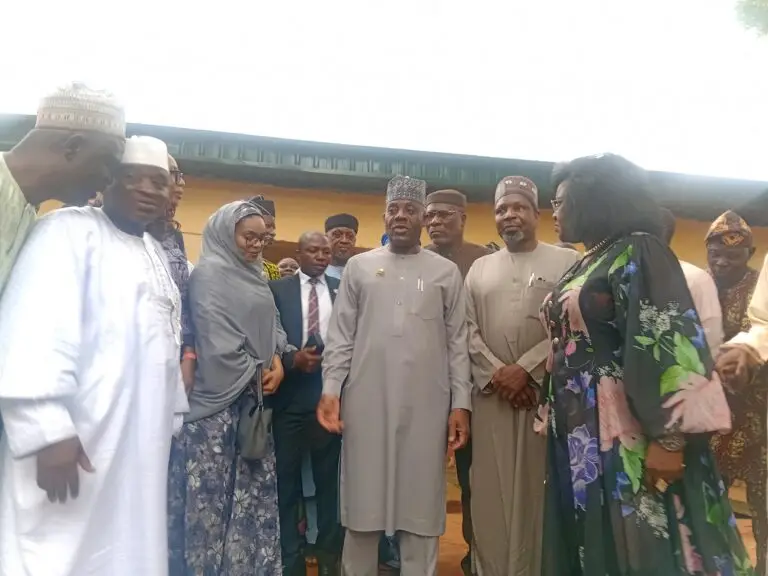
Minister of Education, Dr. Tunji Alausa, made the announcement on Friday while monitoring the ongoing 2026 National Learning Assessment in selected public and private schools across the Federal Capital Territory (FCT).
The assessment, which targets pupils and students in Primary Three, Primary Five, Junior Secondary School (JSS) Two and Senior Secondary School (SSS) Two, is designed to measure literacy, numeracy and cognitive abilities nationwide.
During visits to Government Secondary School, Kuje; Junior Secondary School, Kuje Central; and Topaz Model School, Kuje, Alausa said the exercise would serve as a critical tool for evaluating the effectiveness of teaching and learning across the country.
According to him, the Federal Government has directed the Universal Basic Education Commission (UBEC) to begin making budgetary provisions for the assessment from 2029 to ensure its sustainability.
“The importance of this assessment is that it allows us to determine whether our pupils and students are truly learning. It is a standardised instrument for measuring the quality of education at different levels and identifying areas that require improvement,” the minister said.
He explained that the last nationwide assessment was conducted in 2023 by UBEC, while the previous exercise was carried out in 2019 by the Federal Ministry of Education.
Alausa noted that institutionalising the assessment had become necessary due to the country’s persistent learning poverty crisis, which continues to affect millions of children.
He cited previous reports showing that over 42 million Nigerian children were classified as learning poor, meaning they were unable to read and understand age-appropriate texts by the age of 10.
The minister expressed confidence that ongoing reforms in the education sector would help reverse the trend, adding that the current assessment would provide updated data needed to formulate effective policies and targeted interventions.
“We need reliable data to accurately measure literacy and numeracy levels across the country. Such information will help government design evidence-based solutions that improve learning outcomes,” he said.
As part of broader reforms, Alausa disclosed that the government had streamlined multiple assessment frameworks into a unified national system, a move aimed at ensuring consistency and enabling long-term tracking of students’ academic performance.
He said the initiative forms part of the Nigeria Education Sector Renewal Initiative and aligns with President Bola Tinubu’s vision of transforming education into a catalyst for national development.
The minister also acknowledged the contribution of private schools in expanding access to education, saying they have played a significant role in keeping children in classrooms across the country.
While commending their efforts, he stressed the need for stronger regulatory oversight to ensure compliance with established educational standards.
“Private schools have helped absorb many learners and should be encouraged. At the same time, there must be effective regulation to guarantee quality and adherence to minimum standards,” he said.
Alausa further lauded the learning environments in the schools visited, describing them as clean, well-maintained and conducive to effective teaching and learning.
Also speaking, the Mandate Secretary of the FCT Education Secretariat, Dr. Danlami Hayyo, revealed that more than 120 public schools had undergone renovation under the administration of FCT Minister Nyesom Wike.
According to him, the rehabilitation projects covered classrooms, boarding facilities and sanitation infrastructure, reflecting the administration’s commitment to strengthening educational facilities.
Hayyo pledged the FCT Administration’s continued partnership with the Federal Government in implementing recommendations arising from the National Learning Assessment to enhance academic performance and learning outcomes across schools.
Comments (0)
No comments yet. Be the first to share your thoughts!