


The Independent National Electoral Commission (INEC) has revealed that it is yet to receive any budgetary allocation earmarked for the conduct of Nigeria’s 2027 general elections, even as it intensifies preparations for the nationwide exercise.
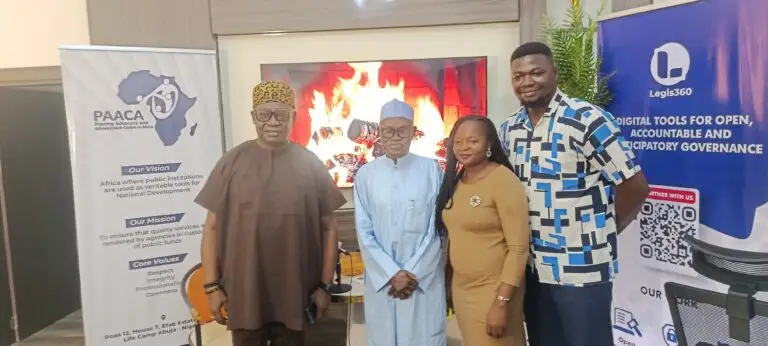
The disclosure was made in Abuja by INEC National Commissioner for Voter Education and Publicity, Mohammed Haruna, during a multi-stakeholder interactive session organised by the Peering Advocacy and Advancement Centre in Africa (PAACA) in collaboration with Legis360.
The forum, which brought together political parties, civil society organisations and electoral officials, reviewed the recently concluded Ekiti governorship election and assessed the commission’s readiness for the 2027 polls.
Haruna said although the funds had not been released, INEC had already commenced critical preparatory activities to ensure a smooth electoral process.
According to him, the commission's proposed budget for the 2027 elections stands at N873.78 billion, covering election operations, technology deployment and capital expenditure.
He, however, noted that the delay was still within the provisions of the Electoral Act 2026, which mandates that funds for a general election be released no later than six months before the polls.
Despite the funding delay, Haruna disclosed that INEC had begun arrangements to procure new electoral equipment, including replacements for Bimodal Voter Accreditation System (BVAS) devices that were lost, damaged or not recovered after previous elections.
“Our Director of ICT recently returned from China over procurement discussions because not all BVAS machines used in the last general elections were recovered. These orders require time and planning,” he said.
The commissioner further revealed that INEC plans to conduct mock presidential election exercises to test its technological infrastructure and prevent a recurrence of the glitches that affected the INEC Result Viewing (IReV) portal during the 2023 presidential election.
Addressing concerns over the rising cost of elections in Nigeria, Haruna argued that the actual cost per voter remained relatively modest when compared with international standards.
“The figure may appear huge, but when broken down, it amounts to about six dollars per voter. For a country like Nigeria, that is reasonable,” he said, attributing rising costs largely to import dependence and exchange rate fluctuations.
Haruna also identified conflicting court judgments as one of the major operational challenges confronting the commission.
He recalled that court orders issued barely 24 to 48 hours before the Ekiti governorship election forced INEC to make last-minute adjustments to election materials and software configurations.
“When courts direct the inclusion of political parties at the eleventh hour, we are compelled to reconfigure our systems and update physical materials almost immediately. This significantly narrows the window for testing and validation,” he explained.
He added that the commission was engaging judicial stakeholders to address the recurring challenge of conflicting court orders ahead of future elections.
On reports of a recent data breach, Haruna assured Nigerians that the commission remained committed to protecting voter information.
He disclosed that an electoral officer accused of deliberately leaking sensitive information had been suspended, while investigations by the Nigeria Data Protection Commission (NDPC), the Police and the Department of State Services (DSS) were ongoing.
Reviewing the Ekiti governorship election, Haruna described the exercise as largely successful, highlighting a 98 per cent voter accreditation success rate through the BVAS technology.
While acknowledging minor technical difficulties involving biometric verification for some elderly voters, he said INEC's technical teams promptly resolved the issues.
The commissioner, however, expressed concern over the persistent challenge of vote-buying, describing it as a growing threat to Nigeria’s democratic process.
Also speaking, PAACA Executive Director, Ezenwa Nwagwu, urged the Federal Government to release election funds early to prevent unnecessary delays and administrative bottlenecks.
He warned that late funding often creates emergency situations that encourage the circumvention of established procedures and weaken public confidence in the electoral process.
“Whenever election preparations become an emergency, opportunities for corruption emerge. Delayed funding can undermine credibility and create avoidable challenges,” Nwagwu said.
He stressed that early funding was particularly important because INEC must adhere to strict international procurement timelines, especially for specialised electoral equipment such as BVAS devices.
Nwagwu also called on civil society groups and citizens to hold political actors accountable for creating obstacles that hamper electoral preparations instead of directing blame solely at INEC.
He further advocated reforms to reduce unnecessary litigation, arguing that many disputes currently taken to court could be resolved through administrative mechanisms.
According to him, the stakeholders’ meeting was convened to examine lessons from the Ekiti governorship election and identify improvements needed to strengthen Nigeria’s electoral system ahead of the 2027 general elections.
Participants at the session also urged INEC to establish more robust and continuous training programmes for ad hoc election personnel, particularly members of the National Youth Service Corps (NYSC).


Comments (0)
No comments yet. Be the first to share your thoughts!