

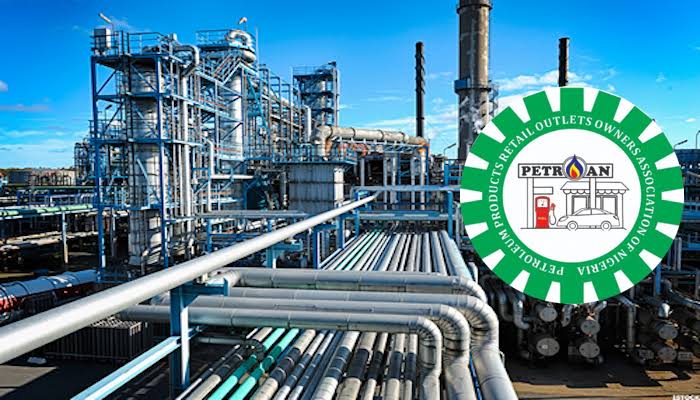
The Petroleum Products Retail Outlets Owners Association of Nigeria (PETROAN) has called on refiners, depot owners and fuel importers to reduce ex-depot and pump prices of petroleum products in response to the recent decline in global crude oil prices.
PETROAN National President, Mr Billy Gillis-Harry, made the appeal in a statement issued on Friday in Abuja, saying the drop in international crude oil prices presents an opportunity for stakeholders in Nigeria’s downstream petroleum sector to ease the burden on consumers.
According to him, savings arising from lower crude oil costs should be reflected in both wholesale and retail fuel prices to ensure fairness and provide economic relief to Nigerians.
Gillis-Harry noted that global oil prices have been on a downward trend, with Brent crude trading between 77 and 78 dollars per barrel following the ceasefire agreement between the United States and Iran and expectations of a gradual normalisation of oil exports through the Strait of Hormuz.
He said market analysts expect Brent crude to trade within the range of 75 to 82 dollars per barrel next week, while West Texas Intermediate (WTI) crude is projected to sell between 72 and 79 dollars per barrel.
The PETROAN president attributed the decline in crude prices to the continued implementation of the U.S.-Iran peace agreement, increased oil exports from the Middle East and concerns over weaker global demand.
He, however, cautioned that renewed geopolitical tensions, fresh supply disruptions or unexpected production cuts by the Organisation of the Petroleum Exporting Countries (OPEC) and its allies could reverse the trend and push prices upward.
Despite these risks, Gillis-Harry said the current outlook for the global oil market remains relatively stable, with a bearish tendency.
He also expressed concern that the landing cost of imported petroleum products appeared, in some cases, to be lower than the prices offered by domestic refiners, describing the situation as a clear indication of the need for a more competitive downstream market.
To address the issue, he urged the Nigerian Midstream and Downstream Petroleum Regulatory Authority (NMDPRA) to continue granting import licences to qualified marketers.
According to him, increased competition among suppliers would help moderate fuel prices, discourage monopolistic practices and guarantee the steady availability of petroleum products nationwide.
Gillis-Harry maintained that competition remains one of the most effective tools for improving efficiency, reducing costs and safeguarding consumer interests, adding that a competitive market would compel industry players to align prices with prevailing market conditions.



Comments (0)
No comments yet. Be the first to share your thoughts!