We begin in the name of Allah, Almighty, the Beneficent and the
Merciful.
Today, the Emir of Katsina, the flag bearer, Malam Umarun Dallaje is
exactly 190 years (1835 – 2025) since his death. He was born at a Fulani hamlet called Dasije within Dallaje, a scattered and remote
community/village in Bindawa District in the present day Katsina State in 1770 and died in Katsina on 25 th of May at the age of sixty-five (65) years.
He was a great qur’anic student, scholar and teacher and was a great warrior who went to Sokoto in search of knowledge and became a disciple of the jihad leader, Shehu Usman Bin Fodiyo.
ORIGIN, BACKGROUND AND MIGRATION
Umarun Dallaje’s grandparents were said to be Arabs that migrated from the eastern part of the globe who intermingled with a host of other caravans and settlers in the course of their lengthy emigrations, leading to
series of inter-cultural assimilations in the areas of religious, linguistic and
marital affinities. The clan was said to have temporarily settled at various places in search of greener pastures and have sojourned with other fulani
clans in the process. Some of them grew to be famous with long outstanding history, notably the Ba’awa (Ba’awiyya) Fulani Clans which continued migrating. They were warriors who became versed in Islamic
education and politics and increasingly became wealthier, with growing number of livestock. In the course of their migration, they established good
rapport with communities they met. The Fulani clans was considered to have dedesendedsisted from Nasi bin Ukba, who was believed to be their progerator while Ukba was believed to be an off-shoot of the Arab race.
Malam Umarun Dallaje has this family lineage according to Machika Abdu
Dogo’s Book from Malam Abdulwahab to Muhammed Na’i to Malam Abubakar to Malam Abdulmumini his father.
According to one account, Malam Umarun Dallaje’s grandparents
were said to have migrated from present-day Yemen in Aljaziratul Arab,popularly reported to as Asia minor. A dispute was said to have erupted between them and the ruler of the territory, Emir Abdulkarim, a grandson
of one Yakub which led to their emigration. The man Yakub was said to have overthrown a one-time ruler of the area Emir Dawud of Tunjurawa tribe, who ruled from 1681 – 1707. Malam Na’i, the great grandfather of Umarun Dallaje was one of the warriors that participated in the struggle.
When Abdulkarim won the fight, Na’i then migrated to present-day Borno with his followers.
They arrived Borno Empire around the year 1711, during the reign of Mai Dunama VII. At Borno, peasants/communities were said to be uneasy with these strangers because they had heard alot about Na’i’s braveness in
war, which as his bravery has spreaded almost everywhere within the Empire, hence the natives palpable fear about him and his followers.
Feeling under siege, Borno people implored their leader, Mai
Dunuma to ask Na’i to leave their territory. He therefore called on him, greeted him and accorded him necessary courtesies, but requested him to move further away from the Empire. Without hesitation, Na’i and his men
obliged and moved further. It was gathered that Muhammadu Na’i died on their way before finding a new settlement and Abubakar, Muhammad Na’i’s son became the leader of the clan and caravan. They continued the
journey up to Nguru where they temporarily settled.
When they departed Nguru, it was gathered that they arrived Katsina in the year 1673, during the reign of Emir Usman Tsaga Rana, but that some of the followers agreed to remain and settle at the place where
Muhammadu Na’i died and was buried. Another section of the clan went to Gombe while some went back to Borno. Similarly, a part of the clan went
to Bata where they met the Bachama people who engaged them in disputes and scuffles and therefore had to leave the place.
As a matter of policy, however, wherever and whenever the clan was leaving, at least one person is left behind to continue imparting Qur’anic education to the people. This explains the reason behind the clan’s wider spread across the areas visited.
The clan has greatly mastered the holy Quran while a number of its
members were proficient in many aspects of Islamic religious knowledge.
That was also the reason why they always sought to further increase their knowledge. Consequently, they were at any given opportunity happy to hear about a renowned Ulama or Islamic cleric whom they may visit to seek further knowledge.
That explained the reason why Umarun Dallaje went to Sokoto to
meet Sheikh Usman Bin Fodio. This also showed that long before the Shehu’s clarion call to initiate the jihad, Umarun Dallaje was already his disciple in the waiting. It was therefore during his stay with the Shehu, that Umaru and Muhammadu Bello, Shehu’s eldest son got, closer to each
other Umarun Dallaje’s active extensive high participation in the planning and execution of the Jihad endeared him to the Shehu and this madeSultan Muhammadu Bello to appoint him to lead the battles of Alwasa and Alkalawa which were successfully accomplished. Umarun Dallaje’s participation in the Shehu’s first victorious battle of Tafkin Kwatto made him
a force to be reckoned with.
] It was against this background, that the Jihad movement for the
conquest of Katsina (and other reforms) was ordered by the Shehu and Umarun Dallaje automatically became the leader assigned to Katsina area.
Apart from Umarun Dallaje, other disciples who became Fulani Emirs in their respective domains in Hausa land are as follows:
i.Malam Umarun Dallaje (Katsina)
ii.Malam Sambo Dan Ashafa (Zamfara)
iii.Malam Isyaku (Daura)
iv.Malam Musa (Zazzau)
v.Malam Suleiman (Kano)
vi.Malam Ibrahim Dantunku (Kazaure)
vii. Malam Ibrahim Zaki (Katagum)
viii. Malam Goni Muktar (Misau)
ix.Malam Muhammadu Wabi (Juma’are)
x.Mala Buba Yero (Gombe)
xi.Malam Yakubu (Bauchi)
xii. Malam Adama (Adamawa)
xiii. Malam Dendo (Bida)
xiv. Malam Muhammadu (Hadeja) All of them were enjoined to be guided by the teachings of the Holy Qur’an and sunnah of Prophet Muhammad (SAW) in the conduct of their
expeditions and subsequent ruler ship of their territorial areas.
UMARUN DALLAJE, EMIR OF
KATSINA - 1807
With the conquest of Katsina, Umarun Dallaje, the flag bearer
assumed its emirship on the orders of Sokoto, having forcefully made the last Habe ruler, Magajin Haladu (1805 – 1807) to flee to Dankama, a village
some 43 kilometers north of Katsina city.
Having consolidated his leadership, Umarun Dallaje ensured the preservation of some important documents like Bebe’s large spiritual knife
(Wukar Bebe), Gajere’s large spiritual knife (Wukar Gajere), Iron pot (Tukunyar Karfe) and the massive drum (Gwauron Tambari). Katsina was
and is still noted for historical documentation, being a legacy of Umarun Dallaje. Other edifices of history that Umarun Dallaje preserved were the famous Gobarau University, founded by Emir Korau in the year 1338 and
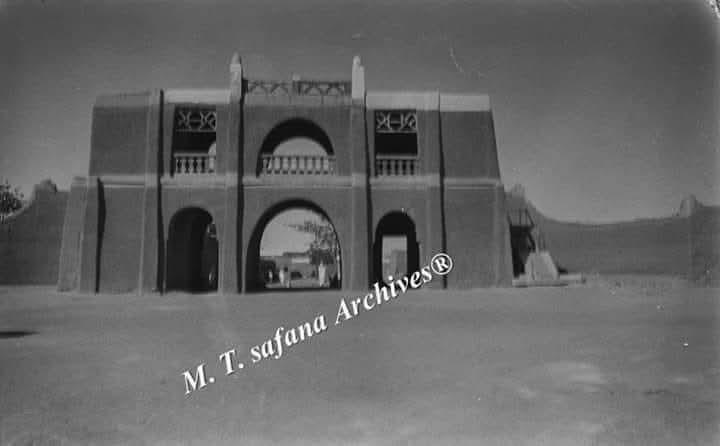
the Gidan Korau itself, the present Emir’s palace.
Umarun Dallaje had an inclusive administration, as he involved those who participated in the Jihad with him, notably Umarun Dunyawa and Malam Na’Alhaji. The lost glory of Islamic perseverance during the Habe
rule was therefore restored during Dallage’s reign. He actively spreaded Islam and converted many pagans and other non-Muslims to Islam within
Katsina territory and beyond. He led many expeditions to nearby communities and settlements and converted them to Islam through
persuasion and tact.
Umarun Dallaje was simple, philanthropic and a messiah in Katsina who tried uniting people to follow proper Islamic injunctions and rules. All
corners of Katsina were reached and proper rules were put in place to ensure people followed and performed Islamic religion as it was designed
and instructed, like the observation of the five daily prayers. Youth who
had the wherewithal were also encouraged to get married, as a moral safeguard to the society’s well-being. He was said to have built many mosques and Islamic learning centres both in Katsina and other places, which were the mandatory objectives of the jihadists then. He also made sure that all Katsina territories were fully safeguarded and put under keen surveillance, so as to
be protected from external aggression and marauders.
He discouraged injustice and was a truthful leader who led by
example. This made Katsina people to be proud of him and of being Katsina indigenes themselves. The prosperity and dignity of Islamic
instructors were upgraded too during his time. Consequently, Islam spreaded farther and ulamas continued trooping into Katsina from far and
wide, enriching the religion’s frontiers. In addition, middle and lower classes of merchants arrived and were accommodated and given land to settle in Katsina. This further made the population to increase many fold.
The slogan “Katsina Dakin Kara” gained traction sequel to the cordial reception given to the settlers who were migrants in search of Islamic education or trade and craft. Umarun Dallaje and his descendants ruled
from 1807 to 1906, spanning a period of about 100 years as follows:
1. Emir Umarun Dallaje
-1807 – 1835
2. Emir Abubakar Saddiku Dan Umarun Dallaje
-1835 – 1844
3. Emir Muhammadu Bello Dan Umarun Dallaje
-1844 – 1869
4. Emir Ahmadu Rufa’I (Garnakaki) Dan Umarun Dallaje
-1869 – 1871
5. Emir Ibrahim Boyi Dan Muhammadu Bello
-1871 – 1883
6. Emir Malam Musa Dan Umarun Dallaje
-1883 – 1888
7. Emir Abubakar Dan Ibrahim Boyi
-1888 – 1905
8. Emir Yero Dan Malam Musa
-1905 – 1906
Umarun Dallaje loved his relatives so much, hence always
intermingled and related with them. He gave his daughters out for marriage to other Islamic rulers and ulamas, particularly his contemporaries and allies in the jihad movement. He died and left behind two wives and 21
children. Among the female children he left behind were the following:
1. Magajiya Aminatu Aya
She married Sarkin Maska Sani who ruled Maska from 1864 –
1881. She was the mother of Sarkin Maska Umaru (1881 – 1888), Sarkin Maska Halilu (1888 – 1910) and Sarkin Maska Shehu
Autan Aya (1915 – 1928).
2. Magajiya Maryamu Hanatari
She married Galadima Abdullahi (1821 – 1861). She was the
mother of Galadima Shawai who was Malumfashi District Head
from 1861 – 1894.
3. Magajiya Nana Asma’u
She married Kaura Abubakar (1811 – 1854). She was the mother to late Kaura Halilu who ruled Rimi District from 1889 - 1895 Umarun Dallaje’s tomb is situated behind Emir’s Palace, Katsina along with some of his children and also that of late Galadima Dudi who
was Umarun Dallaje’s close and trusted ally.
May Allah Almighty grant them Aljannatul Firdausi and we too, as well all those that followed the right path till the day of judgement.
Written by Mallam Zaharaddini Ibrahim (Mayanan Safana)
Translated by Dr. Aliyu Ibrahim Kankara
Edited by Lawal Rufai’i Safana