


By Taibat Ummi Yakubu
There are sporting events, and then there is the FIFA World Cup.
Every four years, the world comes to a standstill. Streets become unusually quiet during matches, offices find ways to accommodate football discussions, and families gather around television screens to witness history unfold. For a few weeks, national borders seem less important than the shared passion of billions united by a single game. The FIFA World Cup is not merely a football tournament; it is a global celebration of dreams, emotions, culture and humanity.
Since its inception in 1930, the FIFA World Cup has grown into the most prestigious and widely watched sporting event on the planet. The tournament was first hosted by Uruguay, which also became the inaugural champion after defeating Argentina in the final. What began as a modest competition involving a handful of nations has evolved into a global spectacle that captures the imagination of people from every corner of the world.
Over the decades, the World Cup has produced unforgettable moments and crowned football's greatest champions. Brazil stands as the most successful nation in the competition's history, having won the trophy five times. Germany and Italy have each lifted the coveted prize four times, while Argentina has claimed three titles. Uruguay, France and Spain have each celebrated two triumphs, while England remains a one-time champion.
Yet the World Cup is about much more than trophies and statistics. It is the stage upon which legends are made. Pelé dazzled the world as a teenager and became the face of football excellence. Diego Maradona inspired Argentina with performances that remain part of football folklore. Zinedine Zidane elevated France to greatness, while Ronaldo Nazário became synonymous with brilliance in front of goal. Andrés Iniesta delivered Spain's first World Cup title in 2010, and Lionel Messi eventually completed his remarkable career by leading Argentina to glory in 2022.
For footballers, there is no achievement quite like winning the World Cup. Players may win league titles, continental championships and individual awards, but the World Cup occupies a special place in their hearts. It represents the opportunity to wear their country's colours on the biggest stage and etch their names into national history. A World Cup winner is remembered not only as a great player but as a symbol of national pride and collective joy.
The significance of the World Cup extends far beyond the players themselves. For fans, it is an emotional journey unlike any other. Every match carries hope, anxiety and excitement. Victories spark celebrations that can last for days, while defeats bring heartbreak shared by millions. Entire generations connect through the tournament, with parents recounting memories of past editions and children experiencing the thrill of football's grandest stage for the first time.
The World Cup also serves as a powerful force for unity. In a world often divided by politics, religion and ideology, football provides common ground. During the tournament, people from different cultures and backgrounds find themselves celebrating the same moments, discussing the same goals and sharing the same emotions. It is one of the few events capable of bringing together such a vast and diverse global audience.
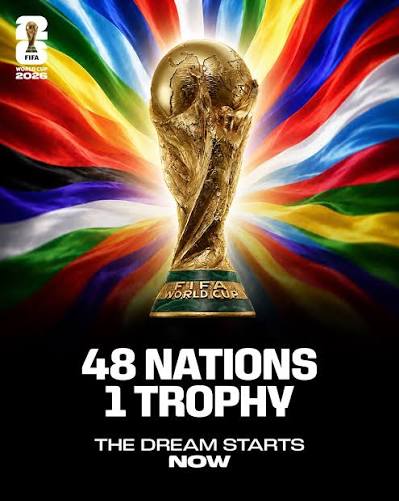
The 2026 FIFA World Cup will undoubtedly be remembered as one of the most significant editions in the competition's history. Hosted jointly by the United States, Canada and Mexico, it marked the first World Cup to feature 48 teams, expanding opportunities for nations that previously struggled to qualify. The tournament showcased football's growing global reach and reinforced FIFA's ambition to make the game more inclusive.
However, the football itself was only part of the story. The 2026 edition broke new ground by introducing the first-ever halftime show during the World Cup final. Inspired by the entertainment spectacle traditionally associated with the Super Bowl, the show brought together some of the world's biggest music stars. The performance by Colombian singer Shakira and Nigerian Afrobeats sensation Burna Boy, alongside Uganda's Ghetto Kids dance troupe, symbolised football's ability to unite cultures through sport, music and entertainment.
The tournament culminated in a dramatic final between Spain and Argentina. For many football lovers, the match felt like a clash between generations. Argentina arrived as defending champions, carrying the legacy of Lionel Messi and the hopes of millions who longed for another chapter in the nation's remarkable football story. Spain, meanwhile, represented a youthful and dynamic side eager to establish a new era of dominance.
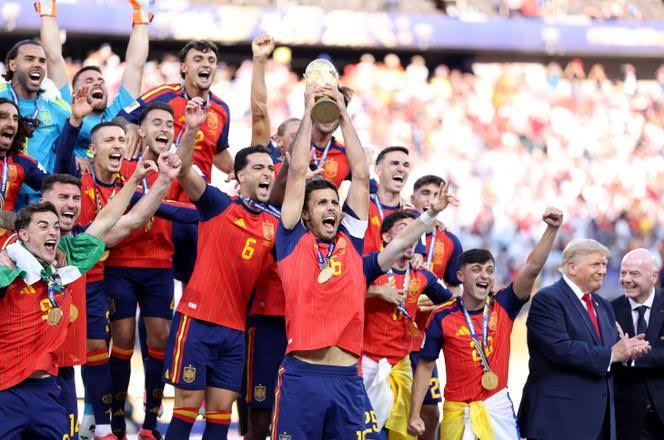
The final was tense and fiercely contested. Argentina defended with resilience, while Spain displayed the technical quality and composure that have long defined its football identity. After ninety minutes failed to produce a winner, the contest stretched into extra time. It was there that Ferran Torres etched his name into football history, scoring the decisive goal that secured a 1-0 victory and delivered Spain's second World Cup title.
Spain's triumph was celebrated across the football world as the crowning achievement of a talented generation. For Argentina, it was a painful end to a remarkable campaign. Yet such moments are what make the World Cup so compelling. It produces heroes and heartbreak in equal measure, reminding fans that glory and disappointment are often separated by the smallest of margins.
One of the most fascinating subplots surrounding the tournament was the continuing debate between supporters of Cristiano Ronaldo and Lionel Messi. Even though neither player stood at the centre of the final, their rivalry remained a dominant topic of conversation throughout the competition. Social media platforms buzzed with arguments, comparisons and passionate opinions from fans determined to defend their chosen icon.
The Ronaldo-Messi debate has become one of the defining narratives of modern football. For nearly two decades, both players pushed the boundaries of excellence, breaking records and inspiring millions. While supporters may continue to disagree over who deserves the title of greatest of all time, the truth is that football has been privileged to witness two extraordinary careers unfold simultaneously. Their rivalry elevated the sport and inspired a generation of young players to dream bigger.
Beyond the goals, trophies and debates, the true beauty of the World Cup lies in the stories it creates. It is the underdog nation defying expectations. It is the young player announcing himself to the world. It is the veteran making one final appearance before retirement. It is the fan travelling thousands of kilometres for the chance to witness history. It is the child kicking a ball on a dusty field while imagining the roar of a packed stadium.
As the curtain falls on another unforgettable edition, attention naturally turns to the future. Football continues to evolve, embracing new technologies, expanding opportunities for emerging nations and reaching audiences in ways previously unimaginable. New stars are already emerging, ready to carry the game into a new era.
Yet despite all the changes, the essence of the World Cup remains the same. It is still a celebration of dreams, ambition and human connection. Spain may currently hold the trophy, but every nation begins the journey to the next tournament believing that glory is possible. Every player dreams of lifting the golden prize. Every fan dares to hope.
That enduring sense of hope is what makes the FIFA World Cup more than a sporting event. It is a shared global experience, a source of unforgettable memories and a reminder of football's unique power to unite the world. Long after the final whistle has blown and the celebrations have faded, the magic of the World Cup lives on in the hearts of players and fans alike, waiting for the next chapter to begin.There are sporting events, and then there is the FIFA World Cup.
Every four years, the world comes to a standstill. Streets become unusually quiet during matches, offices find ways to accommodate football discussions, and families gather around television screens to witness history unfold. For a few weeks, national borders seem less important than the shared passion of billions united by a single game. The FIFA World Cup is not merely a football tournament; it is a global celebration of dreams, emotions, culture and humanity.

Since its inception in 1930, the FIFA World Cup has grown into the most prestigious and widely watched sporting event on the planet. The tournament was first hosted by Uruguay, which also became the inaugural champion after defeating Argentina in the final. What began as a modest competition involving a handful of nations has evolved into a global spectacle that captures the imagination of people from every corner of the world.
Over the decades, the World Cup has produced unforgettable moments and crowned football's greatest champions. Brazil stands as the most successful nation in the competition's history, having won the trophy five times. Germany and Italy have each lifted the coveted prize four times, while Argentina has claimed three titles. Uruguay, France and Spain have each celebrated two triumphs, while England remains a one-time champion.
Yet the World Cup is about much more than trophies and statistics. It is the stage upon which legends are made. Pelé dazzled the world as a teenager and became the face of football excellence. Diego Maradona inspired Argentina with performances that remain part of football folklore. Zinedine Zidane elevated France to greatness, while Ronaldo Nazário became synonymous with brilliance in front of goal. Andrés Iniesta delivered Spain's first World Cup title in 2010, and Lionel Messi eventually completed his remarkable career by leading Argentina to glory in 2022.
For footballers, there is no achievement quite like winning the World Cup. Players may win league titles, continental championships and individual awards, but the World Cup occupies a special place in their hearts. It represents the opportunity to wear their country's colours on the biggest stage and etch their names into national history. A World Cup winner is remembered not only as a great player but as a symbol of national pride and collective joy.
The significance of the World Cup extends far beyond the players themselves. For fans, it is an emotional journey unlike any other. Every match carries hope, anxiety and excitement. Victories spark celebrations that can last for days, while defeats bring heartbreak shared by millions. Entire generations connect through the tournament, with parents recounting memories of past editions and children experiencing the thrill of football's grandest stage for the first time.
The World Cup also serves as a powerful force for unity. In a world often divided by politics, religion and ideology, football provides common ground. During the tournament, people from different cultures and backgrounds find themselves celebrating the same moments, discussing the same goals and sharing the same emotions. It is one of the few events capable of bringing together such a vast and diverse global audience.
The 2026 FIFA World Cup will undoubtedly be remembered as one of the most significant editions in the competition's history. Hosted jointly by the United States, Canada and Mexico, it marked the first World Cup to feature 48 teams, expanding opportunities for nations that previously struggled to qualify. The tournament showcased football's growing global reach and reinforced FIFA's ambition to make the game more inclusive.
However, the football itself was only part of the story. The 2026 edition broke new ground by introducing the first-ever halftime show during the World Cup final. Inspired by the entertainment spectacle traditionally associated with the Super Bowl, the show brought together some of the world's biggest music stars. The performance by Colombian singer Shakira and Nigerian Afrobeats sensation Burna Boy, alongside Uganda's Ghetto Kids dance troupe, symbolised football's ability to unite cultures through sport, music and entertainment.
The tournament culminated in a dramatic final between Spain and Argentina. For many football lovers, the match felt like a clash between generations. Argentina arrived as defending champions, carrying the legacy of Lionel Messi and the hopes of millions who longed for another chapter in the nation's remarkable football story. Spain, meanwhile, represented a youthful and dynamic side eager to establish a new era of dominance.
The final was tense and fiercely contested. Argentina defended with resilience, while Spain displayed the technical quality and composure that have long defined its football identity. After ninety minutes failed to produce a winner, the contest stretched into extra time. It was there that Ferran Torres etched his name into football history, scoring the decisive goal that secured a 1-0 victory and delivered Spain's second World Cup title.
Spain's triumph was celebrated across the football world as the crowning achievement of a talented generation. For Argentina, it was a painful end to a remarkable campaign. Yet such moments are what make the World Cup so compelling. It produces heroes and heartbreak in equal measure, reminding fans that glory and disappointment are often separated by the smallest of margins.
One of the most fascinating subplots surrounding the tournament was the continuing debate between supporters of Cristiano Ronaldo and Lionel Messi. Even though neither player stood at the centre of the final, their rivalry remained a dominant topic of conversation throughout the competition. Social media platforms buzzed with arguments, comparisons and passionate opinions from fans determined to defend their chosen icon.
The Ronaldo-Messi debate has become one of the defining narratives of modern football. For nearly two decades, both players pushed the boundaries of excellence, breaking records and inspiring millions. While supporters may continue to disagree over who deserves the title of greatest of all time, the truth is that football has been privileged to witness two extraordinary careers unfold simultaneously. Their rivalry elevated the sport and inspired a generation of young players to dream bigger.
Beyond the goals, trophies and debates, the true beauty of the World Cup lies in the stories it creates. It is the underdog nation defying expectations. It is the young player announcing himself to the world. It is the veteran making one final appearance before retirement. It is the fan travelling thousands of kilometres for the chance to witness history. It is the child kicking a ball on a dusty field while imagining the roar of a packed stadium.
As the curtain falls on another unforgettable edition, attention naturally turns to the future. Football continues to evolve, embracing new technologies, expanding opportunities for emerging nations and reaching audiences in ways previously unimaginable. New stars are already emerging, ready to carry the game into a new era.
Yet despite all the changes, the essence of the World Cup remains the same. It is still a celebration of dreams, ambition and human connection. Spain may currently hold the trophy, but every nation begins the journey to the next tournament believing that glory is possible. Every player dreams of lifting the golden prize. Every fan dares to hope.
That enduring sense of hope is what makes the FIFA World Cup more than a sporting event. It is a shared global experience, a source of unforgettable memories and a reminder of football's unique power to unite the world. Long after the final whistle has blown and the celebrations have faded, the magic of the World Cup lives on in the hearts of players and fans alike, waiting for the next chapter to begin.

Comments (0)
No comments yet. Be the first to share your thoughts!