


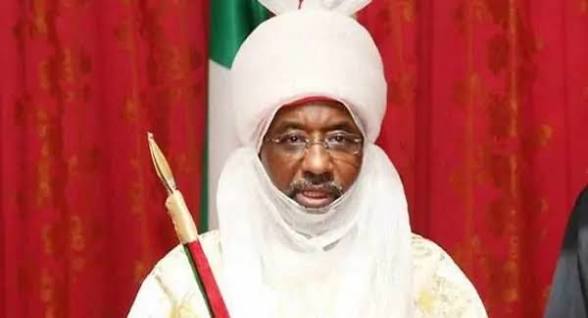
The Emir of Kano, Khalifa Muhammadu Sanusi II, has called on Nigeria’s political class to abandon what he described as the politics of domination and embrace leadership anchored on service, accountability and competence as a pathway to national renewal.
The monarch said Nigeria’s progress depends largely on the emergence of leaders committed to addressing citizens’ needs rather than pursuing power for its own sake.
Sanusi made the remarks during a National Dialogue organised by PowerShift Africa in Kano under the theme, “Revisiting the Past, Reconciliation and Building the Future.”
Represented by the Danmadamin Kano and Professor of Economics at Bayero University, Kano, Prof. Abubakar Aliyu-Sanusi, the emir stressed the need for unity, tolerance and collective responsibility in tackling the country’s growing challenges.
He argued that discussions around power-sharing should extend beyond regional or geographical considerations and focus on producing capable, compassionate and credible leaders.
“Leadership should be about serving the people. What Nigeria needs is a system that allows competent and accountable individuals to emerge and deliver meaningful change,” he said.
The emir described the dialogue as coming at a critical moment in Nigeria’s history, noting that the country continues to grapple with deep-rooted socio-economic and political problems despite more than six decades of independence.
According to him, issues such as insecurity, poverty, corruption, economic hardship, political instability, and ethnic and religious tensions remain major obstacles to national development.
He urged policymakers to place citizens’ welfare at the centre of economic planning, insisting that policies should be judged by their ability to improve living conditions and reduce poverty.
“Any economic policy that fails to improve the welfare of the people cannot be regarded as successful,” he said, while calling for inclusive growth strategies capable of lifting millions out of hardship.
Sanusi also underscored the importance of learning from history, strengthening institutions and addressing lingering grievances that continue to fuel divisions across the country.
“No nation can build a stable and prosperous future without confronting unresolved issues from its past and ensuring justice for all,” he added.
Participants at the dialogue echoed similar concerns, advocating national unity, reconciliation, justice and inclusive governance as essential ingredients for sustainable development and social cohesion.

Speaking during a panel discussion, political analyst Umma Abdullahi said many of Nigeria’s challenges stem from long-standing divisions and artificial barriers that have weakened national identity.
She urged Nigerians, particularly young people, to promote peace, patriotism and mutual respect, while advocating a society where citizens are valued primarily for their nationality rather than ethnic, religious or regional affiliations.
Also contributing, the Eze Igbo of Kano, Igwe Ikechukwu Oliver-Abodo, stressed the need for peaceful coexistence and national solidarity.
He noted that millions of Nigerians have built successful lives outside their ancestral homes, making it imperative for citizens to embrace tolerance and understanding.
“Nobody can divide Nigeria. We must continue to work together for the advancement of our country,” he said, while urging leaders to prioritise youth empowerment and citizens’ welfare.
Earlier, Executive Director of PowerShift Africa, Mr Nso Nnamani, said the gathering was designed to encourage conversations on reconciliation, nation-building and the future of the country.
Nnamani argued that Nigeria’s most pressing challenge is the lack of national cohesion, noting that ethnic divisions and competing political interests have often slowed the country’s development.
He said meaningful progress would require a shared national vision built on trust, understanding and collective aspirations.
“Every successful nation is driven by a clear dream and a common purpose. Nigeria must define its future together and work collectively towards achieving it,” he said.
The dialogue also featured symbolic reconciliation activities aimed at fostering trust among participants from diverse ethnic and cultural backgrounds.
At the end of the event, stakeholders unanimously agreed that unity, justice, accountability and active citizen participation remain indispensable to building a peaceful, inclusive and prosperous Nigeria.

Comments (0)
No comments yet. Be the first to share your thoughts!