


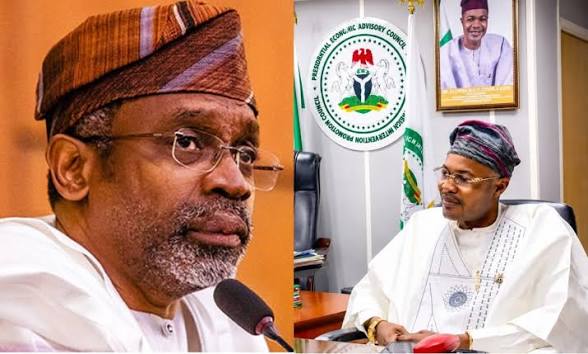
The controversy surrounding the disputed Presidential Foreign Investment Promotion Council (PFIPC) has taken a fresh twist as its embattled Director-General, Prince Adeniyi Adeyemi, expressed a lack of confidence in the Independent Corrupt Practices and Other Related Offences Commission (ICPC), insisting that the agency cannot conduct an impartial investigation into the matter.
Adeyemi argued that assigning the ICPC to investigate allegations involving him, the Chief of Staff to the President, Femi Gbajabiamila, and other government officials amounts to allowing the government to investigate itself. He maintained that the anti-graft agency would be reluctant to indict a top government official, regardless of the outcome of its findings.
The development comes as Adeyemi prepares to appear before a Federal High Court in Abuja on charges bordering on alleged forgery and impersonation.
The PFIPC controversy erupted after the Presidency disowned the council, describing it as non-existent. While Gbajabiamila publicly distanced himself from the organisation, the Presidency, through the Special Adviser to the President on Information and Strategy, Bayo Onanuga, labelled Adeyemi a “con artist” and disclosed that criminal charges had been instituted against him.
Adeyemi, however, has continued to challenge the official narrative, describing the controversy as a case of institutional denial and an attempt to suppress questions concerning public accountability and transparency.
The matter has generated further debate following conflicting accounts over the council’s operations. Reports indicate that the PFIPC allegedly secured approvals for the recruitment of about 300 personnel, obtained office accommodation at the Federal Secretariat in Abuja, and carried out activities that suggested official recognition.
While the Presidency alleged that Adeyemi used forged documents to obtain government approvals and open accounts, the Office of the Accountant General of the Federation reportedly stated that the council had no account with the Central Bank of Nigeria (CBN), creating fresh uncertainty over the circumstances surrounding the case.
In response to the growing public interest, President Bola Ahmed Tinubu directed the ICPC on July 7 to investigate the activities of the controversial council and submit a report within 30 days.
Speaking during an appearance on Channels Television’s Politics Today, Adeyemi welcomed the President’s directive but insisted that only an independent investigative panel could guarantee fairness and transparency.
According to him, the Presidency had already publicly absolved Gbajabiamila of any wrongdoing, making it difficult for the ICPC to carry out an unbiased investigation.
He therefore called on President Tinubu to establish an independent panel comprising representatives of international organisations and civil society groups to examine the allegations and determine the facts.

“The government cannot investigate itself. If those accused are innocent, an independent panel should establish that. Nigerians deserve to know the truth,” Adeyemi said.
The embattled PFIPC chief also made fresh allegations involving the Economic and Financial Crimes Commission (EFCC), claiming that officials of the commission offered him access to forfeited properties in Abuja for use as office accommodation.
According to him, he was allegedly asked to pay N300 million as ground rent into a CBN recovery account before one of the properties could be allocated to the council.
Adeyemi further alleged that after informing an intermediary, the late Babatunde Tanimola, that he could not raise the amount, arrangements were made for temporary office space at the Federal Secretariat pending the release of a proposed take-off grant for the council.
He also repeated his earlier claim that he paid N400 million in instalments through Tanimola to facilitate his appointment as Director-General of the council. According to him, the late intermediary acted as a link between him and influential government figures, helping to secure approvals and official endorsements.
The EFCC has not officially responded to the latest allegations. Efforts to obtain comments from the commission reportedly yielded no immediate reaction.
Adeyemi, who claimed that there had been attempts to intimidate and silence him, insisted that he possesses documentary evidence to support his allegations and is willing to present them before an independent investigative panel.
As the controversy deepens and legal proceedings commence, the PFIPC saga continues to raise critical questions about accountability, transparency and the processes through which government approvals are granted and verified.
With investigations ongoing and competing narratives emerging from both sides, the case is expected to remain at the centre of public and political discourse in the coming weeks.



Comments (0)
No comments yet. Be the first to share your thoughts!